For those of you new here, Week 1 will give you a full breakdown of what we’re doing. Current bracketology HERE. Most recent Bubble Watch HERE.
Our final update as we now have a bracket and we know where every team stands entering the tournament. What a day, and we have some awesome potential matchups setting up. Obviously off the rip I have to say yes, I think this is going to be a chalk tournament, and here is why. We have 3 teams above the Juggernaut line, there have only been 5 teams to enter the tourney in that position since 2002, all 5 made the Final 4 with 3 of them getting to the title game. That is the big point I want to make clear, the top teams are super good, and while Duke and Michigan are dealing with injuries, we saw both at least get to their conference tournaments shorthanded. Duke should get one of their guys back, so I’m not super worried, although my champ pick is Arizona because they are the healthiest. Some other things to keep in mind:
Florida is the most vulnerable 1 seed, paired with the best 2 seed Houston, who I picked.
Matadors and Grinders are vulnerable along with Wannabe and Vanilla, but I usually prefer those first two when matched up with the latter, just because their strength is so strong.
Even the highest rated offense and defense in those categories lost. 2012 Mizzou is a top-5 all time offense and lost in the first round, so all of them are vulnerable but hard to nail which ones will fall.
Solid vs Strong enough is really a personal preference. I tend to default to better overall or a personal matchup preference. You’ll see some picks like Tennessee over UVA or Purdue over Gonzaga, just personal preference.
The smaller schools that fit on the graph without massively expanding it are here, with Akron and VCU being teams I’m picking for upsets due to their strength and matchups with teams who have injuries. USF over Louisville will be popular, especially with Louisville being the weakest Solid team.
For the most part the graph is true to the odds, but at some point you have to go personal preference.
For those of you new here, Week 1 will give you a full breakdown of what we’re doing. Current bracketology HERE. Most recent Bubble Watch HERE.
This is our final update until after the Selection show. I plan to add the relevant tourney teams who do fall outside the top-40 and drop any if they don’t make it so we can really get a look at the field. I also plan to have a bracket visual with the archetype highlighted so we can see how the bracket could play out based on this exercise.
We are now sitting on 3 Juggernaut’s which is obviously unprecedented since we only have had 5 since 2002. Just to reiterate, all 5 of those historical teams have made the Final 4 with 3 of them getting to the title game. Those saying oh maybe this will be a top heavy tourney I say unequivocally it will be. The top-5-6 teams are great to elite, giving us even a bigger group than we had last year. Last year it was 4 and they all made it to the Final 4. So yes, I expect these teams to get deep into the tourney, especially considering Duke is now right there with the 2015 undefeated Kentucky team in terms of overall net efficiency. Below is the graph for this week with the historical slide show to show you each week how it has progressed.
It is finally the day we have all been waiting for, Selection Sunday – meaning before I go to sleep tonight I will have a bracket to digest. All the projections will be behind us, but what we’re here to do is officially posit a guess at what the committee might do and provide some context for why you see what you see tonight on CBS as they reveal the bracket. There are a couple major pivot points that the committee will have to decide on, with the biggest being Miami OH. I continue to project they are sent to Dayton, but that is more on selling a story to the public and packing Dayton than it is them having an actual argument. The committee will likely point to WAB to justify it, and with that we will have to use that as we focus on the final spots which are coming down to a trio of SEC teams, potentially VCU if they lose today and SMU. I break down the case for each below, but that is essentially what we’re down to. 2 spots for Miami OH/3 SEC teams and then VCU if they lose and maybe SDSU but I think they’re out of it.
Bubble Breakdown:
Last 4 Byes: Texas A&M – St. Louis – NCState – Mizzou
Last 4 In: Santa Clara –SMU – Texas –Miami OH
First 4 Out: Oklahoma – Auburn – SDSU – OklahomaSt
Next 5 Out: Indiana – Cincy – VATech – New Mexico – Seton Hall
Overall:
Total Bids: 68
Conference Champs: 31
Other Locks: 27
Bids Left: 10
Bubble teams: 19
Below is the Quadrant system to help contextualize what I’m referring to when discussing wins. Each conference has a table with the team’s resumé to reference at the beginning, for your own comparison, including the locks. Also worth mentioning, any of these teams can get their way in by winning the Conference tourney, I’m assuming with all of these blurbs they will need an at-large bid. For a breakdown of the available bubble spots see below, as we have 59 teams on the Watch, but many of those will be missing out. So without further ado, let’s get it. All info as of 3/12. Check out my current bracket projection here.
It was a valiant effort but ultimately yesterday’s loss to Virginia means it’s simply a waiting game now for the Wolfpack. I still think that they are pretty safe unless we get maximum chaos from bid stealers, as I believe they are ahead pretty safely of at least the final 3-4 spots. They easily could end up in Dayton, especially if the context of them finishing the season just 2-7 comes into play at all in seeding. They made a lot of hay early in the season, not so much of late, but the wins over Clemson/SMU away from home and then UNC/VCU give them 4 over tourney teams and overall 5 in Q1. Put the big wins together with top-40 predictive metrics and a WAB of 43 in this year’s bubble they make for a pretty obvious selection at this point. All Wolfpack eyes will be on the Mountain West, A-10, and apparently the SEC now for bid thieves. (3/13)
SMU(37) – Proj. Last 4 In
SMU was unable to really make this a sure thing by beating Louisville yesterday, but they went blow for blow with a 6 seed and passed the eye test. I think they are confidently in right now but are in a position where a few bid stealers could send them to the NIT. They have just the 9-13 record in Q1/2 which isn’t great, but the top end wins over Louisville/UNC/A&M give them 3 solid wins over tourney teams. They are clean in Q3/4 which helps as well and metrics wise they are in the low-mid 40’s which is good enough to get in, but certainly not great. That’s their case right now, and I have it being good enough to be in Dayton and ahead of Texas/VCU/Auburn/Oklahoma who are who are all vying for the last spots in Dayton. That is certainly debatable, but they did themselves a favor in my opinion by announcing BJ Edwards was going to play in the tourney, as they finished just 1-4 with him sidelined to put them in this position. That was a galaxy brain move that should be at least discussed by the committee and could be what keeps them from being bumped out. I think they have more to stand on than just that, but it prevents that injury from being the excuse that causes them to miss. Dayton feels like the right place for this resume. (3/15)
Virginia Tech(57) – Proj. Next 4 Out
Once again VA Tech failed to pull out a win in the closing seconds, adding to what is now a handful of games they lost either on buzzer beaters or missed shots of their own. Ben Hammond had a runner to win and they missed a follow up tip in as well that sent the game vs Wake Forest to OT yesterday. They got punked in OT which sent them almost certainly to the NIT. They could not afford a loss there and they just couldn’t get stops, and now they’re just 8-13 in Q1/2. On top of the poor record there the metrics offer zero help, as they’re down to mid-50’s in both. They do have the 2 high quality wins over UVA and Clemson, but at this point those aren’t able to make up for all of the other factors being so lackluster. Needless to say, their bubble has burst all thanks to being unable to take down Wake Forest. (3/11)
Outside Looking In:
Florida St (67) – Proj…bubble burst
Robert McCray had a 3 point shot clank off the rim as time expired that would have sent the Noles to Dayton potentially as they had a chance to take down the mighty Duke Blue Devils yesterday. Despite a valiant effort their late season run appears to have come up just short, as they have fallen to just 9-14 in Q1/2. They may have looked like a tourney team late in the season, especially going blow for blow with Duke, but at this point we are forced to take the entirety of their season into account, and that 7-11 start was just too deep a hole for them to dig out of. They will be happy with how they finished, but that shot selection and result will likely haunt them for some time. Great run at it but ultimately they come up just shy. (3/13)
Cal(68) – Proj...bubble burst
Cal had a chance to stay in the conversation yesterday and got their teeth kicked in by fellow bubble team Florida St. That is essentially all she wrote for the Cal Bears and their hopes at an at-large, as the resumé metrics are poor (mid-50’s), the predictive metrics are worse (70’s) and they’re 2-4 in Q2 if you still had any doubts. Yes they had a couple of good nights where they picked up some good wins (Miami, UNC, UCLA), but this about having a complete season and they just were unable to do that. The NIT needs teams too. (3/12)
Stanford (62) – Proj...bubble burst
As quickly as Stanford rushed in to join the bubble picture again they found themselves exiting, as they had to have that one yesterday vs Pitt and couldn’t get it done. They gave up 20 offensive rebounds, with the final one being the dagger as the smallest guy on the floor got his own miss for a put back game winner that will send Stanford to the NIT (or maybe the crown idk). They had been trying to overcome the 3 early season losses in Q3, but they just added a 4th which sent their metrics plummeting and gives them very little argument to say they’ve vastly improved from the team that dropped 3 of those stinkers. They have the high quality wins, but being 4-4 in Q3 is far too disastrous, even in this year’s bubble. We can essentially forget about Stanford from this point forward – bubble burst. (3/11)
–Big Ten–
Locks:
Proj. 1
Pr. 3
Proj. 3
Proj. 3
Proj. 2
Proj. 5
Proj. 7
Proj. 8
Proj. 9
On the Right Track:
Teetering:
Indiana(41) – Proj. Next 4 Out
Disclaimer I am a Purdue fan, but objectively speaking yesterday had to feel like one of the more pathetic IU performances we’ve seen in a long time. The Hoosiers had a chance to try and firm up their spot in the dance as bubble teams were falling left and right. They got to play Northwestern, a feisty team but one that entered the day 4 games below .500. It was an absolute shellacking as the Hoosiers trailed by as much as 18 points and got outscored 38-24 in the 2nd half. All of that was with Northwestern’s starting C Arrinten Page not playing. I can’t remember a more disappointing loss, with so much at stake and to lose to a team like Northwestern, IU fans have to be shining the pitchforks. I’d imagine DeVries gets a little rope since it’s only year 1, but pressure is certainly on next year now. I digress, the Hoosiers are not going to be a tourney team, that is the moral of the story, as I can’t see them backing their way in now that they are just 4-4 in Q2 and really only have the Purdue/Wisconsin wins keeping them barely in the conversation. Ultimately, I think that’s all she wrote for this year’s Indiana Hoosiers. (3/12)
Outside Looking In:
–Big 12–
Locks:
Proj. 1
Proj. 2
Proj. 2
Proj. 4
Proj. 5
Proj. 6
Proj. 9
Proj. 8
On the Right Track: N/A
Teetering: N/A
Outside Looking In:
Cincinnati(48) – Proj. Next 4 Out
Everything seemed to be lining up so well for the Bearcats to sneak their way into the tourney, with bubble teams losing virtually every game, all the way to Cincy’s 8 point lead with just minutes to play. They turned into a pumpkin, turning the ball over left and right, allowing UCF to charge back and send the game to OT. Even then they had a chance to take the lead in the dying seconds and Jalen Celestine fired an ill-advised 3 only down 1 and missed well short. Just like that, their hopes at an at-large likely came to an end. Even if you discount the bad loss to EMU without 3 starters, they are still just 7-14 in Q1/2. You can’t win just a third of your meaningful games and get into the dance, unless maybe you’re Auburn but that’s a different discussion. Either way the resumé-based metrics are just too poor to be considered, even if you gave them a bump by removing that Q4 loss, it’s just not enough to crack the top-50. They had to have that game against UCF and they just couldn’t get it done. Ultimately, they still look like a tourney team to the eye test, but unfortunately it’s been too little too late. (3/12)
Oklahoma St(73) – Proj. Next 4 Out
The Cowboys fought hard but ultimately couldn’t get enough stops to beat TCU and give themselves a real shot at getting in. As of now they’re just on the outside, and while most teams around them also lost there are still a few teams alive and they are pretty solidly behind the group that’s in Dayton right now. I don’t really see a world they get at this point, but they do have the wins over BYU/UCF/A&M that at least allow them to remain in the conversation. If it was over now I’d say they’re First 4 Out, but I imagine they only slide farther out of it between now and Selection Sunday. Unfortunate but they had to beat TCU and just couldn’t get it done. (3/12)
West Virginia(59) – Proj...bubble burst
West Virginia is going to remain in this conversation due to the absurdity of their resumé, but let me be clear, after the loss to BYU yesterday they have no shot. The crazy part is they are 5-3 in Q1 (B) games, but just 2-4 in Q2, a mind bending fact, and something that will haunt this team as if they could have just beaten say K-State and Xavier we would be talking about them as a legit tourney team. They have wins over Kansas/BYU and a sweep of both Cincy/UCF. They just couldn’t keep up that level of play against lesser competition and it ultimately cost them a trip to the dance. Their metrics are very bad, but flip those bad losses to wins and we’re in a different story. In a year where teams seemingly can’t get big wins, the Mountaineers were the outlier as a team that could beat anyone but also lose to anyone. That propensity to play to the level of their competition will send them to the NIT. (3/12)
–Big East–
Locks:
Proj. 1
Proj. 6
Proj. 9
On the Right Track: N/A
Teetering: N/A
Outside Looking In:
Seton Hall(54) – Proj...bubble burst
And that is that for Seton Hall, as they had a chance on Friday evening to take down St. John’s and really make a charge at an at-large. Instead, they lost by 10 points and will finish the season just 1-6 in Q1. Even in a down year in the bubble, having just 1 Q1 win to go along with 6 losses outside of Q1 is just not going to be close to cutting it. A win vs St. John’s could have gotten them close, maybe on the right side, but not having that signature win to hang your hat on gives them no shot. It was a battle to the end but ultimately they are who we thought they were, a grind you down NIT team. Until next year. (3/13)
–SEC–
Locks:
Proj. 2
Proj. 4
Proj. 4
Proj. 5
Proj. 6
Proj. 7
Proj. 8
On the Right Track:
Teetering:
Texas A&M(43) – Proj. 10 seed(Last 4 Byes)
Texas A&M had a chance to make this an open and shut case yesterday, but not only did they fail to do that they also gave another team life to get into the dance in Oklahoma. The Sooners boat raced A&M and now the Aggies will have to wait until Selection Sunday with a nervy couple of days upcoming. I do think they will get in, but if there are a couple of bids that get stolen they could end up in Dayton. They have the wins over Georgia/UK/Texas, but ultimately those aren’t as strong as some of the other SEC teams. They do have solid predictive metrics that average to the high 30’s, so that on top of the 40th WAB ranking should keep them on the right side. However, it could be closer to Dayton with even the chance to be in Dayton with some bid stealing. It’s essentially in but a worse case scenario of chaos leaving them right in the crosshairs. Have to be rooting for Utah St, St. Louis and the top-2 in the Big East to win their conference tourney’s. (3/13)
Missouri(58) – Proj. 10 seed(Last 4 Byes)
Mizzou missed a golden opportunity to lock this thing up yesterday as they fell to Kentucky in the SEC tourney, meaning they end the season on a 3 game losing streak that seed them tumbling down the seed list. Ultimately I think their wins over Florida//Vandy/Tennessee at home and UK/A&M away from home are just far too strong for them to fall out. Their metrics are probably high 40’s after this loss, and the results-based would average in the 40’s as well going into . I think the caliber of wins will trump any poor metrics, as the committee tends to lead with that when things are close. In a year where we’re looking at teams with 1 or 2 good wins, having 5 over other tournament teams is just way too strong to miss out in my opinion. But again, the matrix had them a 10 seed before the Arkansas loss, so I’m not the final decision maker here. Beat UK and it’s a wrap, but lose and Mizzou fans will hear enough noise to be nervous on Selection Sunday. (3/13)
Texas(42) – Proj. Last 4 In
I have gone back and forth on this, but after far too much deliberation I have landed on the Texas Longhorns being in the field. If I remove any recency bias and just look at what they have done over the totality of the season, they have accumulated a group of wins that you cannot ignore. They are just 17-14, but it’s hard to look past the wins over Bama/Vandy/NC State/Georgia/A&M. We are essentially down to Oklahoma/Texas/Auburn/SDSU for the final spot if you believe Miami OH is getting in regardless. The case for Texas today would be having 2 Q1(A) wins which only Auburn can match, as well as the 6 Q1 wins overall. That on top of being better in 5 of the 6 computer metrics than OU and 4 of the 6 vs SDSU, they are likely going to have the edge, but man we are splitting the smallest hairs I can remember in a long time. I give the edge to Texas but we also can’t completely discount Auburn in this as they also have a win @ Florida and better metrics, so if we are going to give the edge to Texas vs OU does that mean Auburn jumps them all on the back of a few big wins and computer metrics? I have no idea to be honest, and who knows maybe the committee will surprise us with a 3 bid A-10 and leave all of these SEC teams out, but I highly doubt that. What I do know is when all else fails, go with the team that most consistently beats out Q1 opponents, and 6 out of 15 is a better win % than either Auburn or Oklahoma. That may be the deciding factor, but ultimately I think you can make a compelling case for either of those 3. And hey, maybe they give a total middle finger to the little guy and 2 of the 3 get in with Miami OH getting the shaft. It’s a day that could be full of surprises, but ultimately, this is my final landing spot. (3/15)
Auburn(39) – Proj. First 4 Out
The Tigers were unable to pull off an upset of Tennessee to really push themselves into the field as they now will have to settle for pleading their case to the media. As far as the actual case by the number and not people’s feelings, Auburn has a legit argument to make. The argument against them being in is it would be unprecedented, but we are also assuming the committee makes an unprecedented and including Miami OH, so why not a 17-16 Auburn team? They have better metrics in 5 of 6 categories over both Texas and OU, so all of a sudden if you ignore the fact they’re only 1 game above .500, our supposed objective computer metrics like them more. So in an effort to remove bias from any storylines, then I would say objectively Auburn should be in over OU and Texas, however I do think you can justify Texas due to the 6 Q1 wins over Auburn only nabbing 4 in even a larger sample. So, my final landing spot is just to reward Texas for taking a little bit better advantage of their high leverage chances, but I certainly would understand Auburn’s inclusion. In fact, if it weren’t for this Miami OH conundrum then we would likely just have them both in Dayton. There still is that chance that the committee looks at St. Louis/Santa Clara getting in as the little guy getting representation and put these SEC teams in over Miami OH. I am not predicting it but I’m certainly saying there’s a chance, and who knows maybe they just pit Auburn with Miami OH to give us all what we want. I am not predicting it, but there are a host of ways I think this could go and it would be perfectly rational. I’m comfortable with leaving Auburn out, but would understand their inclusion. (3/15)
Oklahoma(47) – Proj. First 4 Out
Oklahoma went down swinging, taking Arkansas to the wire last night, but ultimately falling short thanks to the heroics of Darius Acuff. I’m not sure where that leaves us with the Sooners, as there are several factors we are going to have to discuss here. From the rip, they are 4-9 in Q1 which is pretty strong for this year, but the weak 6-5 Q2 record is the concerning part, and likely what is dragging their metrics down to concerning levels. They are low 40’s in terms of predictive averages, but just 49th in WAB and average out to 53rd in resumé metrics thanks to a horrific 68 in KPI. Might be time to take that metric out back. Anyway, we are now down to essentially Oklahoma/Texas/San Diego St/Miami OH for the final 2 spots. I land in the camp that Miami OH will be included and go to Dayton because of the story and eyeballs, plus the committee can point to WAB as justification. So, that leaves us with 3 for the final spot, maybe 4 if you include Auburn. I have gone back and forth a million times, because these team sheets are so close. The sell for Oklahoma is they are the one actually playing like a tournament team right now, and to me that context should matter. However, I do think if I take my own bias out of it, the committee is supposed to consider the entire season and weigh every game evenly. If they do that, Oklahoma does have fewer Q1 wins 4 – 6 and Q1(A) wins 1 – 2 than Texas. You also have the metrics which Texas slightly edges Oklahoma out in 5 of those 6, although it’s very slim. Ultimately I have landed that OU is my first team out because of those factors, but if they are in I’ll be kicking myself because when I woke up yesterday that was my instinct. But I just see the facts of the slim lead for Texas outweighing any context argument. It is safer for the committee to rely on metrics and just scramble the games and consider them all evenly, without recency bias. So for that reason, OU is out and Texas is in. (3/15)
Outside Looking In: N/A
–Mountain West–
Locks: N/A
Proj. 9
On the Right Track: N/A
Teetering:
San Diego St(45) – Proj. First 4 Out
Unfortunately for the Mountain West, in its last year as a the conference that we know and love, their effort at at least getting multiple bids has come up short. I do not think the Aztecs have enough after losing to Utah St last night to get themselves in. They are behind the SEC teams for me, who have all picked up better wins and played much tougher schedules. Computer metrics wise they are also behind those teams, so they really don’t have much of a case against those teams. The argument you actually would have to make would be over Miami OH. I’m saying there’s a non-zero chance you could stack these teams up and say well wait a second, by the criteria used in the past the Aztecs have had a better season. They have better top wins overall, are better in 4 of the 6 computer metrics than the Redhawks. Unfortunately the one metric Dan Gavitt has mentioned as being relied upon for selection is WAB, and Miami does edge out the Aztecs there. I am going to keep SDSU just on the outside, as I can’t justify them over the group of SEC teams and believe Miami OH will be included due to the story and what their inclusion would do for Dayton. That means there is no room for SDSU unfortunately. (3/15)
Outside Looking In: N/A
New Mexico(46) – Proj...bubble burst
I told you last night’s game with San Diego St was a loser leaves town game, and unfortunately for the Lobos they are officially gone. Their metrics plummeted into the 50’s on average and they just don’t have enough meat on the resumé to have a chance, as they didn’t even get a win over Utah St like the Aztecs did. They did have the non-con wins over Santa Clara and VCU, but ultimately those aren’t going to be enough to make up for the 2 Q3 losses and overall just 2-7 record in Q1. Valiant effort but ultimately they are NIT bound. (3/14)
–WCC–
Locks:
Proj. 3
Proj. 8
On the Right Track: N/A
Teetering:
Santa Clara(40) – Proj. Last 4 In
Alright we now know the final look of the Santa Clara resumé after the WCC champ game loss to Gonzaga last night. They fought valiantly but the Zags surged the final 8-10 minutes and pulled away after the Broncos lead for much of the game. I would imagine if you’re a committee member you walk away impressed by both teams, giving Santa Clara their flowers for hanging tough with the Zags but also recognizing that’s a legit 3/4 seed right now who just has another gear they can get to. So, they pass the eye test is what I’m saying, and with the predictive metrics in the high 30’s and results based in exactly the same spot I would confidently say they’re in as of today. I have had to slide the Broncos back to Dayton, but those wins over St. Mary’s paired with the solid metric averages should keep them in the field. The A-10 having a bid stealer shifted them back for me, but I truly don’t see them being left out at this point, as they should have their ticket punched for the first time in 30 years. What a season for the Broncos and a real shot now at nabbing a tourney win as well if they are in Dayton and can catch SMU or Texas who have been struggling. (3/15)
–A-10–
Locks: N/A
On the Right Track:
St. Louis(27) – Proj. 10 seed(Last 4 Byes)
St. Louis was able to avoid an upset on Friday but were unsuccesful in doing so yesterday as they lost in dramatic fashion to Dayton in one of the wilder final sequences I can remember. They now have to wait and see, and while I still strongly believe they are in the field, the 4-4 finish to the season makes this way harrier than I ever thought possible. They have dipped down to 42nd in WAB, and while that is still good enough to likely be in the field, they easily could be in Dayton, especially with predictives right around 40 as well. Most probably already have them locked, but a team that is still alive to play in Dayton is certainly not a team I’m willing to issue a lock on. Right now I have them ahead of Santa Clara for that last spot in Dayton because they beat them head to head, but the Broncos have 2 wins over St. Mary’s that are better than St. Louis has in terms of top wins, plus a better WAB and 2 of 3 predictive rankings. There is certainly a world where St. Louis is playing in Dayton, especially having 0 Q1(A) wins and overall having their best win be Santa Clara or a fringe tourney team in VCU. They are definitely in, but where they end up could be lower than people are expecting. (3/15)
Teetering:
VCU(44) – Proj. First 4 Out
Well we are faced with either VCU punching their ticket themselves or on their knees begging the committee for a 3-bid A-10. Where I have landed is that the committee will take the easy way out and just make the A-10 title game a play-in game effectively, sending the loser to the NIT. I do think if VCU loses people will include them, potentially knocking out SMU or the final SEC team. Personally I think VCU’s lack of top end wins, specifically a 0-3 record in Q1(A) would be why they miss out. Not to mention their WAB would at least fall to the mid-40’s and predictive sites have them closer to 50th. There just isn’t enough meat on the bone if they are adding a loss to Dayton to the equation, which would drop them to just 6-8 in Q1/2. Their best win would be over USF, while the SEC teams have a plethora of big wins over tourney teams, as does SMU who has knocked off Louisville, UNC and Texas A&M, all tourney teams. So, at this point my official prediction is the winner of the A-10 champ game gets slotted into an 11 seed and the loser is out. It’s an easy swap for the committee either way, as trying to fit VCU in and bumping someone else out would be quite the ordeal, and they have done it this way in the past. Not to mention it is justified as VCU just doesn’t have the wins to be included. They played Vandy, Utah St, and NC State in the noncon and lost all 3 and then got swept by St. Louis. 0-5 against tourney teams is a very tough sell. (3/15)
Outside Looking in:
–Others–
Locks: N/A
On the Right Track: N/A
Teetering:
Miami (OH)(64) – Proj. Last 4 In
Well we’ve officially hit uncharted territory as Miami OH lost in the first round of the MAC tourney to UMass to throw a completely unprecedented resumé at the committee. Without getting too deep into the philosophical questions I’m going to try and place myself in that committee room and foster a guess at what they might weigh as they make a decision. First off, we heard from Dan Gavitt in mid-February as he proclaimed loudly WAB would be a big factor in “selection decisions” with less weight in seeding calls. Well, Miami’s hopes now reside in that metric as look to be landing at a 37th ranking there. Nobody in the top-40 was left out last year. They also have their tug on the heartstrings plea of, well we went 31-0 don’t punish us for one bad game! This is an entertainment product after all, and while there is very little to go on in terms of the criteria the committee has laid out in the past beyond WAB, I definitely can see a story like this that has captivated the country getting special treatment. Let’s be clear, special treatment is what it will require, as predictive sites like Kenpom and Bart torvik barely have them as a top-100 team right now and they didn’t play a Q1 game all season long, much less win 1. They also can’t make the argument that they haven’t lost to a bad team anymore, as UMass is somewhere around the 200th best team in the country. It is of course an unprecedented resumé, but we are talking about them being stacked up next to teams like Oklahoma, Texas, SMU and even other mid-majors like VCU, Santa Clara and San Diego St. By the standards put forward by the committee, the only place they beat those teams out is in WAB. What that does mean is the committee will have something to point to if they include them, and what I am projecting is they are sent to Dayton, where their home fans would pack the stands and produce an awesome atmosphere for college basketball, and they can have a shot at a big boy to prove themselves. I am placing a non-zero chance they are left out, because if the committee simply stays true to their full assessment of teams, it’s logical to conclude other teams are more deserving. I just think the story and potential for what that Dayton environment could look like will look a whole lot better to the committee than the storm that would ensue if they left them out. So, Miami should be dancing, but I see nothing better than a spot in Dayton and it is a complete guess as to what the committee will do. (3/12)
For those of you new here, Week 1 will give you a full breakdown of what we’re doing. Current bracketology HERE. Most recent Bubble Watch HERE.
Below we have a slide show with every graph going back to before Christmas on Dec 19th. It is a great view to see where we have come from, with teams rising and falling, as well as finding a more consistent identity. Florida stands out as a massive riser, with teams like BYU and Gonzaga being the biggest movers in the opposite direction. Illinois and Arkansas made major moves north as their offenses have clicked more and more as the season has gone on. Conversely, Nebraska has gotten better and better on the other end, rising all the way to the 5th best defense in the country after starting in the middle.
It is also important to point out how the juggernaut watch has evolved, with my pointing out midway through the season that Michigan was tracking for an all-time season. That was point of adding the line, as only 5 teams since 2002 have entered the tourney above it, and all 5 made the Final 4, with 3 getting to the title game. Since then, we’ve seen Arizona flirt with that line and now Duke has surged into Michigan territory, legitimizing any opinions that it’s a 2 horse race. Arizona is still right there though so I wouldn’t completely agree with that theory. My final thought on where we are right now is that the best 3 defensive teams in the country are 1-2-3 right now. In a landscape where offensive efficiency has exploded, being able to get consistent stops has become the key standout ability these days.
We are now 3 weeks away from staring at the full bracket, making our picks and gearing up for another wild opening weekend. Until then though we have some things to iron out, with 21 spots still up for grabs (for now) and 36 teams still jockeying for position. It’s going to be a wild ride, and we have some emerging storylines worth the price of admission, as teams like Cincinnati and Florida St have come out of nowhere to get themselves into the fray. We have deep conversations to have when it comes to committee philosophy and what they’re going to do with major conference teams like Ohio St or Auburn, and what that means for the mid-majors like St. Mary’s/Santa Clara/VCU and more. We’re going to get into all of it, but at the end of the day opportunity still knocks for all of these teams, as nothing is set in stone with most teams having 4 games still to play before conference tourney week. For many of these teams, the next 14 days will be the difference between dancing and a trip to the NIT. What a ride it’s going to be, let’s dive into it.
For those new here stick with me, as I explain more about what I’m doing, vets can skip ahead with the buttons below.
So, I’m going to assign teams to 4 groups – Locks, On the Right Track,Teetering and Outside Looking In. Any team left out is not even on the radar. To avoid any confusion, let’s quickly define what I’m looking at for each.
“Locks” – Basically, these are teams I don’t see a world they don’t get in. I must admit I’m a below average gambler, see last year, so I am going to be quite stingy when it comes to assigning locks, ya better have the resumé to lose almost every game left and still get in.
“On the Right Track” – This group will range from teams who are on the precipice of getting locked down to teams who lie in the 6-7 seed range, as they’re comfortably in the field but a string of losses could send them spiraling toward the true bubble danger zone.
“Teetering” – This is the group of teams that are truly on the bubble, where every win and loss can shift where they stand and how comfortable they feel. They could range from the 8-9 seeds who look solid but are by no means safe, to the teams you find on the first 4 or next 4 out lists.
“Outside Looking In” – These are the desperate teams, who are not close to in according to Bracket Matrix, but have enough opportunities to have a path to work themselves in.
I have provided below the Quadrant system to help contextualize what I’m referring to when discussing wins. Each conference has a table with the team’s resumé to reference at the beginning, for your own comparison, including the locks. Also worth mentioning, any of these teams can get their way in by winning the Conference tourney, I’m assuming with all of these blurbs they will need an at-large bid. For a breakdown of the available bubble spots see below, as we have 60 teams on the Watch, but many of those will be missing out. So without further ado, let’s get it. All info as of 2/23. Check out my current bracket projection here.
NC State picked up a very important win this week by taking down UNC to notch their best win of the season in terms of NET ranked opponent. It does have a bit of an asterisk because neither Caleb Wilson or Henri Veesar played for the Tar Heels, but nevertheless the Wolfpack handled their business. It added a 5th Q1 win which put them right on the brink of locking as they have just 4 to play and are sitting 11-7 overall in Q1/2. The only issue I have with locking them up is the final 4 games are all losable, so a disastrous finish would really put them in jeopardy. They go to Virginia Tuesday and then to Notre Dame. The latter is the one they really need to win to sort of seal the deal, as it would avoid a 3rd Q2 loss and push them to 12 total wins in Q1/2. That would be enough to close this thing up and really only debate exactly what seed line they’ll finish in. I have them as a 7 right now, could be an 8, but either way there are a lot of teams between them and the true cut line. They just need to finish .500 to punch their ticket, with wins @ Notre Dame and Stanford at home, and frankly 1-3 may still be good enough. Pretty easy task comparatively to the rest of the teams on the Watch. For a program that hasn’t sniffed a 7 seed since 2004 when they were a 3 seed, this is quite the statement first season for Will Wade.
Miami (FL)(35) – Proj. 8 seed
This week was sort of a hold serve week for the Hurricanes as they pulled out a narrow victory over VA Tech at home, getting a stop in the dying seconds, and then lost a nail biter @ Virginia. Both games could have gone either way, but coming away from that 1-1 is just fine as they continue to sit around the 8-9 seed line, with plenty of breathing room between them and the real bubble fight. They have a little less meat on the bone than we’d like to see at this point to lock up, but the big strength of their resumé is the lack of bad losses. They do have the win @ NC State giving them a Q1(A) win, plus the win vs UNC and @ Wake to round out the Q1 wins. The tricky part is with only 3 Q1 wins they could still fall quite a bit, with 3 more Q1 games upcoming 3-7 would sure look a lot different. They go to in state rival Florida St this week for one of them, and the Noles have been playing really well of late, winning 6 of 7 including this weekend @ Clemson. If you drop that one, then beat BC at home they would face 2 Q1 wins that I’d like to see them split to really feel comfortable locking them in. Those last two games are @ SMU and then vs Louisville. A very difficult finish to the season, so as good as things look right now the picture absolutely could look a lot different two weeks from now. We’ll see how they handle the homestretch.
Clemson (38) – Proj. 9 seed
I can’t help but feel at least 1% responsible for the last couple of weeks of Clemson basketball, as I came out with strong praise for this team and what they were doing as they sat 20-4 and tied with Duke at 10-1 in the ACC. Since then, they obviously got a bit big for their britches, hearing the praise raining down on them from a small time blogger, and have now lost 4 straight games to send them careening down the seed list. This week was as head scratching a week as we’ve seen from any team in the dance right now, as they not only lost to an average Wake Forest team on the road, they then came home in a massive bounce back spot and lost to a similarly average Florida St team. They were in such a great position, and maybe folks were right to overlook what they had done to start the season, but I’m not sure anyone would have guessed this large of a collapse would have happened. Things are only going to get tougher for the Tigers, as they host Louisville on Saturday and then to begin the final week of the regular season they go to UNC. Their lifeline may end up being the season finale vs GA Tech, as they may need that one to stop the bleeding and keep themselves from falling completely out of the field. Every year we are treated to a dramatic collapse, this season it happens to be at the expense of Clemson fans, but if you’re out there reading this, find you a Wisconsin or Nebraska fan, they know a thing or two about coping with this sort of thing.
SMU(31) – Proj. 9 seed
It was a massive week in Dallas for the Mustangs as SMU was desperately needing a big win to really feel solid in their positioning and they got just what they needed as they took down Louisville. Their backcourt was once again special, as this time Boopie Miller and Jaron Pierre combined for 48 points as this high powered offense continues to put up 90+ night after night. They followed that up with a 24 point blowout of BC, giving them that 2-0 week we pointed to as all important to keep distance between themselves and the real danger zone. It also gave them what qualifies as a Q1(A) win, their first of the season, although it’s barely in there so that could change, but still they’re 4-6 in Q1 either way, and 8-8 overall in Q1/2. At this point that is plenty, but they do finish with 4 straight in Q1/2, with 3 games on the road with teams still fighting to work their way into the bubble mix and a home game with Miami. This week they go to Cal and Stanford, who both undoubtedly have this one circled as a big time win chance. The Mustangs are going to the west coast as prey, so while they’re riding high after a big week, it’s very possible they go 0-2 and are all of a sudden in a much more precarious position. They would still be ok, but it would put a lot of pressure on the final week of the season. Pick up one of those wins though and they would be very very close to punching their ticket. A pivotal week to say the least.
Teetering:
Virginia Tech(50) – Proj. First 4 Out
The Hokies had a season changing win slip right through their fingertips this past week, as they went to Miami and blew a late 3 point lead. Tre Donaldson hit a 3 with a minute left to tie the game, then the Hokies turned it over and fouled Donaldson sending him to the line where he hit 1/2. Down 1, the Hokies had a chance to reverse their fortune, as they’d already lost multiple games in the last seconds this year, but Ben Hammond was unable to get a buzzer beating runner to go and VA Tech once again lost in the final seconds. They were able to bounce back from that loss and beat Wake at home, but they still sit just 2-8 in Q1 as they desperately need to add one more to get on the right side of things. It has been a brutal season full of what if’s and blown chances, but at the end of the day they are still alive and still have a chance to flip the script. They have trips to UNC and Virginia left, with a game vs BC in between. The way I see it they need a 2-1 finish to be on the right side of things entering the ACC tourney. If they can’t find a way to steal one of those road Q1 games they will fall to 2-10 in that category and need a huge run in the ACC tourney to have a chance. It’s an uphill climb, but maybe they can catch UNC without Caleb Wilson and steal one. It’s a dire situation, but at the end of the day you just have to be happy to be alive, as hard as that is given all that has transpired this season.
Cal(59) – Proj. Next 4 Out
Cal continues to just hang around the perimeter, not able to crack into the field but still giving themselves a chance if they can go on a run. This week they handled their business at home, beating Stanford to begin the cleanup mission in Q2, jumping to 1-3. They have a unique resumé as we’ve touched on in the past, having 4 big time Q1 wins but going just now 1-3 in Q2 is very ugly. The way I see it their path is to finish the season 4-0 and be pretty solidly in, although close, or a 3-1 finish that would be a could go either way situation. They host SMU on Tuesday for what would likely be a Q2 win to continue to improve that record, and then they host Pitt, not much there. Same goes with next week’s trip to GA Tech, but then another important one as they go to Wake which could put them at 5-5 in Q1. That finish would probably have them in, as I don’t see how the committee wouldn’t reward 5 Q1 wins and a 22-8 overall record from the ACC. If they lose to either Wake or SMU, then they’d have some work to do in the ACC tourney. So much up in the air as others are going to win/lose games we don’t expect, and bid stealers can shrink things, but at this point if you’re a Cal fan you have to know, you need every win the rest of the way. You’re close, but you can’t be dropping games given the level of teams on the docket. It’s do or die time for Cal.
Outside Looking In:
Florida St (74) – Proj. In the Hunt
Let me tell you, I never expected to be writing about Florida St on the Watch, but here we are, after the Noles have now ripped off 6 wins in their last 7 games, they have earned their place. On January 25th they woke up and were 8-12, season feeling over I’m sure, but since then they’ve taken down 4 of the teams you see above them here, including road wins over Miami and Clemson that are Q1(A) and another Q1 road win over VA Tech. Their only loss during this stretch was at home to Virginia by 3 points, a game they led by 9 with under 10 to go, but let it slip away. So, I understand that at 14-13 it looks wild to include them here, but they’re playing very good basketball right now and look like they aren’t slowing down. Robert McCray V deserves the shoutout, as he has been a scoring machine lately, but they’re team defense has been the biggest improvement. Prior to this run you look at their losses and they often were giving up 90+. The last 7 games they have given up 75+ only twice, both wins. What a turnaround, but to be candid, I think they need to win out to have a legit shot without ACC tourney magic, but that feels very realistic given what they’ve done and what is ahead of them. They have home games with Miami and SMU, which would give them two more Q2 wins over top-40 teams, and then road trips to Pitt/GA Tech, childs play compared to what they’ve been doing. I’m telling you, if they finish 18-13 they likely could find themselves in the field. This is the kind of thing we long for around here, so alongside Cincy this is the biggest story we’re watching here. We’ll see if they can pull it off.
–Big Ten–
Locks:
Proj. 1
Pr. 2
Proj. 2
Proj. 3
Proj. 4
Proj. 6
On the Right Track:
Iowa(28) – Proj. 8 seed
Well the Iowa Hawkeyes entered this week desperate for a big time win to cement themselves and they grinded one out vs Nebraska. It was ugly, but it was gritty, as they won a low possession, defensive battle over the Huskers, pulling it out 57-52. Bennett Stirtz continued to be the straw that stirs the drink for the Hawkeyes, as he had 25 of the 57, as he played every minute and frankly at times he looks like the only guy for them that can create any offense. He was the same for them later in the week, but it was in a loss as they fell to Wisconsin in Madison, a game played in a much different way stylistically. They couldn’t keep up with the high octane Badgers, giving up 84 points, but ultimately to come away from this week with a Q1(A) win they have to be happy. That lifted them to 3-7 in Q1, and while that’s no sure thing, having now 2 Q1(A) wins and a relatively clean resumé keeps them in good shape. The last week of the season is brutal, as they host Michigan and then go to Nebraska in the rematch, so one would fairly assume two losses there. That puts pressure on this week in my opinion, as they host a desperate Ohio St team and then have a sleepy trip to Penn St. They can’t afford to be slipping up in Q2, as their 5-0 record there is a strength. I don’t think they’ll miss the dance, but losing out would put them too close for comfort, and even a 1-3 finish would be dicey if you add a first game exit in the Big 10 tourney. They’re solidly in, but not lockable at this point.
Teetering:
UCLA(41) – Proj. 10 seed
It was desperation time in Westwood on Saturday night, and after falling behind as much as 23, the Bruins responded, making a furious comeback and ultimately winning on Donovan Dent’s game winning layup at the buzzer in OT. It was an incredible college basketball game, but it would’ve been just another missed opportunity for UCLA if not for Dent’s heroics. He had 14 points and 15 assists, orchestrating the offense for 42 of the 45 minutes, and they needed every last bit of it, as their tourney hopes were beginning to crumble a bit. Now, they’ve added a 2nd top-10 win as they already had the win over Purdue, so they should be considered solidly in right now, although it’s still close with 4 games to go. The schedule is very manageable the rest of the way, as they only leave LA once, going to Minnesota. They have a home and home with USC and they host Nebraska. If they go 3-1 to finish, punch the ticket, but I think even a 2-2 finish would be enough as they would either add 2 Q2 wins or 1 of each, and I still think 3-9 in Q1 could get it done. All of that to say, job well done on Saturday night, but it’s not done just yet. Still have to pick up some wins down the stretch, with USC and Minnesota on deck as two very winnable games they could be sitting pretty with Nebraska coming in next week. We’ll see if they can make it that simple though.
Indiana(36) – Proj. 11 seed (last bye)
Just as we suspected it wasn’t a fun trip for these Hoosiers as they went to rival Purdue and got spanked around in a record setting loss to the Boilers. Ultimately though, a loss is a loss around here, and there’s no real shame in losing on the road to a top-10 team as far as the committee is concerned. The bigger issue is they’re now 4-10 in Q1/2. Many have the Hoosiers comfortably in, but I think this is much closer than people are giving credit, as I think people discount the committee’s emphasis on Q1 win volume and win %, both of which are mega negatives for the Hoosiers. I think they need at bare minimum to finish the regular season 3-1, meaning wins over N’Western/Minnesota at home and then either vs Sparty or @ Ohio St. That still would only be 3-11 in Q1 and maybe only 2-0 in Q2 still if N’Western stays outside the top-75. Do we really think 5-11 in those 2 would be good enough? If it’s a win over Michigan St that will likely help more, but honestly I’m not going to feel all that confident unless they find a way to finish 4-0. I know the Net ranking and predictive metrics like them, but they had no good non-con wins and while the Wisconsin win is looking better and better, the wins are just barely stacking up as it is. Let’s not forget everyone else on the bubble has chances to add and pass the Hoosiers. They can do a ton for themselves this week as they host Michigan St on Sunday. Win that and now we’re talking.
USC (58) – Proj. Last 4 In
The Trojans are in absolute free fall right now as they not only got their teeth kicked in by Illinois in what was a great chance to notch a big time win at home, they followed it up by losing by 1 to lowly Oregon for a devastating Q3 loss (their 2nd). I now have them barely in the field, although I would understand if you had them out, the margins are very thin. What I like about the resumé is they have the road win over Wisconsin as the highlight and then 4 more wins away from home that are Q1 or high level Q2. I think those keep them in right now, but it’s very close with just 4 games left. They have 3 straight Q1 games coming and a final Q2 home game to finish the season as they get UCLA both home and away. This week is the first of those matchups as they go over to Westwood to face the Bruins who are riding high after a big win over Illinois. Then they host Nebraska. I would think they would need to find a way to win one of those to stay on the right side of the bubble when we meet again next week, as 2-10 with 2 Q3 losses is very unlikely to stack up. Whatever the case, they’re directly in the middle of the bubble fight right now, and people are likely going to be split on where they should lie. The good news, they have plenty of chances to turn the narrative around and make it a no doubter.
Ohio St (37)– Proj. First 4 Out
Ohio St is still awaiting that coveted 1st Q1 win, and while the home win this week vs Wisconsin was their best to date, it still isn’t that marquee win to flip them on to the right side. I know people will scoff at the system that is in place, since Wisconsin and Northwestern are both on the edge of being inside that Q1 qualifier, it still holds that they’re 0-6 against top-30 teams and 2-7 vs the top-50, regardless of where they played them, plus they have 2 losses to sub-50 teams. It’s not an inspiring resumé, so while people may be confused how a team with this record and Net ranking is behind some of the teams they are, it really comes down to proving you can win those top level games. Yes, Auburn is 15-12 but they have 5 Q1 wins, even if you take Ohio St’s best 2 wins it still isn’t close to stacking up. So, with all of that said, the Buckeyes clearly have some work to do, and with 2 Q1 games coming this week, opportunity is still knocking. They first will go to Iowa who is solid but very beatable and then they host Purdue. That is the one we’ve been circling for a while now as it’s a chance to pick up a top-10 win at home. The Boilers have been up and down, losing to UCLA and IU on the road previously, so that one has to be played as if their lives depend on it, because they likely do. However you slice it, an 0-2 week to push them to 0-10 in Q1 might be the final nail in the at-large coffin, as that’s it for Q1 until the Big 10 tourney potentially. They are backed into a corner, time to throw some haymakers.
Outside Looking In: N/A
–Big 12–
Locks:
Proj. 1
Proj. 2
Proj. 2
Proj. 3
Proj. 4
Proj. 5
On the Right Track:
UCF(46) – Proj. 8 seed
Alright now it feels like this train is back on the tracks after a brief hiatus where they lost 3 games in a row in rough fashion. This week they were able to handle business, beating TCU at home to notch a Q2 win and then go to Utah, and while it was close, they beat the Utes for a 2nd Q2 win on the week. They won the latter without star guard Riley Kugel, so we’ll give a pass on the margin of victory and just note he was a game time decision so it doesn’t look like he’ll be out long. Themus Fulks and Jordan Burks picked up the scoring load and really it was just what the doctor ordered this week as they got back on track and are looking to close strong and make this a no brainer. Overall they’re now 9-7 in Q1/2, with an impressive trio of wins over Kansas/Texas Tech/Texas A&M, so I really think they just need to avoid disaster to be in the field at this point. They will stay in Utah with a trip to BYU upcoming and then they host Baylor. Even if they lose to BYU as long as they come back home and handle Baylor the way they should then I wouldn’t expect any doubts next week when it comes to the Knights. We’re getting close to locking them up, just need to see one or two more taken care of.
Teetering:
TCU(47) – Proj. Last 4 In
TCU pretty much held serve this week as they went to UCF and lost a tough Q1 game and then came back home and grinded out a tough one vs the Mountaineers. They didn’t come by that victory easy, as they trailed by 5 with just under 7 mins to play, but they used a closing run of 16-5 to put WVU away and rack up another Q2 win. It’s about an even split right now in terms of who has TCU in vs out, so it’s obviously very close but I will make my case. Right now I think the committee is going to be sitting down and looking at some very weak resumés and based on everything I’ve seen from them over the years and in this year’s top-16 reveal, I think the teams with the elite Q1(A) wins are going to have the edge. Right now TCU has two of those, with one being a non-con neutral site win over Florida that has aged like fine wine, and then the home win over Iowa St as the kicker. Add to that two more Q1 wins over top-50 teams Wisconsin/Baylor away from home and I think it’s criminal to have them out at this point. I understand WAB has them in the high 40’s, but the committee is not stuck to that metric alone, and they clearly have shown high level wins are #1 tie breakers. The bad losses can and historically have been overlooked, especially when they’re in Nov/Dec and there are enough big wins to offset. That’s why I have TCU in right now and that’s why I think they get in as long as they finish strong. They have a desperate Arizona St team at home and then a reeling K-State team with an interim HC on the road. A 2-0 week would make me feel even more certain, but losing one of those would certainly hurt their case a bit. It won’t take away those 4 Q1 wins, but it adds more doubt where there’s little room.
West Virginia(63) – Proj. Next 4 Out
Nobody on the Watch had a worse week than W. Virginia, who not only lost @ TCU in a game they led by 5 with 7 to go, but that was on the heels of an inexcusable home loss to Utah. The offense has dried up here lately, and while it hasn’t been a strength all year, failing to score 60 points in back-to-back games is a new low. They do play the one of the slowest paces in the country, but at some point you have to be able to score to beat good teams, and they just can’t do it right now. They are now facing an uphill battle if they want to charge back onto the right side of things, as they’re just 6-10 in Q1/2 with a Q3 loss now as well. With 4 to play I think they have to finish out 3-1 minimum, with 4-0 probably needed to actually flip the script entirely entering the Big 12 tourney. They go to a down and almost out Oklahoma St team this week and then host BYU. The Cowboys have fallen off so hard that’s a Q2 game right now, so they really can’t afford to drop that unless they plan to beat BYU at home. Their final 2 games are also Q2, so if they can flip that Q2 record to above .500 and still hold those 4 Q1 wins I think that’s enough to make it really interesting. I don’t have much confidence they can do it, but you’ll find out if you keep reading my confidence level doesn’t exactly bat 1.000 when it comes to predicting who will surge/fade. It’s put up or shut up time for the Mountaineers, who for the 2nd year in a row find themselves deep in the bubble drama.
Outside Looking In:
Cincinnati(51) – Proj. In the Hunt
And alas, we have our first team to surge from off the radar to on the Watch, as this Cincy team has risen from the ashes to put themselves back into at-large contention. Where do we even begin? I guess it has to start with bags on the heads of students just a few weeks back, as calls for Wes Miller’s head on stake were growing so loud he was apologizing to folks in the hallways after losses. At that point, they were sitting 11-12 and 3-7 in the league, and what looked like a promising roster could have conceivably been starting to plan their future endeavors outside of Cincinnati. However, inside that locker room this group decided to keep fighting instead of folding, and they have now ripped off 4 wins in a row, with the most recent win in Allen Fieldhouse over Kansas being the biggest of them all. That was the statement victory, and one that got everyone’s attention as they went to Kansas and didn’t just win, they thumped the Jayhawks. Now, as great of a story as that is, we still have a resumé to discuss, as we don’t value February more than November when it comes to team evaluation, the whole season counts. The good news for Cincy on that front is it’s relatively clean, with just the one bad loss outside of Q1/2, and an overall decent 6-11 record in Q1/2. That’s of course not good enough to be in right now, but they’ve given themselves a legit chance now with 2 Q1(A) wins vs Iowa St and @ Kansas. I almost had them on the Watch last week but thought, certainly they won’t win @ Kansas. How foolish of me, and even now I’m looking ahead and doubting they can win their next one @ Tech. Anything is possible, but even with a loss there I think a 3-0 finish after that (vs Ok St, vs BYU, @ TCU) would actually be enough. Go 2-2 in this stretch and we’re probably still short, but 3-1 I think they’d have a legit argument with 4 Q1 wins. What a story, and what a feeling after so long of not seeing teams get hot and pick up monster wins
Oklahoma St(83) – Proj. In the Hunt
Well we go from Cincy being red hot to the exact opposite here with the Cowboys as they now have dropped 5 in a row since that big win over BYU. At that point they were 16-6 and looking like they could be a solid tourney team, but the wheels have just fallen off. They lost by double digits this week both at home vs Kansas and then @ Colorado to drop to just 7-11, with only that lone Q1 win vs BYU. It’s desperation time at this point, as they have to find a way to at least go 3-1 down the stretch to have a chance, and the schedule is not kind at all. They first have a must-win game vs W. Virginia, who is also playing for their tourney lives so that will be a massive bubble matchup on Tuesday night. Then they go to the aforementioned Cincinnati Bearcats, who again are fighting for their tourney lives. If they don’t go 2-0 this week then their path at a 3-1 finish will have to include a home win vs Houston, and a win @ UCF next week. Not going to be easy, and certainly not a bet I’d be willing to make. However, the path is still there so they remain, however distant the dream may feel. For the Pokes, it’s do or die, with the NIT nipping at their heels. We’ll see if they can hang on.
Arizona St(68) – Proj. In the Hunt
Another first timer on the Watch the Sun Devils have been lurking in the shadows for some time now, but they just hadn’t picked up that big time win that told me they had the stones to go on a run. That was until this past week when they took down Texas Tech. It happened to be the game JT Toppin got hurt, but he played most of that game and Arizona St was in control when he went down, so I think they get full credit for what qualifies as a Q1(A) win right now. That brought them up to 3-9 in Q1, with non-con wins over Texas and Santa Clara being the others they can bring to the table. Those aren’t exactly super strong, but they qualify and with a 4-3 Q2 record they certainly belong in the conversation right now. I do have to mention they followed up the win vs Texas Tech with a road loss to Baylor, so it’s not like they’re white hot like Cincy, but that elite win at least closed the gap enough for them to have a chance. The way I see it, they need to finish 3-1 to be well positioned (not guaranteed in), which would include 2 more Q1 wins as they finish with 3 such games, with a home game vs Utah squeezed in there. It starts on Tuesday night as they go to TCU, which at this point feels like a must-win because in order to finish 3-1 they’d have to win @ Iowa St in the season finale if they lose to TCU. So, it’s very much a long shot, but with how things transpired this past week I’m not counting teams out who have shown a pulse as of late. The Sun Devils qualify, and TCU has been known to lay an egg every now and then, we’ll see if they can steal one.
–Big East–
Locks:
Proj. 1
Proj. 5
On the Right Track:
Villanova(30) – Proj. 7 seed
Nova narrowly escaped Xavier this week, going to OT in Cincy but ultimately pulling off a W. Then came the disappointing result, as they hosted UConn and were unable to hang with the Huskies, trailing for most of the game and losing by 10. That drops them to just 2-5 in Q1, and while the rest of the resumé is relatively clean outside of that (1 Q3 loss), they are sitting on just 1 top-50 win. The metrics like them and that is causing some to elevate them on the seed line, but I think they’re much closer to an 8 than they are a 6. Then you look at the remaining schedule and the only Q1 meat that’s left is a trip to St. John’s. If they enter the Big East tourney just 2-6 in Q1 they better hope they’ve cleaned up the rest of their games down the stretch, as they certainly can’t afford a bad loss. If they walk into Selection Sunday with Seton Hall being their 2nd best win, I could see them being much lower than people are expecting, as while the metrics do matter, the committee is going to be looking at teams like Texas A&M, Texas, UCF, Georgia and many others behind Nova who can sport a handful of wins better than Nova’s 2nd best win. We saw that matter with UConn being placed above Houston thanks to their top end wins, so while I don’t expect Nova to miss out, I think this could be a lot closer than people think. That could of course change if they go beat St. John’s on Saturday. They also better not look ahead to that though, as Butler is frisky. Have to stay focused and then be ready to strike.
Teetering:
Outside Looking In:
Seton Hall(53) – Proj. In the Hunt
In what may end up being the final blow to Seton Hall’s at large hopes, the Pirates fell to DePaul this week to fade almost entirely out of the bubble picture. They bounced back and beat Georgetown at home, but that didn’t give them much resumé wise. They probably would need to go 3-0 to finish the season if they want to be anywhere near the right side of the bubble, but even a 2-1 finish could leave them at least a part of the conversation. The reason that is true is they play UConn on the road and also host St. John’s. Win one of those and go to Xavier and win and then they improve their 6-7 Q1/2 record to 8-8, with wins over NC State and one of the powers atop the Big East. The 2 Q3 losses are going to drag them down though, so that’s why I still am not sure that would be enough. The Big East tourney is still out there, but regardless of how you look at it the situation is grim for Shaheen Holloway and co. as they just haven’t been good enough since starting the season 14-2. They only have the road trip to Storrs until we meet again, so barring a shocking upset we are likely going to be singing the same tune next week.
–SEC–
Locks:
Proj. 3
Proj. 4
Proj. 4
Proj. 5
Proj. 5
On the Right Track:
Kentucky(29) – Proj. 7 seed
Well I said I was going to be cautious with this Kentucky group for one more week before locking, and boy am I glad I did that as UK had a horrific week. They first allowed Georgia to walk into Rupp Arena and win, giving them 2 embarrassing home losses on the year, and then they went to Auburn and lost on a last second tip in. A devastating 0-2 week that now has them down to the 7 seed line after flirting with as high as a 5 seed during the 8-2 run they went on. Now they’re sitting on 3 losses in a row and overall just an 8-10 record in Q1/2. They are buoyed by their 3 Q1(A) wins away from home (@ Arkansas/Tennessee and neutral St. John’s) but they certainly can’t afford to just lose every game down the stretch and feel totally safe. They have a sleepy trip to S. Carolina that shouldn’t be so sleepy since they’ve lost 3 in a row. They need to lock in and get a key win that will count as a Q2 victory. That one is important because it’s all Q1 after that, with home matchups with Vandy/Florida and a trip to A&M in there. Not an easy close, so that one on Tuesday night feels very important for them to stop this skid and keep from falling even further below .500 in Q1/2. Of course, a bounce back 2-0 week to include a win vs Vandy would reverse all the bad feelings, so it’s not totally panic time, just time to lock in.
Georgia(34) – Proj. 9 seed
Few teams on the Watch had as good a week as the Dawgs did this past week, as they went into Lexington and beat Kentucky in Rupp Arena. Not too many better places to win, and they didn’t stop there, as they kept their focus and returned home to beat Texas to pick up another quality win. Jeremiah Wilkinson’s return after missing a couple of games was huge for them, as he had 19 in each win, but Blue Cain continues to be the engine for them. All of that comes on the heels of me declaring them in a free fall last week, as they had lost 5 of 6 and looked like they were on the fast track to the NIT. They somehow found something to grab on to, and not only are they no longer careening toward their crushing death, they now have some legitimate separation between themselves and the real bubble. They finish with a pretty workable schedule, beyond this week’s trip to Vandy which will be tough. They then host S. Carolina (must-win), Bama and then finish @ Mississippi St. Go 2-2 the rest of the way and they should have nothing to worry about. Anything short of that we may be hanging on to them for a while, but I still find it tough to believe with the wins they have that they’ll miss out. Especially in this year’s bubble environment. Still though, they can make it very easy if they just handle business where they should the rest of the way.
Texas A&M(42) – Proj. 9 seed
After losing 4 in a row this week was a huge one for the Aggies as they desperately needed to stop the bleeding, and did so with 2 big SEC wins. They first beat Ole Miss at home, one they had to have, and then went on the road and beat a frisky Oklahoma team to notch a 4th Q1 win. That was the one that breathed a little confidence back into this group I’m sure, as it certainly did me, because for a couple of weeks there it looked like their hot start in the league may have been a mirage. They certainly shouldn’t have been considered the best team in the league, but they’re still a very respectable 9-5 in SEC play, and with an 8-8 Q1/2 record and no truly bad losses they are in a good spot. The biggest thing they have going for them, and why I really doubt they miss the tourney entirely, are those 3 road Q1(A) victories. Those are the golden ticket right now for them, as the committee clearly values to top end wins, and in a year where teams are struggling to put together multiple Q1 wins in general, having 3 on the road is massive. They still sit around just the 10 line mostly due to the 3 Q2 losses and overall the lack of a top-30 win, but again, those elite wins carry some hefty weight. They have a very tough trip to Fayetteville up next, but after that are 3 winnable games that they need to get at least 2 of I think to remain cozy. The first of those is in-state rival Texas on Saturday, so don’t panic if you see them lose to the Hogs, but a 2nd loss to Texas would really put the pressure on the final week. Important week, but not quite do or die as they have some breathing room.
Teetering:
Auburn(33) – Proj. 10 seed
Just as I said it could, this one certainly went in all sorts of directions last week, as Auburn went to Starkville and lost an inexcusable one to Missisippi St to kick off the week. It appeared that may be the dagger for the Tigers, as that was their 5th loss in a row and seemingly a straw that could break the camel’s back. The good news, if there can be such a thing after that, was that Keyshawn Hall was back in the lineup, and while it’s more embarrassing to lose with him than without him, at least whatever spat he and Coach Pearl had was seemingly behind them. Then things pivoted, as they hosted Kentucky with their backs against the wall and pulled out a miraculous win at the buzzer, as Elyjah Freeman swooped in a had a put back lay in with 1.1 secs remaining and they won by 1. That tip in may have just saved their season, exactly the drama we sign up for here at the Watch, and now the schedule lightens up big time as they enter the final 4 games with some momentum finally. This week they go to Oklahoma and host Ole Miss, with a home game vs LSU to follow and then the finale at Bama. If they go 3-1 to finish the season it’s a wrap, they’re in at 18-13. If they go 2-2 it would be interesting, but with 1 win in the SEC tourney I’d think 18-15 would be enough. There are inevitably people who are screaming at their computers reading that, but here’s the truth. The committee is not going to punish a team that has 8 losses in Q1(A), especially when we have teams fighting on the bubble who haven’t even played 1 of those, much less won 2 of them. You add in the 5 or 6 overall Q1 wins and the 13-4 record outside of Q1(A) and it really makes perfect sense. People will argue it’s too many losses, but the committee has fought hard to incentivize teams to play loaded schedules so we get less cupcake games and more monster matchups. If they didn’t schedule Michigan/Arizona/Purdue/Houston and instead 4 low major teams, they’d be 19-8 and nobody would bat an eye. Therein lies the problem for the committee. Do you want those games scheduled or not? If you do, you can’t punish a team like Auburn for losing them, since they have proven they can win Q1 games, 5 of them in fact. That’s a long winded explanation that I feel necessary for people to digest. SOS schedule matters because the NCAA wants big time non-con games, and in order to get that teams like Auburn have to get in. They still have to finish the job, but that’s why they are where they are.
Texas(39) – Proj. 10 seed
The Longhorns began the week by extending their winning streak to 5 games, as they handled LSU at home with ease. Then came the first leg of a 4 straight Q1 game stretch, and they fell @ Georgia, giving up 91 points in an 11 point loss. Defense continues to be a major problem, but that’s just kind of their identity at this point as they play high scoring games and just try to out score you. Overall they are still in good position as it stands, but their next 3 games are very tough as they host Florida and then go to A&M/Arkansas. If they end up losing 4 in a row they will be in very dangerous territory as they enter the finale vs Oklahoma. I’m not going to predict where it would leave them exactly, but they’d be just 7-13 overall in Q1/2. Similar to Auburn they are going to get some grace on the loss volume due to the SOS, but unlike Auburn they have a Q3 loss hanging out there. While it sounds drastic, it really feels realistic as that stretch is not easy, but if any of those are going to be wins it feels like this week the trip to A&M is the most attainable. Of course, they could shock Florida and knock them off, despite them looking elite for the last month+, and that’s probably more realistic than winning in Fayetteville, the Hogs don’t lose there. I do think they need a 2-2 finish to feel safe, as that would add a Q1 win, lifting them to 6 potentially if Oklahoma can hang in the top-75. They’ve been a tourney quality team over the last month, but they have to continue to make up for their slow start to the season.
Missouri(61) – Proj. 10 seed
Mizzou was desperate for another big win and this week offered up two trophies they could potentially nail to the wall. Vandy ended up falling victim to the Tigers’ desperation, as Mizzou was able to hold on for dear life as they nearly blew a 21 point 2nd half lead. It ended up being just a 1 point win, but a win is a win around here and that counts for their 4th Q1 win, with 3 of them being Q1(A) right now. They will need every one of those, as the 4-4 Q2 record is pretty ugly comparatively to the rest of the bubble, but not many teams can bring that level of top wins to the table either. As I’ve said repeatedly around here, the top level wins are going to break ties, and despite the bad computer metrics right now Mizzou is beating nearly everyone around the cut line in big time wins. They still have work to do though, as it’s obviously close and the schedule down the stretch is full of opportunities to make this an open and shut case. On the flip side, this thing could really go awry, so with Tennessee coming to Columbia next it’s not time to feel comfortable, that would be a huge win. They then go to Mississippi St, which is a great time to finally get that Q2 record above .500. If they don’t win that, and drop to 4-5 in Q2, their argument is going to get quite a bit weaker, as the committee does factor in win % in these quadrants, as well as losses outside of Q1. I think that’s the more important one, which sounds wild because beating Tennessee at home would be huge, but it’s just the optics of a losing record in Q2 can be very damaging. Either way, they would be really hurt by going 0-2 this week, so coming away with a at least one of these is paramount. Needless to say, they’re in, but maybe only for now if they don’t keep stacking wins.
Outside Looking In:
–Mountain West–
Locks: N/A
On the Right Track:
Utah St(24) – Proj. 7 seed
Utah St was a win @ Nevada away from being the 2nd non-power conference team to get locked up, but they couldn’t quite get it done and now sit just 3-3 in Q1. The strength of their resumé to this point had been win % and that strong 7-0 Q2 record, but with the former taking a hit and the meat that is still left on the bone with the final 4 games I’m going to remain cautious. They still have 1 Q1 game (@ SDSU) and then 3 Q2 games to go, so while the 10-3 record there looks very strong it could look quite a bit different in a couple of weeks. That rematch with the Aztecs is up next, and they are desperate for a big win, especially after dropping 2 tough ones this past week to fall further out of the picture. What I’m worried about ultimately is they have just 3 wins against top-50 teams, and none against top-40. So while the record overall is shiny, at the top end it’s not super strong. They happen to be one of those teams I’ve referenced who haven’t even played a Q1(A) game, much less won one, so when you’re stacking them up against teams who have multiple wins there will the committee punish them? It’s a tough juggling act for them, but I think the strong computer metrics will play a part as they are considered a back end top-25 team. I find them to be very safe right now, but again the strength of that 7-0 Q2 record could take major hits down the stretch if they start losing to teams like Grand Canyon (who just beat the Aztecs), New Mexico and UNLV. I don’t see a collapse happening, they’ve been so good, but if it does this would get really interesting.
Teetering:
New Mexico(43) – Proj. First 4 Out
The Lobos got through this week with 2 wins, albeit a bit dicey there on Saturday night as they had to come back from a 22 point deficit to pull out what ended up just a 2 point win @ Fresno. Either way, it’s a W in the win column and it kept them from dropping another ugly one as they enter the homestretch with a real chance to make a run at this thing. Like we said last week, they finish with 3 of 4 in Q1/2, so chances to make some hay as we enter conference tourney week. They first head to a desperate Nevada squad on Tuesday and then they host an equally desperate San Diego St team. Needless to say it’s a massive bubble week for the Mountain West as what has gone from a potential 3-4 bid league is now slipping into dangerous territory, where really only Utah St looks solidly in. This could quickly turn into a bid stealing conference if they all cannibalize each other and then Utah St loses the MWC tourney. It’s going to be an interesting follow, but for the Lobos, they just need to focus on a 3-1 finish to the season, as that would give them a win in Q1 and Q2, with a likely loss @ Utah St. No shame in that finish. Some may be thinking that’s asking a bit much, they are 9-5 overall in Q1/2, shouldn’t that be plenty? Well, we have to look beneath the surface on these quadrant records, and 5 of those wins are in the lower tier of Q2, with only 2 of them (@ VCU, vs Santa Clara) being against top-50 opponents. That’s the major weakness, as they’re going up against teams like TCU, Mizzou, Indiana and more who all can bring multiple wins better than New Mexico’s best to the table. They need to beat them on volume and win %, so a strong finish is critical.
Outside Looking In:
San Diego St(44) – Proj. In the Hunt
I am pretty confident when I say the worst week on the Watch award goes to the San Diego St Aztecs, as they dropped 2 very winnable Q2 games and have slid fairly far out of this thing. Where they were hanging their hat was the fact they had a clean resumé, but after losses vs Grand Canyon and @ Colorado St, they are down to 5-2 in Q2 vs 5-0 when they started the week. They also still only sport the 1 Q1 win which was @ Nevada, not exactly an elite win. Their only saving grace right now is they’re about to play 3 straight Q1 games, with a home matchup with top-25 NET ranked Utah St up next. I have no hesitation in saying that is a must-win for the Aztecs if they want to contend for an at-large bid. I simply think they have no chance of stacking up with these power conference teams without at least 1 big time win over a top-30 team at least. Right now the Utah St is the only team that can qualify as that in this league, so they have to find a way to grind that one out. After that they go to New Mexico to finish out this week and then to Boise next week. I think at minimum they need to split those games, which would leave them 3-6 in Q1, giving them a chance. So that’s the path forward, and while it’s dark and windy, it remains a path nonetheless.
Nevada(66) – Proj. In the Hunt
I was very sure we were going to be dumping Nevada off of the Watch altogether after I saw them lose to San Jose St on Tuesday night, but in truly classic bubble team fashion they bounced back with a win over Utah St on Saturday to confuse the hell out of me. A Q4 loss and your best win of the season all in the same week, what a rollercoaster ride. Don’t get me wrong though, they are still very far out of this thing, and will need to finish 4-0 to even have an inkling of a chance. They host New Mexico this week which would add another top-50 win to their short list of those (Utah St now the only one) and then they have 3 straight against middling MWC teams. That includes trips to UNLV and Wyoming though, which count for Q2 wins, so they could elevate their Q2 record to 8-2 by the time we reach conference tourney week. At that point, they would need a neutral site win over at least one of the other contenders to notch at least a 2nd Q1 win to feel like they have a chance. So, of teams on the watch they may have the most difficult path forward, but I do think it’s a legit one now that they have that win over Utah St. Going to take a string of wins, with zero margin for error, but this time of year all you need is a chance.
–WCC–
Locks:
Proj. 3
On the Right Track:N/A
Teetering:
Saint Mary’s(25) – Proj. Last 4 In
St. Mary’s is quite the case right now as almost universally they are viewed as in the dance as it stands, but I’m having a real hard time justifying their presence outside of NET ranking. They held their ground this week by going on the road and picking up 2 low level Q2 wins @ Seattle and Wazzu. Right now they are begging VA Tech to go on a run so they can land solidly in the top-50 and give them a Q1 win, but having just 1 win against the top-75 is simply not going to cut. It doesn’t come close to matching their top-30 ranking in the NET, but for those that are big fans of WAB they are ranked highly enough by that metric to be in the field. I suppose whatever algorithm goes into that weighs low level Q2 games highly enough, and maybe it’s just the lack of bad losses lifting them up. I can’t really explain it based on what I’ve seen the committee do historically, but right now the consensus is that a team with 0 top-50 wins is in the field, as high as a 9 seed. I have them going to Dayton, somewhat reluctantly, but admittedly the strength of the bubble around them is lackluster so maybe they could squeak in. Ultimately, I’m going to stand by what I’ve been saying for weeks. If they want to feel safe on Selection Sunday they need to sweep this final week of the regular season for them. Their season is on the line, and they get two chances at home to take down Santa Clara and then Gonzaga. You win those 2 and you now have 3 solid wins, with one of them against a top-10 NET team. Now you’re worthy. If they fall to Gonzaga specifically, I just don’t know how they’re going to get in. Maybe wins over Santa Clara/VA Tech will be enough, but their 3rd best win is over Wichita St (86th NET). That doesn’t come anywhere close to other power conference teams. They have the strong metrics, but I’m not sure if that’s going to be enough. So, I’m sticking with what I’ve always been saying, their backs are against the wall and they need 2 wins this week.
Santa Clara(40) – Proj. Last 4 In
Santa Clara did what they had to do this week, bouncing back nicely and dominating San Francisco on the road to pick up a 7th Q2 win. They now sit 1-4 in Q1 and 7-1 in Q2, which is pretty strong. The issue is the Q2 wins are on the weaker side, with the best really being the road win @ Xavier. The race for the last couple of spots is likely going to come down to mid-majors with clean resumés that lack top end wins vs power conference teams with a host of losses outside of Q1 but some big time Q1 wins they can hang their hat on. Generally I would lean toward the committee rewarding the big wins, especially Q1(A), but I do have Santa Clara as the 2nd to last team in as they do have that win over the Gaels at least. Their issue is going to be the other bubble teams having chances to pick up more big time wins, and while many have been squandering those chances, they still have more coming, with Ohio St/VA Tech/Cal and others all lurking. They’ve had time to get over the disappointment of losing to Gonzaga, as they clearly showed Saturday night, so they have to bring that energy of our tourney lives are on the line Wednesday night, because they very likely could be. If they drop to just 1-5 in Q1, it’s going to put all the pressure on the WCC tourney, as I’d think they’d need a Finals appearance there (meaning a win over St. Mary’s/Gonzaga in the Semis). It’s a tough road ahead, but one you’d sign up for when you haven’t been dancing in 30 years. Queue the “so you’re saying there’s a chance” meme.
–A-10–
Locks: N/A
On the Right Track: N/A
St. Louis(22) – Proj. 8 seed
We almost had a red alert with St. Louis on Friday night, as they entered the massive matchup with VCU coming off of a bad loss @ Richmond earlier in the week. They then got down to VCU early, trailing by as much as 14 in the early stages and still by 9 at halftime. Someone lit a fire under them though, as they came out of the half and went scorched earth, using a massive 2nd half run to overwhelm VCU and ultimately pull out a 13 point win, that saw their lead grow as big as 19 at one point. They scored 55 points in the 2nd half, showing whey the metrics have loved them to this point, as when they step on the gas they can turn into a very dangerous piece of machinery. The big picture is that jumped them to 4-2 in Q2 and 6-2 overall in Q1/2, which if it holds will be plenty to get them in I would think. Taking on that 2nd bad loss does hurt a bit, but they still are sitting on 3 top-50 wins after the sweep of VCU. It’s not an overwhelming resumé as I keep saying week after week, but if they can keep winning they will at least come to the committee with a strong win % and the metrics that show them as a top-25 team. They have 4 more to go, with 2 of them being road Q2 chances. A 4-0 finish and this things a wrap I would say, as even a loss in the early stages of the A-10 tourney would be ok being something like 8-3 in Q1/2. A loss to Dayton or George Mason might make it a bit more interesting, depending on how they go out of the A-10 tourney, so we’ll likely hold on to them to at least see the 4-0 finish all the way to the finish line. It gets started quickly as they go to Dayton on Tuesday night, and then they host Duquesne. Can’t rest on your laurels, you’ve made it this far can’t blow it now.
Teetering:
VCU(45) – Proj. First 4 Out
VCU fought valiantly @ St. Louis on Friday night, leading by 9 at the break, but the Billikens were just too much in the 2nd half, as the Rams essentially folded under the pressure of what felt like an avalanche. They really just started turning it over and missing every open shot, even in the paint, as they ended up shooting only 34% on 2 point shots for the game. The 3 ball dried up, and they couldn’t take care of it either, all on top of St. Louis getting hot and dropping 55 2nd half points. It was all too much to overcome, and now they’re just 1-5 in Q1, with the neutral site win over VA Tech barely holding on. They’re right there with St. Mary’s in terms of having very little to show off in the great win category, but they’re 21-3 outside of Q1(A) which is very impressive. I have them just on the outside looking in, and with the remaining schedule I find it hard to imagine they can pass the teams in front of them. They deserve to be on the Watch and apart of the conversation, but if they go into Selection Sunday with their best wins being VA Tech (50th, for now) and USF (52nd) I don’t believe they will be in. With only St. Louis out there as a better win than that, and the A-10 finals being the next shot at them, you can see the conundrum. They basically need every other bubble team to collapse and for VA Tech and USF to go on big time runs to charge into the 40’s overall. That’s their path, win out and hope for mass chaos to everyone not named VA Tech/USF. Not too much to ask for is it?
Outside Looking in:
–Others–
Locks: N/A
On the Right Track: N/A
Teetering:
Miami (OH)(48)
The biggest story of college basketball right now are your Miami RedHawks, who continue to roll through their schedule as they are now 27-0. It’s a great mid-major story, and awesome to see considering how top heavy the sport is feeling in the portal/NIL era. Now, I hate to take the air out of the balloon, but I’m sure you’re aware at this point the schedule is Charmin soft, which unfortunately is very bad news when it comes to evaluating them for an at-large spot. I have already heard the discussions about how there is no way they can be left out if they only lose once or if they go undefeated until the MAC final. But are we actually sure about that? Right now I have very little hope that the committee would give an at-large spot to a team without a top-50 win. They would have benefitted greatly from a trip to Akron, but unfortunately their only matchup with them was at home and is just a Q2 win. It would be an unprecedented resumé I will admit, but it is likely they would be stacked up next to high major teams who would have several top-50 wins. The only way I see it happening is if it’s a close loss to Akron, and even then they need the other bubble resumé’s to be weak. I just don’t see how they would justify to SEC/Big Ten teams who have played a gauntlet of a schedule that a team who played 0 Q1 games is going to get in over them, especially with the metrics evaluating them in the mid-80’s per the prediction sites like Kenpom. Your only argument is they just didn’t have the chance, but if they lose at any point in Q2, what makes me think they could compete in Q1? That is not what I desire the answer to be, as I think it’d be more fun to have them in, but I just can’t see the committee doing it. I hope we don’t have to find out if I’m right.
For those of you new here, Week 1 will give you a full breakdown of what we’re doing. Current bracketology HERE. Most recent Bubble Watch HERE.
There are a couple of notable outliers standing out right now that I do think need to be discussed more in depth, so indulge me for a bit as I dig deeper. We’ll start with Michigan, who right now sits in rarified air as they would be the 3rd best team to enter the tournament since 2002 if the season ended today, if measured by net efficiency++. Obviously, we have made the line for Juggernaut which delineates those teams who have been > 50 Net++ entering the tournament, which has only included 5 teams, all of which made at least the Final 4. Michigan, at 53.03 sits comfortably above that line, and only sits behind last year’s Duke team and 2015 Kentucky. Now, both of those teams lost battles in the Final 4 to other great teams, but that at least means right now we’re looking at a Final 4 or bust situation for this team, as you have to capitalize on being this dominant of a team. Things could still shake up a little bit, but with only 8 games max to go, it looks like we will certainly have a historically dominant team in Michigan entering this year’s dance.
The other team worth diving into right now is Illinois, who would currently rank as the 13th best offense to enter the tournament since 2002, and clear and away the best this season. They have consistently been a topic of conversation around here because of their position in just the ‘Solid’ archetype, with Illini fans willing to throw out this entire exercise simply on that basis alone. I understand that response, but I do want to give some context to the Illinois profile specifically, as they now are at their highest offensive rating to date. When I look at the data set I see a range of teams from Elite all the way to Matadors, with around this level of offense, so if we remove the extremes, as I don’t think the Illini defense will get to Elite but also doubt it falls all the way to matador, we get some interesting data. It pairs down to just 7 teams > 128 Net++, with 3 better than Illinois and 3 slightly below. The 3 above were all around 130 or higher, and 2 of them made it to the title game, with 1 falling in the Elite 8. In the 128 Net++ group that is closer to where Illinois is at right now, it’s a bit more varied, with 1 team winning it all (2015 Duke), one losing in the Sweet 16 and another exiting in the 2nd round. All 6 of those teams ranged from Great to Strong Enough with varied defenses. That’s the closest analytical comps we can come up with. I do think it tells us their ceiling is probably higher than a general ‘Solid’ team because of that explosive offensive ability, but you still see the variation in results that make you hesitate a bit. All in all, if I was choosing my title contenders today, I would draw a line from Nebraska to Purdue, and everyone to the right of it would be my list. That’s 7 teams, with Illinois just sliding in there as a 7th alongside the Elite/Great teams.
When it’s all said and done, we’re looking for the teams most likely to survive a single elimination tournament, and the below is where we see the field right now. Remember, it’s a sliding scale of reliability though, not a perfect prediction. Simply using history to help contextualize the landscape as we march toward the dance.
This last week belonged to a couple teams, with both TCU and Wisconsin making major moves as they each picked up 2 Q1 wins to catapult up the seed list. They are a bit of an exception to the rule though, as for the most part the upper echelon of the sport continues to rack up wins until they play each other. Teams like Iowa, Oklahoma St, Baylor and Ohio St all failed to jump on opportunities this week, among many others, as the bubble continues to shrink and tighten up from the Last 4 Byes to even 10-12 deep on the outside. It’s a smaller group than we’ve had in years past, with more locks than we typically have this early because the top is so strong. We still have multiple chances for mid-majors to get in with the A-10/WCC/MWC all looking to get multiple bids, with strong signals of bid stealing opportunities as their top end teams should be solid at-large teams with Gonzaga/Utah St/St. Louis all looking strong. That could mean and even further tightening of the rope, but for now all we can do is lay out the path forward for these teams. For some, it’s do or die the rest of the way, for others, it’s survival and avoiding disaster. Whatever the case, it’s 38 teams vying for roughly 25 remaining spots. Let’s get it.
For those new here stick with me, as I explain more about what I’m doing, vets can skip ahead with the buttons below.
So, I’m going to assign teams to 4 groups – Locks, On the Right Track,Teetering and Outside Looking In. Any team left out is not even on the radar. To avoid any confusion, let’s quickly define what I’m looking at for each.
“Locks” – Basically, these are teams I don’t see a world they don’t get in. I must admit I’m a below average gambler, see last year, so I am going to be quite stingy when it comes to assigning locks, ya better have the resumé to lose almost every game left and still get in.
“On the Right Track” – This group will range from teams who are on the precipice of getting locked down to teams who lie in the 6-7 seed range, as they’re comfortably in the field but a string of losses could send them spiraling toward the true bubble danger zone.
“Teetering” – This is the group of teams that are truly on the bubble, where every win and loss can shift where they stand and how comfortable they feel. They could range from the 8-9 seeds who look solid but are by no means safe, to the teams you find on the first 4 or next 4 out lists.
“Outside Looking In” – These are the desperate teams, who are not close to in according to Bracket Matrix, but have enough opportunities to have a path to work themselves in.
I have provided below the Quadrant system to help contextualize what I’m referring to when discussing wins. Each conference has a table with the team’s resumé to reference at the beginning, for your own comparison, including the locks. Also worth mentioning, any of these teams can get their way in by winning the Conference tourney, I’m assuming with all of these blurbs they will need an at-large bid. For a breakdown of the available bubble spots see below, as we have 62 teams on the Watch, but many of those will be missing out. So without further ado, let’s get it. All info as of 2/2. Check out my current bracket projection here.
It’s safe to say Mikel Brown is back and feeling 100% as the FR phenom had the best week of his career this week, as he scored 74 total points in the Cardinal’s two big wins over NC State and Baylor. Since his return they are now 6-1, with the only loss being @ Duke, so they seem to be hitting their stride at just the right time as they’re back to full strength and flying up the seed list. They are now on the doorstep of locking, but this week gives them another chance to really put the finishing touches on their case as they head to SMU for another Q1 opportunity. If they can go to Dallas and knock off what is now a desperate group, then with 6 Q1 wins we will feel confident they’ll be dancing. They host GA Tech after that one, so at minimum I would think a 1-1 week with their toughest 2 remaining coming the week after as they go to Clemson/UNC. Throw in a trip to Miami in the season finale, and you see why we’re not locking quite yet as they have 4 major road trips still left. That means there’s at least some level of probability that they slide right back down the seed list if they can’t find a way to get a big win on the road. This time of year is the hardest time to go on the road, especially when the opponents are desperate for big wins. The Cardinals are the hunted right now, with hungry animal after hungry animal in their path, we’ll see how they handle it.
Clemson (31) – Proj. 7 seed
Just as I was hyping up Clemson they turn in a week like that, as not only did they just lose to Duke on the road, it was on the heels of a much more embarrassing loss at home to VA Tech. That dropped the Tigers to just 4-4 in Q1, and while that as a snapshot isn’t too bad, especially this year, they still have 3 more Q1 games so that gives them the potential of dropping to 4-7 in Q1 with 0 wins in Q1(A). I still think that likely gets them in, but that’s assuming they beat Florida St and Georgia Tech as well. If they don’t want to finish in a free fall they have to figure something out on the offensive end, as they are an elite defensive team but lost scoring 66 and 54 this week. They are now 75th in offensive efficiency, one of the worst rankings of any team on the Watch right now. They get a chance to bounce back and cool any paper tiger talk this week as they go to Wake Forest and then host Florida St. If they are able to sweep those games then we should be feeling very confident as the Wake game should add a 5th Q1 win so long as they can hang on to a top-75 ranking. It’s not panic time or anything, we’re just waiting to make sure this isn’t one of those late season collapse scenarios.
NC State(29) – Proj. 8 seed
The last time we met I was praising the Wolfpack for the turnaround they had made, how they had clearly turned a corner and had this thing rolling. Well, this week was the proverbial crowbar in the bike tire, as they went to Louisville and laid an absolute egg, giving up 118 points in a 51 point blowout loss. As if that wasn’t bad enough, they came back home and lost to Miami on a last second foul on a 3 point shooter after leading by 7 with about a minute to play. A complete disaster of a week for a team that had seemed to have finally found their footing, and now they are still going to be looking for a big win down the stretch to really cement themselves as a tourney team this year. They have 3 remaining chances, with UNC/Duke coming to Raleigh and then a trip to Virginia in there as well. If they go 0-3 in those games, but beat ND and Stanford, they probably will still be in as they have the 3 Q1 wins and would have 9 Q2 wins at that point. It could be fairly close though at that point, so we’ll say bare minimum finish for them to be ok is 2-3, but 3-2 will be the finish that actually makes you feel confident heading into Selection Sunday. They have just 1 game this week to try and get back on track as they host UNC who will be without star Caleb Wilson. Great timing, but play like they did this past week and there’s no guaranteed they win regardless of Wilson being out.
Miami (FL)(35) – Proj. 8 seed
Miami has a solid case for the best week of any team on the watch as they picked up two gigantic Q1 wins to double their Q1 win total and go from fringe tourney team to solidly in at this point. They first took down UNC at home in a game they never trailed and then erased a 7 point deficit in the final minute to knock off NC State. Malik Reneau has been absolutely dominant, particularly this week as he averaged 21 and 8 in the two wins against pretty good opposing front courts. The strong play lifted them to 8-4 in Q1/2, and while the non-con was full of cupcakes, they have been able to take advantage of enough conference opportunities to put themselves in good position with 6 to play. This is an important week to not slip up and slide back into dangerous territory, as they welcome a desperate VA Tech and then go to Virginia. Not easy games, and certainly a week where you can go 0-2 and all of a sudden you’re back in the true bubble mix. If they can just handle the Hokies at home they’re in a position they can afford a loss @ Virginia. They really just need to handle business at home the rest of the way, with the real key being the finale vs Louisville as one that could seal the deal on this thing. Have to take it one at a time though as they are not out of the woods just yet.
Teetering:
SMU(36) – Proj. 9 seed
Well that’s now 6 Q1 losses in a row now after the Mustangs most recent loss @ Syracuse on Saturday. They led the Cuse by as many as 12 in the 2nd half, but it was all for not as they let is slip through their fingertips as Syracuse hit a game winning layup with 2 seconds to go to down em. That leaves SMU in a dangerous place as they continue to take on water and see team after team surpass them as they’ve gone from 3-1 in Q1 to 3-7. They still are clinging to the wins over A&M/Wake away from home and the home win over UNC. That isn’t a ton of meat on the bone, and while it’s enough for them right now, they’re down to the 9 seed line or even as low as a 10 right now. I could be singing a completely different tune next week if they are able to beat Louisville at home, so I don’t want to be overly negative right now, but Louisville is playing very good basketball right now. If they drop yet another Q1 game I’m going to be getting very worried about whether or not they have the chops to avoid sliding all the way to the NIT. The schedule down the stretch features some other desperate bubble teams, with trips to Stanford/Cal on there as well as Miami coming to Dallas. If they just take care of business at home and finish 3-3 they’ll be fine, but at this point I can’t expect much from a team that has lost 6 in a row in Q1. Again, this week could flip the script, or we continue to see the fall of the Mustangs.
Virginia Tech(58) – Proj. Last 4 In
Nobody on the Watch better encapsulated the roller coaster ride of life on the bubble quite like the Hokies did this week. They started off the week going to Clemson and picking up their biggest win of the season, knocking off a tournament team on the road for a 3rd Q1 victory. That jumped them back into the field, but they very clearly did not handle that success very well as they went from the high of the season to quite possibly the low of the season as they lost to Florida St at home on Saturday by 23. An absolute stunner, and I would say the most disappointing loss of the week by any bubble team, as they finally added to the lone impressive win over Virginia and looked like a certain tourney team if they could just handle business down the stretch. Now, things are back up in the air, as they likely sit barely on the outside, but the margins are super thin between the last 4 in and first 4 out right now so it’s a tough call. They have 3 more big road trips as they go to Miami this week and then UNC/UVA down the road. If they go 0-3 in those games but win the last 2 at home they’ll finish 3-10 in Q1 and 5-1 in Q2. They’d be firmly in the bubble conversations, but I would venture to guess they’d be on the outside looking in now with that Q3 loss also out there. They’re officially right back in the pressure cooker after seemingly getting some reprieve, but they have only themselves to blame. Leaving Miami with a win could reverse it all, and truly keep Hokie fans on the ride of their life.
Outside Looking In:
Cal(61) – Proj. Next 4 Out
Cal had a big chance to actually go above .500 in Q1 despite an 0-3 record in Q1, but fell @ Syracuse in OT early last week to drop to 4-5. That leaves them just 4-8 in Q1/2, and even with the fact that they have 4 Q1 wins, far more than some other teams who are in the field, you absolutely cannot ignore the 0-3 Q2 record at this point. At this point they simply look like a team who got a couple of nights and surprised a few teams, and that likely will be their profile if they can’t prove they can win consistently against decent teams. The schedule the rest of the way is very friendly, but if they want any chance to get in they probably have to run the table the rest of the way. They host Stanford/SMU/Pitt, so that would lift them to 2-3 in Q2, and then they go to GA Tech and Wake. A 5-0 finish would leave them 8-8 in Q1/2 in some combination depending on where Stanford/Wake finish in the NET. That should have them in, but if they lose one of those and fall to just 7-9, there’s no telling where they would fall, especially if they happen to lose a Q2 game and are just 1-4 in that category. It’ll be a weird resumé to place, but we’re only going to have to worry about it if they can go on a run down the stretch here. It starts with the one matchup this week with a classic ACC showdown between Stanford and Cal, with seriously major bubble implications.
Stanford(70) – Proj. In the Hunt
Stanford and their hope of an at-large bid are now on life support as they lost yet again on Saturday, this time @ Wake Forest. They are now just 3-6 since Chisom Okpara was lost to injury, and barring a major run down the stretch this write up is all for not. However, that path still does exist, even with the low probability of success, they still have 4 Q1 wins and overall are 6-7 in Q1/2. They do have the 3 Q3 losses they are trying to overcome, but the schedule still offers enough for there to still be a chance, albeit very slim. I’m looking for a 4-1 finish bare minimum for them to stay in the race, as that would give them 2 more Q2 wins to lift them to 4-3 there and then they’d also grab 1 Q1 win to finish 5-5 there. At 9-8 with 5 Q1 wins they would have to be in consideration, even with the 3 Q3 losses. That kind of run would also hopefully give them a strong enough case without Okpara to not be discarded simply because of that injury, a la 2025 West Virginia. It’s a long perilous road but it’s a workable path nonetheless, and it starts this week with a trip to Cal. That’s their only game, and a loss wouldn’t knock them out but it would mean they would have 0 margin for error the rest of the way. How about that for pressure? Such is life on the bubble.
–Big Ten–
Locks:
Proj. 1
Proj. 2
Pr. 2
Proj. 3
Proj. 3
On the Right Track:
Wisconsin(33) – Proj. 7 seed
While there are other teams out there who had pretty good wins, I’m certain nobody did as much for there resumé as the Wisconsin Badgers did this week. They added two top-15 wins, with the first one @ Illinois adding to their short list of ultra impressive wins. They are absolutely rolling offensively, as the backcourt duo of John Blackwell and Nick Boyd are en fuego right now, combining for over 100 points in the 2 wins. For those unsure, the 2nd big win was a blowout of Michigan State in Madison, bringing the Badgers Q1 win total to 3 on the season. While 3 doesn’t sound impressive, t’s as strong a 3 as there is as they have road wins over Michigan/Illinois and the win over Sparty. That vaults them as high as a 7 seed right now, and if they can just win the games they’re supposed to the rest of the way they should be comfortably in come Selection Sunday. With that said, this is the Bubble Watch after all, and we know all too well things don’t go that smoothly for teams who find themselves here at this time of year. They have a trip to Columbus up next that is very dangerous as the Buckeyes are needing every win they can get as they scratch and claw to get on the right side of things. Then they host Iowa, who may be in a similar situation if they lose another one to Nebraska. It’s a tricky week, especially after the success of this week. I know I have become tainted by covering the bubble, as most fans would see their level of play and this week as a relief and easy 2-0, but things just aren’t that simple around here.
Teetering:
Iowa(27) – Proj. 9 seed
There were a few disastrous weeks by teams on the watch, and the Iowa Hawkeyes were certainly on the podium in that contest. They kicked off the week going to lowly Maryland and losing, to give the Terrapins their 3rd win in the Big 10 and adding a Q3 loss to the Hawkeye resumé. Then, in what seemed like an obvious bounce back big win opportunity, they got dominated pillar to post at home by Purdue to fall to just 2-6 in Q1. Is that the best these Hawkeyes have? Not good enough, and while they have been riding high for a long time on their high NET rating, that is plummeting and it looks like bracketologists are finally noticing. Right now they have road wins over IU/Washington in Q1 and then home wins over UCLA/USC to give them a couple more over tournament teams. I think they are now a lot closer to the bubble cut line than many are still giving credit to, and while I definitely think they’re still in the field, the margin by which that’s true has never been smaller. The good news about playing in the Big 10 is there are opportunities around every corner, and as down as you can feel one week you can bounce right back and be in a completely different position the next. What I’m referencing here is the matchup with Nebraska in Iowa City that awaits. Respond well and knock off the Huskers and all this talk about being on the cut line will seem silly. Lose that though, they then have to head to Madison to play a Wisconsin team that has beating Illinois/Michigan St their last 2 games. All of a sudden Iowa could be 2-8 in Q1 and absolutely reeling. I’m not saying the Nebraska game is a must-win, but pressure is mounting.
USC (48) – Proj. 9 seed
USC slipped a little this week with the loss @ Ohio St, but once again they weren’t healthy as Chad Baker-Mazara didn’t play. The positive they have seen over the past few games is the play of young FR Alijah Arenas, as we pointed out last week. He continued his strong play with 25 in the loss in Columbus, but that’s now 3 straight games that he’s scored 24+. They should be getting Baker-Mazara back sometime soon, so him paired with the emerging FR will make the Trojans all the more dangerous. Until then, the reality is they’re just 2-5 in Q1, and while the 7-1 record in Q2 is very strong, they certainly are going to need to add more down the stretch to not fall out of the field completely. They have a great opportunity to do just that this week as they welcome Illinois to LA. Knock off the Illini and they have their signature win that would help to solidify them as a tourney team, although that likely won’t be all they need in order to get in. They have a can’t-lose game with Oregon in LA after that, so a 2-0 week and there is a big weight lifted off of the shoulders of Muss and co. Lose to Illinois though and they may slip out of the field if other teams take advantage of chances. They still have 1 more home Q1 chance with Nebraska down the road, but at some point you have to take advantage as 1 Q1 win is not going to get it done. It’s go time for the Trojans.
UCLA(40) – Proj. 10 seed
The Bruins played just once this week and it was a humbling trip to Ann Arbor as they got pummeled in the 2nd half, losing the game by 30 after trailing by just 2 at the half. They got an in person glimpse at what it looks like for the apex predator to unleash his full might on you, and it turns out they aren’t much of a match. While that isn’t too big of a surprise, it’s not too relevant as we’ve seen team after team fall victim to the Wolverines in a similar fashion, and at the end of the day for UCLA it’s just another Q1 road loss. They stay right there on right side of the bubble, part of my Last 4 Byes group as they have a tiny gap between them and the real tension point with the Dayton/NIT bound groups. Things are not going to get too much easier this week as they head down the road to Michigan St next and then return to LA to host Illinois. Quite the 3 game stretch, but if they can come away with 1 W in those 3 they will have widened that gap a smidge more. I’m circling the Illinois game at home obviously, but Michigan St has looked very vulnerable lately, so both are possible, even if unlikely. The most likely honestly at this point is that they go 0-2 this week and slide into the danger zone as that would drop them to just 2-8 in Q1 and overall just 6-10 in Q1/2. If that is what happens they’ll be right in the crosshairs of the bubble cut line with 4 to go. So, while it’s 2 very difficult games in order to go dancing you have to earn your way.
Indiana(34) – Proj. 10 seed
That went just as expected for the Hoosiers this past week, as they handled Oregon at home with ease and then went to Illinois and took a bit of a beating as they lost by 20. It wasn’t embarrassing by any means, but it does drop them to 2-8 in Q1 and just 4-9 in Q1/2. They are a bit higher on the matrix than that record suggests on the surface, but those 2 wins do happen to be Q1(A) so I guess that helps to balloon them a bit. I just can’t see 4 Q1/2 wins holding up come Selection Sunday, so the Hoosiers certainly have some work to do as we hit the home stretch. The only time they play until we meet again is Friday night @ Purdue, so this situation is likely going to get worse before it gets better, although they could in theory pull of the sweep of Purdue. Let’s assume they lose that and fall to 2-9 in Q1 with 4 to play. I think they would need at bare minimum to finish 3-1, meaning wins over N’Western/Minnesota at home and then either vs Sparty or @ Ohio St. That still would only be 3-10 in Q1 and maybe only 2-1 in Q2 still if N’Western stays outside the top-75. Do we really think 5-11 in those 2 would be good enough? If it’s a win over Michigan St that will likely help more, but honestly I’m not going to feel all that confident unless they find a way to finish 4-1, including the game this week @ Purdue. It’s a tough road to ho, but they just don’t have the quality wins to stack up in my opinion. Let’s not forget everyone else on the bubble has chances to add and pass the Hoosiers. It’s nut cutting time in Bloomington, no way around it.
Ohio St (38)– Proj. First 4 Out
The Buckeyes continue to be the extreme when it comes to that classic group of teams that are desperately seeking a big win down the stretch. After the loss this week to Virginia they now sit 0-8 in Q1, but on the flip side if you look outside of Q1(A) they’re 16-2. All of a sudden that starts to stack up when you’re looking at some of these mid-majors who they are contending with like St. Mary’s, New Mexico and Santa Clara. So many of these bubble teams either have very little when it comes to big time wins or they have a litany of bad losses dragging them down. My theory will remain to be that the committe, especially this year, will look past the bad losses and award the teams who have picked up multiple quality wins a la TCU/Texas/Missouri. That leaves the Buckeyes and that aforementioned group desperately seeking at least 1 win they can hang their hat on. Ohio St is in a better position when it comes to opportunities, as they still have 3 remaining, with the 3/1 meeting with Purdue in Columbus the clear target. However, even if they do win that, they still go to Michigan St and Iowa, drop both of those and would we think 1-10 in Q1 is going to do it? Even if we presume home wins over Wisconsin and IU moving them to 7-1 in Q2, it wouldn’t be obvious. I think that’s the bare minimum they have to do to be in the conversation, pick up 1 of the 3 Q1 wins and sweep the rest, good for a 4-2 finish. Anything less than that is likely a trip to the NIT and a new HC. Safe to say the stakes are high.
Outside Looking In: N/A
–Big 12–
Locks:
Proj. 1
Proj. 2
Proj. 2
Proj. 3
Proj. 4
On the Right Track:
BYU(20) – Proj. 6 seed
I honestly don’t even know where to begin with BYU right now. They went 2-0 this week, but it was ugly. I mean, can you really get excited about a narrow win @ Baylor and then going to OT at home vs Colorado? Then you see the news, Richie Saunders, one of their big 3 that has been a critical piece this year, tore his ACL. I mean you still have Dybantsa and Rob Wright, but they were taking on water prior to this injury. We could be looking at a major slide here for BYU if the Saunders injury causes a major disruption, as they play 5 of 6 in Q1 to finish the season, including matchups with Arizona and Iowa St this week. The optimistic outlook would be that they would rally around their guy and play tighter and more connected with that common goal. Maybe in a twisted way it’s the exact thing that could bring everything back together? I have my doubts, especially when that crusade begins with a trip to an Arizona team that is going to be licking their chops after a disappointing back-to-back losses. Then they host Iowa St. That game might be their last gasp this season, as I just am not confident they can get their mojo back after that kind of week coming on the heels of Saunders going down. The question may then become, will the committee feel they have enough data points to judge them without Saunders? I would guess not, but if it’s really bad it may be enough to really put them in danger. For now, we’ll just see how they respond to the adversity before we go full panic mode.
UCF(50) – Proj. 9 seed
Just a couple of weeks ago we saw UCF beat Texas Tech to move to 17-4 and look like a sure fire tournament team. We now sit with the Knights at 17-7, with the latest home loss to West Virginia almost assuredly being the low point of the seasons. The two losses prior were at least on the road, and while the blowout loss @ Cincy was a warning sign that we called out here, I genuinely did not expect them to lose at home to the Mountaineers. That was a classic bounce back spot and they fell flat. At this point we can’t assume or expect a W in any game going forward. That’s not a prediction of them losing out, but as generous as the schedule is down the stretch, the W. Virginia home game was equally as friendly. They are still in a position to be in the field, but we have to remember they have a very top heavy resumé, with home wins over Kansas/Texas Tech and the road win over A&M carrying the load. Everywhere else the resumé is pretty weak, with 0 wins in the upper tier of Q2, a sub-200 ranked NCSOS and 50th or worse in the 3 major analytic rankings. The big wins are good enough right now, but make no bones about it, this recent stretch has put them right in the thick of the bubble conversations. Just as I mentioned earlier, this week is very weak in Big 12 terms, as they host TCU and then go to Utah. This has to be a 2-0 week if they want to stop taking on water, as anything less is going to add another loss outside of Q1 and continue this downward slide.
Teetering:
TCU(45) – Proj. Last 4 In
If it wasn’t for the Wisconsin Badgers I would be crowning TCU as the team of the week. They’ll have to settle for Silver, but they have to be thrilled to have notched a top-10 win over Iowa St and another Q1 win as they went to Stillwater and beat Oklahoma St in OT. That’s now 3 straight wins since the embarrassing blowout loss @ Colorado, after which I questioned the effort and was sure Jamie Dixon was doing much more than just that. Whatever message he delivered, consider it received, as they have been playing very good basketball and have surged to one of the last 4 spots in the field by my estimation. I know they have bad losses, at least one in every quadrant, but in my eyes the committee rewards big time wins, in spite of bad losses, especially with high volume, see 2024 Texas A&M. The Frogs now have wins over Iowa St/Florida/Wisconsin as well as sweeps over bubble teams Baylor/Oklahoma St. Give them a 4-2 finish to the season and I think the Frogs are definitely dancing. That could give them 3-4 more Q2 wins, even with 2 Q1 losses. 10-9 in Q1/2 should be more than enough, with a good start being even a split this week as they head to UCF and then host W. Virginia. They get Arizona St and K-State after that, so they really are prime to go on a run and make this a sure thing. Just can’t have that team that played in Boulder show up the rest of the way.
West Virginia(54) – Proj. First 4 Out
I was a bit pessimistic about the Mountaineers last week but they pulled a rabbit out of their hat on Saturday and beat UCF in Orlando to really jump back into the thick of these conversations. Jasper Floyd and Honor Huff combined for 38 points in what was close to a must-win as they really would have fallen pretty far out of the hunt if they dropped another one. They still aren’t on the right side of things, being under .500 in both Q1/2 isn’t going to get it done, but they have chances left with 5 of 6 either Q1/2 down the stretch. They control their own destiny, and at this point that’s all you can ask for when you’re a team who had very little expectation to be in this position heading into November. They own a win over Kansas to add to that win @ UCF along with 2 other Q1 wins, it’s just that 2-3 Q2 record that needs work. Every win is critical when you’re in this position, but they don’t have to run the table to get in. Beat Utah first this week and then maybe you steal one @ TCU. If not, they still have BYU/UCF at home and K-State on the road. Win those three, or even beat Oklahoma St in Stillwater, and they’re going to be in a great spot. All of that is just a projection though, as spots can dry up with bid stealers and/or suprising runs from other bubble teams. So however you slice it, they’re on the ropes.
Outside Looking In:
Oklahoma St(72) – Proj. Next 4 Out
Similar to UCF, the Pokes have followed up a massive home win (vs BYU) a couple of weeks ago with a very disappointing 3 game losing streak. This week was such a massive opportunity to solidify themselves and carry that momentum from beating BYU, but they dropped one @ Arizona St and then came back home and lost to TCU in a game they never led. It did go to OT, but they really were playing catch up the entire game, even when they were tying it up late it was a furious comeback and then in OT they immediately got down and could never recover. They are now a good ways out of it with just the 1 Q1 win and now 3 losses in Q2, not to mention the ugly metrics and NCSOS. It’s not a pretty picture, but it could clear way up if they can find a way to knock off Kansas at home this week. I am not going to predict it, but this time of year crazy things happen as some teams are playing for their tournament lives and other teams are just trying to get to the finish line in tact. That matches this game with Kansas to a tee, as the Jayhawks are coming off a tough loss @ Iowa St and have to stay on the road. Not easy, and while they may be hungry to bounce back, it’s the dog days of February and the Pokes should come out with their hair on fire. We’ll see if that emotional edge is enough to make up for the talent gap, but if it’s not they will be down to Houston/Arizona as their chances at a 2nd Q1 win. Tough sledding.
Baylor(47) – Proj. In the Hunt
The Baylor Bears are now clinging by their last finger as they dangle on the edge of the bubble cliff after dropping 2 major opportunities this week. Honestly it’s wild I even have them on here right now as they’re just 3-10 in their last 13 games, but they have 3 Q1 wins, a combined 6-12 Q1/2 record and decent metrics. The overall record is ugly thanks to a top-10 SOS, but they have a legitimate chance to finish 4-2 with losses to Arizona/Houston and 3 more Q1/2 wins. It feels like that still wouldn’t be enough considering how the committee has punished these teams who have racked up so many losses in previous years (2023 Oklahoma St, 2024 Oklahoma, 2025 Indiana), which is the category I expect Baylor to end up in, but with this weak of a bubble you just never know. Either way, this week is a must go 2-0 to stay on the watch type of week, as they go to K-State and then host Arizona St. That would add most likely 2 Q2 wins, possibly a Q1 if the Sun Devils can hang on to the top-75. The path is far too narrow to be losing to lowly teams like that, so it’s officially do or die time for the Bears this week, as a loss is effectively an elimination game unless they plan on beating Houston/Arizona.
–Big East–
Locks:
Proj. 1
Proj. 5
On the Right Track:
Villanova(30) – Proj. 7 seed
Villanova is just cruising along right now, handling their business while adding bits and pieces to their resumé as they continue to add at best Q2 wins. This week it was a home win over Marquette, good for nothing, and then a road win over Creighton which brought them to 6-0 in Q2. That’s just life in the Big East right now as basically all you have are UConn and St. John’s to try and knock off. They are 0-2 in those games thus far, so as we’ve said they’re just trying to avoid black stains on the resumé until they get the rematches with those 2. This week marks the first chance at revenge as they host UConn on Saturday. They went blow for blow with them back in January in what was ultimately an OT loss. They have to navigate a tricky trip to Xavier prior to that, so they can’t get caught looking ahead in that one as the Musketeers are frisky, just ask St. John’s. Saturday is the date we’ve had circled for weeks now though as it’s the last home Q1 chance left and the only one aside from a trip to St. John’s. It’s not a must-win by any means, Nova has 2 Q1 wins, but none of them are Q1(A). So suffice to say a marquee top-10 win would be just what they need to stave off any real bubble danger come Selection Sunday.
Teetering:
Outside Looking In:
Seton Hall(49) – Proj. In the Hunt
It’s unfortunate but while the Pirates probably feel much more confident after going 2-0 this week, it really is only good enough to keep them distantly in the conversation. The win @ Butler on Sunday did lift them to 5-2 in Q2 which helps, but it doesn’t move the needle positively as much as it prevents a further slide. They simply need to continue to win basically every game, with maybe a 4-1 finish being enough to keep them alive, albeit still likely out. They have Georgetown and DePaul at home this week, 2 wins that would be Q3, again not moving the needle. Then they go to UConn, the one they can lose. Then the final week of the season would be the critical juncture, as they go to Xavier (Q2) and then host St. John’s (Q1). Win both of those and they would enter the Big East tournament 2-6 in Q1 and 6-2 in Q2. That is a somewhat compelling case, especially if the rest of the bubble continues to miss out of big win opportunities. It’s a long shot I will admit, but that is the path forward for the Pirates. This week has to be those 2 wins, and while I call them easy they certainly can’t treat them like that or we’ll be just removing them altogether. They’re still on the ropes, but they’ve been landing counters to stay alive, have to keep it up.
–SEC–
Locks:
Proj. 3
Proj. 4
Proj. 4
Proj. 5
On the Right Track:
Kentucky(28) – Proj. 6 seed
Not a huge update for Kentucky this week as they only played @ Florida, a 9 point loss in a game they never led. They did battle hard, but Florida is rising to another level right now, so it’s certainly not a bad loss and they remain right on the 6 seed line in solid position but not quite lockable yet. They have the 5 Q1 wins, with 3 of them Q1(A) so it would take a monumental collapse to completely miss out, we just want to see a little more in order to lock em up, 17 wins after all wouldn’t be a guarantee. They have a fairly straight forward game vs Georgia this week in a perfect bounce back spot before they go to Auburn in what will be a massive one for the Tigers. I’ve said it previously but this time of year is ripe with upsets because of the difference in mentality, and that will be on display for Kentucky this week as they aren’t playing for their tournament lives the way Georgia and even Auburn is right now. Both of those teams are going to be hungry for wins, so UK has to match that hunger to avoid a disappointing 0-2 week. I don’t see Georgia rolling into Lexington and winning, but we can’t forget Mizzou did exactly that 6 weeks ago. They clearly picked up their level of play since then, going 8-2, but they just can’t let themselves slide back into that laissez-faire mentality again. All of that to say, the Wildcats are on the verge of locking, just some caution for at least one more week.
Tennessee(22) – Proj. 6 seed
Tennessee did a lot to stave off any doubts about this team slipping into a dangerous territory as they quietly picked up 2 Q2 wins this week. They first went to Mississippi St and then beat LSU at home, 2 teams in the cellar in the SEC, but in this conference even those teams can pose a problem. Nate Ament continues to be the difference for this team, along with their increasingly stingy defense that in SEC play only ranks behind Florida. They’re now 6-1 in their last 7 games, and while the 4-7 Q1 record doesn’t look crazy good on the surface, all 4 of those wins are Q1(A), and that 5-0 record in Q2 puts major separation between them and the true bubble teams right now. They really just have to hold serve, maybe picking up one more key win to really seal the deal on this thing. They host Oklahoma this week, one they should win, and then they have a massive in state showdown @ Vandy. That game really feels like a measuring stick for both, as Vandy has tripped up agains the top teams in the SEC so far, despite having a very good resumé. Regardless of the impact on either teams resumé, the in state rivalry and intrigue for who is for real makes that one must-watch tv. For our purposes here, a loss doesn’t hurt them too bad, but a win locks em up.
Auburn(32) – Proj. 8 seed
Auburn has now lost 4 straight Q1 games, with the latest one @ Arkansas being without Keyshawn Hall for what is being described as conduct detrimental to the team essentially. That’s a horrible sign, and evidently comes on the heels of him being benched in the loss earlier in the week down the stretch as they lost to Vandy at home. It was a tough schedule stretch so I feel like some grace would usually be applicable, but with that hanging out there it’s hard to have much confidence in this group right now. Resumé wise they are in a peculiar position as they are just 14-11 but the schedule ranks as the toughest in the country as they’re 12-3 outside of Q1(A). We have teams that haven’t even played a Q1(A) game on the Watch, meanwhile Auburn has played 10 of them. I find it hard to believe they get severely punished for the bad record considering how much of it is due to playing that ridiculous of a schedule, so I probably have them a bit higher on the seed list than others. They have the 2 elite wins @ Florida and over St. John’s on a neutral court, plus wins over Arkansas and NC State. It’s hard to know where they are mentally, or at what point Hall is going to be allowed to return, but at full strength I think they have a real shot to finish 4-2 and be an easy at-large ticket. Without Hall or with real deeper locker room problems, I have no idea how far this could fall, so in terms of drama Auburn may be the premier watch in the SEC right now. It starts with what should be an easy W @ Miss St, and then a big one when they host UK. This could go all sorts of directions, just get your popcorn.
Teetering:
Texas A&M(43) – Proj. 10 seed
A few weeks back I ranted and raved about Bucky Ball and how A&M was needing more attention for what they were doing after starting 7-1 in the SEC. Well, all of that is beginning to unravel as the Aggies have now dropped 4 in a row, with this week’s loss to Mizzou at home being the real red flag. Losing to Bama/Vandy/Florida you can explain away, this is a tough league after all and those are all slotted as 4 seeds or better right now. But when you drop one to a fellow bubble team at home, you can’t be shocked when people start to dismiss you as a good team. That debate aside, the resumé is also now looking fragile as they had a horrific non-con schedule and dropped even the minor chances they had, so they really have just the SEC wins to their name. The trio of road wins over Texas/Auburn/Georgia are keeping them afloat, but that’s it in terms of top-50 wins to their name. If they keep dropping games they are going to end up down there with the UCLA’s and Indiana’s of the world, or even worse, the mid-majors like St. Mary’s/San Diego St/Santa Clara grouping. I think the 3 road wins in the SEC will carry them above that group, but if they truly add nothing more in Q1 I think they could fall all the way to as low as Dayton, with bid stealers still to come potentially. They of course can end the 4 game losing streak and bounce back, but it’ll take more than that as the next one up is lowly Ole Miss coming to College Station. It’s a good chance to get rolling again, but it doesn’t add much and has 5 Q1/2 games following it. If they go to Oklahoma on Saturday and win I’ll back off my pessimism, but lose that one and they’re in hot water.
Texas(37) – Proj. 10 seed
The Longhorns continue to roll as they played just once since we last met but it was a massive road win over Mizzou to extend their winning streak to 4. Dailyn Swain and Matas Vokietaitis continue to carry the load inside, but honestly it’s been the improvement defensively that’s been the key, despite the 92nd ranking in Kenpom. They have allowed less than 70 points in 4 of their last 5 wins, and in most of their losses they’ve allowed over 80. Clearly they are going to be able to score the rock, it’s all about defense for this group. Shifting to resumé they are a very weird team to place as they are 5-6 in Q1 but just 1-2 in Q2 and also own a Q3 loss. It’s going to change a ton also down the stretch as all 6 of their remaining games are Q1/2 with 4 of them being Q1. So, there’s a chance they slide right back out of this thing, especially if they can’t grab the 2 Q2 games. If they do improve to 3-2 it gets much prettier, even if they do drop to 5-10 in Q1, I think they would have a great case. That’s merely a 2-4 finish, so there’s actually more wiggle room than you may think for a team that’s a 10 seed right now, but that’s what happens when you have 5 Q1 wins and just need to improve Q2. It’s all about the final picture you’re presenting to the committee, and right now I think they’re as well positioned as any of these bubble teams in the SEC to be looking pretty. The final stretch starts with hosting LSU for one of the Q2 game and then a trip to a reeling Georgia team. Maybe they just go 2-0 this week and really separate themselves.
Georgia(39) – Proj. 11 seed (Last bye)
I’m willing to say Georgia is in a free fall right now as they’ve lost 5 of their last 6, with this week’s blowout losses to Florida and Oklahoma (Huh?) driving me to this point. I understand losing to Florida, they’re elite right now, but going to Norman and getting blown out by the Sooners when you desperately need to hold serve and get a big win is a bubble disaster. They still have enough meat on the bone to be in the field right now but it’s hard to have confidence they’re going to snap back and save this thing in the long term. The optimistic view would be they played without Jeremiah Wilkinson, but is he going to keep them from allowing Oklahoma to score 92 points? You can explain it away if you want, but ultimately the only way they really can do that is if they start winning games. They are sitting 3-6 in Q1, with 3 more on the docket, so 3-9 wouldn’t be a slam dunk by any means. It doesn’t look like anyone knows when Wilkinson will be back, but with or without him they will be going to Lexington trying not to lose yet again, with Texas coming to Athens right after. If they can’t find a way to win either of those then I’d see them at best in the Last 4 In, so the pressure is building at the same time their leading scorer is out. Horrible combo as we enter the back half of February.
Missouri(66) – Proj. Last 4 In
Mizzou had a roller coaster week, fitting for life on the bubble, but as good as the win @ A&M was the loss at home to Texas in blowout fashion essentially erased it. They are now 3-4 in both Q1 and Q2, giving them one of the weirdest resumés out there, making it as unclear as possible to predict where they should land if the season ended today. I gave them the edge of the mid-major teams like St. Mary’s/San Diego St/Santa Clara because of the Florida/Kentucky/Auburn/A&M wins which dwarf what those teams have in the big win column. I think that tracks more to what the committee has historically done, but I honestly wouldn’t blame you if you said that 3-4 Q2 record should be more of a penalty than I’m giving credit for. It’s a tough discussion, but lucky for Mizzou they have opportunities to make this a no doubter. They finish with 5 Q1 games and another Q2, so they could slide up to 4 or 5 Q1 wins and even up Q2 at 4-4 and be in a much better spot. I don’t know what combination of wins would happen as they’re all tough, but let’s say they beat Oklahoma on the road that means they need to pick off one of Vandy/Tennessee/Arkansas at home to get to 5 Q1 wins. Add the Mississippi St road win and that’s the path that I would feel somewhat confident in. Obviously more than that is gravy, but given they just lost to Texas by 17 I think expecting more than what I just laid out is a bit naive. Vandy comes to town next so it’s go time for the Tigers.
Outside Looking In:
–Mountain West–
Locks: N/A
On the Right Track:
Utah St(23) – Proj. 7 seed
Utah St appears to be cruising to the finish line as they picked up 2 more easy wins this week to extend their winning streak to 7 with wins over Fresno St and Memphis. They scored 90+ in each of their wins as this offense continues to hum, entering the top-20 on that end per Kenpom. They clearly look like the most dangerous team in this conference and with an 8-2 Q1/2 record look like a sure fire tournament team right now. The reason they aren’t locked at this point though is they still have 6 left that are all going to be Q1/2, so that pretty record could take some hits down the stretch. If they take on too much damage it could get interesting, especially with trips to Nevada/San Diego St who are going to be dying for a big win. I think they can afford to take several losses down the stretch, so I wouldn’t worry too much, but they could really wrap this thing up this week if they can handle Boise at home and then go to Nevada and win another Q1 game.
Teetering:
San Diego St(41) – Proj. First 4 Out
The Aztecs were able to continue to keep pace with Utah St in the conference race this week as they picked up another win over Nevada at home, keeping them tied atop the MWC at 12-2. Unfortunately, the don’t quite have the resumé that the Aggies do at this stage, so they are right there see-sawing back and forth from Last 4 In to First 4 Out, depending where you look. It’s hard to have a team whose best wins are over Nevada/New Mexico. It’s not a great group of wins thanks to them really struggling out of the gate and losing all of their tough non-con games. They have 3 more Q1 games that we’re going to have circled, as they host Utah St and go to New Mexico/Boise. If they can win 2 of those games and jump to 3 Q1 wins I would feel confident in having them in, especially if it’s a win over Utah St which would be their highest ranked win to date. If that’s the only one they grab they’d have an outside chance, but would still just be 2-6 in Q1, not great. So, I’m looking for a 5-1 finish from the Aztecs to feel like they have a good chance heading into conference tourney week. This week they just need to hold serve as they get Grand Canyon at home and then go to Colorado St.
New Mexico(44) – Proj. First 4 Out
New Mexico bounced back in a major way this week with the win @ Grand Canyon, and while the Lopes dropped out of the top-75 to make that merely a Q2 win, it still was huge to stop the mini skid and get back in the W column. They were powered by Jake Hall, a FR who in a year with youngsters shining everywhere deserves a bit of shine as he has been one of the best shooters and scorers in this conference, shooting 43% from 3 on pretty high volume. His play, along with their defensive effort, got them back on track and now they have a reprieve this week as they host Air Force (respect the troops) and then go to Fresno. The latter is a bit trickier but still there’s no way to justify anything other than a 2-0 week when with that kind of schedule as you’re fighting for your tournament lives. The last 2 weeks of the season are going to be the pivot point, so they just have to stay the course and avoid disaster this week, with 3 of 4 being Q1/2 chances down the stretch. I’m looking for a 5-1 finish to get back in this thing, so while it may feel like a ho-hum week every win is critical given their position right now.
Outside Looking In:
Nevada(59) – Proj. In the Hunt
The Wolfpack are down to their last gasp as they are just running out of the required chances to make a real run at this thing. They failed their only test this week as they went to San Diego St and lost, no real shame there, but it drops them to 0-5 in Q1. Honestly I’m not even sure if they run the table if it would be enough, but they at least would be up closer to the cut line with the MW tourney offering more chances to add to the resumé. That’s what they have to do though, as they are now the only team on the watch where I’m asking them to win out in order to stay in it. They have the chance to add home wins over Utah St and New Mexico, with the Aggies visiting on Saturday. That is a must-win, well they all are at this point, but we’ll just drop them off the watch if they can’t pick that one up. You absolutely have to have at least 1 Q1 win if you want to be in real contention, and that is the only one on the docket until potentially the MW tourney. If they do win out that would put them 1-5 in Q1 and as much as 6-2 in Q2 as they have trips to Wyoming/UNLV that could tack on some Q2 wins depending on where they finish in NET. It’s as do or die as you can get, but here they are still on the watch so that’s at least some thread of hope.
–WCC–
Locks:
Proj. 3
On the Right Track:N/A
Teetering:
Saint Mary’s(26) – Proj. Last 4 In
St. Mary’s is quite the case right now as almost universally they are viewed as in the dance right now, but I’m having a real hard time justifying their presence outside of NET ranking. They held their ground this week by beating Pepperdine and then picking up a Q2 win @ Pacific, but there’s no getting around the fact they’re just 0-3 in Q1. They also only have the 1 win in the upper tier of Q2, so this is truly a mid-major level resumé that we are just not used to seeing from the Gaels. It doesn’t come close to matching their top-30 ranking in the NET, but for those that are big fans of WAB they are ranked highly enough by that metric to be in the field. I suppose whatever algorithm goes into that weighs low level Q2 games highly enough, and maybe it’s just the lack of bad losses lifting them up. I can’t really explain it based on what I’ve seen the committee do historically, but right now the consensus is that a team with 0 top-50 wins is in the field, as high as a 9 seed. I have them going to Dayton, somewhat reluctantly but admittedly the strength of the bubble around them is lackluster so maybe they could squeak in. Ultimately, I’m going to stand by what I’ve been saying for weeks. If they want to feel safe on Selection Sunday they need to win out, specifically with a sweep of Gonzaga/Santa Clara the last week of the season. If they lose to Gonzaga in particular, that would leave them 0-4 in Q1, is the committee really going to put a team in the field without a Q1 win? That would be unprecedented. A bet I’m certainly not going to make if it comes down to it, so while you won’t hear storylines about the Gaels this week, all eyes should be fixed on Moraga CA next week as they fight for their tournament lives.
Santa Clara(42)
I feel for Santa Clara as I’m writing this, as they really did go blow for blow with Gonzaga on Saturday night, they just couldn’t get enough stops down the stretch to pull out a win. They were able to score with them for the most part, it was just the Zags’ athleticism was too much, as they lived in the paint, getting to the line and shooting 72% on two point shots. It was a valiant effort, that really had them pass the eye test for me in terms of being a tourney team, but we all know it doesn’t just come down to that on Selection Sunday. They now sit 1-4 in Q1 and 6-1 in Q2, which is pretty strong. The issue is the Q2 wins are on the weaker side, with the best really being the road win @ Xavier. The race for the last couple of spots is likely going to come down to mid-majors with clean resumés that lack top end wins vs power conference teams with a host of losses outside of Q1 but some big time Q1 wins they can hang their hat on. Generally I would lean toward the committee rewarding the big wins, especially Q1(A), but Santa Clara isn’t completely out of it right now as they still have another Q1 chance as they can sweep St. Mary’s next week. I’m sure the feeling is a bit deflated heading into this week but the reality is there’s still a path, it’s just likely going to take one more big win after what should be a win @ San Francisco this week.
–A-10–
Locks: N/A
On the Right Track: N/A
St. Louis(17) – Proj. 8 seed
St. Louis just keeps on charging forward, and in doing so they are slowly climbing up the seed list, with some slotting them as high as a 6 seed. I understand the argument, given the 4-1 record in Q1/2. I just am holding off a bit as they still have some chances to drop games and make it much more interesting. They go to Rhode Island and then host VCU this week, and that one is going to be a marquee game on Friday night as the Rams desperately need to knock off the Bilikens for their own at-large case to really have a fighting chance. They also have tricky trips to Dayton/George Mason after this week, so while things look very good right now, they certainly can’t afford to drop 3 Q2 games and all of a sudden just be 4-4 in Q1/2. I don’t predict that to happen, but when you are a team with your main argument being win % not win volume, a couple of losses can really hurt. So long as they handle their business, they really could even afford to drop one unexpected one, as 6-2 in Q1/2 should be more than enough for them to survive a loss in the A-10 tournament. They are oh so close to seeing this thing through, just have to keep on winning.
Teetering:
Outside Looking in:
VCU(46)
The Rams have now reeled off 9 wins in a row as they essentially are just waiting for an opportunity to strike and land a much needed Q1 W. They are just 0-5 in that category, but this is the long awaited week to turn that 0 into a 1 as they visit St. Louis. Right now their best win would be 57th ranked S. Florida or 58th ranked VA Tech, so suffice to say a road win over a top-25 win is imperative. They first will need to handle business against George Washington, and then be ready to pounce. It’s going to be a tall order going to St. Louis and coming out with a W, but there simply is not a path forward that I can see without picking up a Q1 win, as they likely would only have that opportunity again in the A-10 tourney against the Bilikens, which would almost assuredly be the championship game anyway as they should be seeded 1 and 2. So, the path forward is to simply win out, and then a loss in the A-10 final to St. Louis would leave them 1-5 in Q1 with somewhere around a 6-2 record in Q2. That’s their best case, and there’s not even a high likelihood that would be enough, but it would at least have them right on the outside looking in if it wasn’t good enough so they’ll be in the conversation. None of it really can come to fruition without the win on Friday though, so they should be from the tip playing like their lives depend on it, because they essentially do, unless they want all that pressure to be on the A-10 tourney.
–Others–
Locks: N/A
On the Right Track: N/A
Teetering:
Miami (OH)(51)
The biggest story of college basketball right now are your Miami RedHawks, who continue to roll through their schedule as they are now 25-0. They are a very balanced group with 5 guys averaging double figures, so credit to HC Travis Steele who has recruited and developed many of these guys, with only a couple of transfers who also were here last season. It’s a great mid-major story, and awesome to see considering how top heavy the sport is feeling in the portal/NIL era. Now, I hate to take the air out of the balloon, but I’m sure you’re aware at this point the schedule is Charmin soft, which unfortunately is very bad news when it comes to evaluating them for an at-large spot. I have already heard the discussions about how there is no way they can be left out if they only lose once or if they go undefeated until the MAC final. But are we actually sure about that? Right now I have very little hope that the committee would give an at-large spot to a team without a top-50 win. They would have benefitted greatly from a trip to Akron, but unfortunately their only matchup with them was at home and is just a Q2 win. It would be an unprecedented resumé I will admit, but it is likely they would be stacked up next to high major teams who would have several top-50 wins. The only way I see it happening is if it’s a close loss to Akron, and even then they need the other bubble resumé’s to be weak. I just don’t see how they would justify to SEC/Big Ten teams who have played a gauntlet of a schedule that a team who played 0 Q1 games is going to get in over them, especially with the metrics evaluating them in the mid-80’s per the prediction metrics like Kenpom. Your only argument is they just didn’t have the chance, but if they lose at any point in Q2, what makes me think they could compete in Q1? That is not what I desire the answer to be, as I think it’d be more fun to have them in, but I just can’t see the committee doing it. I hope we don’t have to find out if I’m right.
For those of you new here, Week 1 will give you a full breakdown of what we’re doing. Current bracketology HERE. Most recent Bubble Watch HERE.
Below is a table showing a comparable 8 archetype grouping by Net efficiency to compare with my archetypes. I tried to keep the sample sizes as close as possible, this time just stepping down by overall Net efficiency. I believe mine do a better job of separating reliable from unreliable, specifically looking at the dropoff in mine from the 4th to 5th groupings and beyond. Whereas in Net it’s just a slow fade, which makes it tough to really decide who you would back and who you wouldn’t, or in other words, who truly is more reliable. You can judge for yourself though.
Week 9 Thoughts:
Not only is the Juggernaut Watch back but we now have 2 teams crossing the historical threshold of 100% reliability to the Final 4. Never have we seen a team with NET++ > 50 miss the Final 4 as we’re 5 for 5 since 2002. We now have Arizona and Michigan who have crossed that critical threshold, and while I just spit on Net++ in general as a way to analyze, 5/5 to the Final 4 is too notable not to pay attention. Other notables would have to start with BYU, as we’ve seen them fall from borderline Elite to Matador, one of the most dramatic shifts from any team on the season. They have crumbled on the defensive end, and while Dybantsa can clearly carry the load offensively, they gotta get back to guarding. Then we have Virginia, who have been all over this chart since we began back in December, as they’ve gone from Matador – Great with their defense getting better, then back to almost Matador and now the offense has fallen off and they’re barely hanging on to Solid on the other end of the spectrum. What a wild ride, but all along the way they’re 20-3, so hard to argue with the results thus far. Also shout out Clemson, still the only grinder, representing a bit of a throwback style winning with defense. Finally, Illinois, who remains our NET outlier who people are calling to be elite but are lacking the defense to be reliable, which as we showed earlier is a better predictor of March success. We are getting closer and closer to our final picture heading into the tournament, but teams continue to rise and fall along the way, and I for one am enjoying the ride.
The bubble is shrinking at an unprecedented rate, as teams like Butler/Washington saw their paths close up as they just couldn’t take advantage of opportunities. We also haven’t really had that classic power conference team get hot and start picking up win after win like we usually see this time of year, so we’re down to a group of power conference teams like Oklahoma St/Baylor/Missour in the Big 12/SEC and then the mid-majors like Santa Clara/St. Mary’s and San Diego St/New Mexico in the WCC/MWC who are jockeying for position this year. So, while the volume of teams who are still living with a realistic path to an at-large is a bit lower, the drama between those that remain certainly is as it always is. This past week teams like Oklahoma St and Indiana picked up big wins to surge forward, as pressure continues to mount on teams to capitalize on their Q1 chances. The common thread this year are the elusive Q1 wins, as the teams at the top of the sport are just rarely losing, just ask Ohio St or Virginia Tech. It’s rough out there, but what it also means is one huge win like the Cowboys got over BYU can send you flying up the seed list. That’s the drama we’re all looking for as we track the bubble, with 6 weeks to go until Selection Sunday. Let’s get it.
For those new here stick with me, as I explain more about what I’m doing, vets can skip ahead with the buttons below.
So, I’m going to assign teams to 4 groups – Locks, On the Right Track,Teetering and Outside Looking In. Any team left out is not even on the radar. To avoid any confusion, let’s quickly define what I’m looking at for each.
“Locks” – Basically, these are teams I don’t see a world they don’t get in. I must admit I’m a below average gambler, see last year, so I am going to be quite stingy when it comes to assigning locks, ya better have the resumé to lose almost every game left and still get in.
“On the Right Track” – This group will range from teams who are on the precipice of getting locked down to teams who lie in the 6-7 seed range, as they’re comfortably in the field but a string of losses could send them spiraling toward the true bubble danger zone.
“Teetering” – This is the group of teams that are truly on the bubble, where every win and loss can shift where they stand and how comfortable they feel. They could range from the 8-9 seeds who look solid but are by no means safe, to the teams you find on the first 4 or next 4 out lists.
“Outside Looking In” – These are the desperate teams, who are not close to in according to Bracket Matrix, but have enough opportunities to have a path to work themselves in.
I have provided below the Quadrant system to help contextualize what I’m referring to when discussing wins. Each conference has a table with the team’s resumé to reference at the beginning, for your own comparison, including the locks. Also worth mentioning, any of these teams can get their way in by winning the Conference tourney, I’m assuming with all of these blurbs they will need an at-large bid. For a breakdown of the available bubble spots see below, as we have 62 teams on the Watch, but many of those will be missing out. So without further ado, let’s get it. All info as of 2/2. Check out my current bracket projection here.
The Hoos are knocking on the door of Lock status, and at 20-3 in the ACC we could probably put them there, but the overall resumé is still a bit lacking at the top end for me to get there just yet. They have just 4 Q1 wins, and while the 2-0 week this week was encouraging, beating Pitt and Syracuse at home this year really doesn’t add much other than avoiding bad losses. The defensive effort was encouraging after giving up 97 to Notre Dame the week prior, holding Pitt to 47 and Cuse to 59. I want to see them get through a tricky week this week though as they head to a pesky Florida St and then have Ohio St on a neutral court on Saturday. Right now they are a borderline 4-5 seed, even at 20-3 overall, so if they do drop 2 games right now they are by no means safe if they start to unravel. It’s unlikely, but again we’re just going to make them truly earn the lock as 4 Q1 wins is by no means a guarantee any given year, just ask the 2025 Indiana Hoosiers. Maybe that doubt is par for the course with this year’s Hoos, but considering they went to double OT to escape lowly Notre Dame, I think some discretion is acceptable for one more week.
Clemson (30)
Can someone out there start talking about what this Clemson team is doing right now? I feel like they are the least talked about team in the Country that is simply dominating game after game. They are now 13-1 in their last 14, with an OT loss the only blemish since the 3 point loss to BYU on Dec 9th. The knock will probably be they haven’t played Duke/UNC/Louisville, but still how many casual fans out there would be able to correctly say Duke is tied with Clemson atop the ACC right now at 10-1? I would guess very few, so I’m going to keep pounding the Clemson and Brad Brownell drum as every fan should at least acknowledge how difficult it is to go on this kind of run in a power conference. Now, it’s about to level up a bit as they do get those aforementioned 3 teams down the stretch, including a trip to Duke coming up this week. They first host VA Tech, so in my book a split this week would keep the train rolling as nobody has gone to Cameron Indoor and picked up a win, so a loss is by no means a bad thing. So, barring a shocking loss to the Hokies this train will keep on humming as they look poised to make a 3rd straight tourney after going just 3 times in Brownell’s first 13 seasons total.
Louisville(17)
This week was a nice bounce back for Louisville as they beat Notre Dame and Wake Forest to kind of get things rolling again after that jarring blowout at the hands of Duke last week. Mikel Brown seems to be still trying to find his footing, going 2-12 from 3 this week, but still his impact has been huge in terms of creating for the other shooters. This is going to be a big measuring stick week though for Louisville as they host a white hot NC State team and then go to Ft. Worth for an odd neutral site non-con game with Baylor who is desperate for a big time win. Right now they are in a solid position at 4-6 in Q1 with no bad losses, but if they fall to 4-8 this week we will start to have some serious questions as we hit the homestretch. They will have 4 more Q1 chances on deck after this week, all on the road, so 4-12 in Q1 is absolutely on the table. Would you want to enter Selection Sunday with that record, especially given it would be 9 losses in a row in that category? Put it that way and all of a sudden the home and neutral chances this week have a whole lot more importance. Of course, it’s not impossible to win on the road so it would take a lot of poor play for us to find Louisville in that situation, but here at the Watch that’s the exact kind of scenario that makes you nervous. This week is huge to erase that disaster scenario from the lexicon of possibilities.
NC State(27)
I’m not sure another team on the Watch has a clearer turning point in their season than the Wolfpack’s trajectory since their disgusting home loss to GA Tech. They have responded to that embarrassing effort by ripping off 6 straight wins, 2 of which were Q1 and 3 were Q2. That has transformed their Q1/2 record from 6-5 to 11-5, catapulting them from around a 10/11 seed to as high as a 7 seed right now. That is one of the biggest climbs we have seen since the Watch started and it has really been behind the strong play of Darrion Williams and Quadir Copeland. Copeland is averaging an absurd 15 ppg and 10 apg in the 6 game stretch with Williams adding another 16 ppg. All of that has helped them score 80+ in every game as they now look poised to make the dance in year 1 under Will Wade. This week presents them with their toughest test since going to Clemson and winning to kick this run off, as they head to Louisville tonight to take on the Cardinals. A loss wouldn’t do much damage but a win would force everyone to start taking this run seriously. It would also give them their 3rd Q1(A) win of the season, putting them in a territory few of the true bubble teams will come close to matching. They host Miami after that, so 2 more Q1/2 chances as the schedule isn’t letting up any time soon, but so far all that has meant for them is adding great win after great win. We’ll see if they can keep it rolling.
Teetering:
SMU(34)
The theme of the ACC from this point forward is going to be blown opportunities, and while the urgency to capitalize isn’t as high for SMU as it is for the below teams, it’s hard to not feel concerned about the 1 point loss to NC State, a game in which they lead by as many as 13 late in the first half. They gave up 50 in the second half, with Darrion Williams’ 6 threes and 25 points being the catalyst for the Wolfpack’s double digit comeback. SMU is still pretty safely in thanks to their 3 Q1 wins, but if that’s all they end with this thing is going to be a lot closer than we would have thought a month ago. They did bounce back from this loss to pick up a Q2 road win @ Pitt, so it’s not panic time by any means. They just have dropped 5 straight Q1 games after starting 3-1, so they are quickly sliding down the seed list (proj. 9 currently) as other teams have simultaneously been adding to their Q1 total. They have a chance to add to it this week though, as they travel to Syracuse who is still barely inside the top-75 to qualify. If they first handle Notre Dame at home and then pick that one up we’ll feel a lot better about the Mustangs. However, drop a 6th Q1 game in a row to fall to 3-7 and we have to seriously talk about the possibility of SMU falling into dangerous territory. Like I said, not panic time, but you’re starting to read some warning signs on the future cast.
Virginia Tech(55)
The Hokies are in a really tough spot as we laid out last week, as they had 5 Q1 chances left but they are all on the road which makes it very tough to pick up impactful wins. They suffered the first loss of those 5 opportunities on Saturday as they lost @ NC State, dropping to 2-7 in Q1. They continue to stare down the barrel of 2-11 in Q1, which I don’t believe will be good enough to get in, so they have to find a way to pick one of these teams off in their building. This week they’re heading to Clemson who has been playing great basketball as they grind people down with their elite defense. Am I confident they can pick this one up? No, but since they merely host Florida St after that, they will only be in a worse position next week if they drop to 2-8 in Q1. I still have them on the right side of things right now, heading to Dayton, but I’m in the minority despite them having clearly a better top win than Miami, for example, and a better Q1/2 record than them as well. That’s neither here nor there though, as we all can agree 2-11 in Q1 is not going to get it done on Selection Sunday. So, they have to win the one’s they are supposed to and by any means necessary grab one of these Q1 road chances. Another at-bat this week, we’ll see if they can put it in play.
Cal(60)
Cal missed out on a massive opportunity this weekend as they lost to Clemson and now continue to sit right on the cut line, with that ugly 0-2 Q2 record sticking out like a sore thumb. They essentially trailed for the entire game as they were held to a season low in points, so there wasn’t much drama to it as the Tigers kicked their teeth in and now Cal has exhausted their home Q1 opportunities. The bigger issue in my opinion is the ugly Q2 record I just mentioned, and the schedule actually lends itself to them cleaning that up and propping up that 4-5 Q1 record that is much more impressive. If Clemson drops outside the top-30 that could drop them to 0-3, so there actually is a premium for them to just pull themselves back to .500 in that category to clean this thing up a bit. They will have chances to do so as they host SMU/Stanford and go to Wake. They also have one remaining Q1 chance up next as they head to Syracuse, one they certainly could use as they lean on their high Q1 win total as their biggest asset. In my opinion that puts them ahead of Miami, as they have 3 wins that are all far and away better than Miami’s best. I tend to believe the committee leans toward top end wins over clean resumés. After that is a can’t lose trip to BC, so while a 2-0 week could be massive, an 0-2 week could send Cal spiraling into NIT territory quickly.
Miami (FL)(37)
Miami played with fire a little bit on Saturday but ultimately they escaped Boston with a win over BC to keep them right on the cusp. That was their only game since we last met, so it’s not a huge update as they still need to be big game hunting as they have just the 2 Q1 wins @ Wake/Syracuse. A majority of bracketologists seem to believe that’s enough to get them in right now, frankly I think that’s absurd but that’s just one man’s opinion. I don’t see how a team who’s best win, home or away, is over the 67th ranked team in NET would be in the field, especially when they have a Q3 loss. The bubble is weak, but not that weak. So, with that, you can at least confidently say the Hurricanes need a premier win to hang their hat on, as you absolutely do not want to enter Selection Sunday with that pair of wins being all that you have. They have 2 cracks at it this week as they welcome in UNC on Tuesday night and then go to NC State later in the week. Whether or not I’m right at this current moment about where they stand, I certainly can’t see an 0-2 week keeping them on the right side of things for the other folks out there. I would put the UNC game one step shy of must-win, as they still host Louisville later in the year and could win some on the road, but at some point you need to show the committee you can beat a tourney caliber team if you want serious consideration come March. However you see it, it’s nut cutting time for the Canes.
Outside Looking In:
Stanford(70)
Well we’re officially in the disaster scenario I described last week as Stanford failed to beat Clemson at home and can now only improve their Q1 record away from home the rest of the way. We’re not going to completely give up on them since they ended their 5 game losing streak with a 23 point drubbing of GA Tech. Ebuka Okorie was special in that one, leading the way with 40 points to at least get them back above water. Right now they are pretty far out of it, but we have to at least lay out the path, as they do still have the 4 Q1 wins, I just think the committee likely is going to take the Chisom Okpara injury and the fact they are just 2-5 since then into account. Just like we saw with West Virginia last year, the committee is perfectly willing to throw out big time wins if they occurred with a key player a team no longer has at their disposal. Does that include bad losses though? That’s the unique dichotomy of this Cardinal resumé right now, but either way I can’t see a path forward without them going on a run here down the stretch. It starts with trips to Boston College and Wake Forest this week. BC is awful, and Wake is reeling after looking somewhat competent earlier in the year. Gotta have a 2-0 week to keep the dream alive.
–Big Ten–
Locks:
Proj. 1
Proj. 2
Pr. 2
Proj. 3
Proj. 3
On the Right Track:
Iowa(20)
Iowa has felt like a sure fire tournament team for a long time now, consistently being in the top-25 of predictive sites like Kenpom/NET since December. However, this week was a massive step toward making their resumé actually come closer to matching their strong metrics as they had just 1 Q1 win until they went to Washington this past week and picked up a W. They followed that with a win over Northwestern at home, giving them 6 wins in a row as they start to solidify themselves in the field. They still land around the 7 or 8 seed line, so not super safe, especially with just 2 Q1 wins, but it’s super clean outside of that. The concern is they have 5 of their final 8 in Q1, so while 2-5 is good enough right now, would 2-10 keep them alive? I would say no, so there is still some urgency down the stretch as they absolutely need to add at least one more big time win. The chances start this week, as they host Purdue on Saturday after a sleepy trip to Maryland earlier in the week. So, as highly as the computers think of the Hawkeyes, they are by no means out of the woods yet from a resumé standpoint, and a loss to the Boilers this weekend would amp up the pressure as we tear through February. They still have Nebraska/Michigan at home to come, but if I’m them I like my chances to knock off a bumbling Purdue team than those 2. Big one in Iowa City on Saturday.
Teetering:
Wisconsin(43)
Wisconsin took another Q1 hit as they went to Bloomington and lost to IU in OT by 1. They took a late lead in both regulation (up by 4 under a min to go) and OT (up 1 with 10 secs) but were unable to hold on to either as they really let one slip away. Just like Iowa they sit with just 2 Q1 wins, but unlike the Hawkeyes they also own 2 Q2 losses and a road win over 2nd ranked Michigan. Safe to say it’s been an up and down year for the Badgers, but it has still been good enough to have them on the 9/10 seed line at the moment. This week offers up great rewards, but with a perilous path as they head to Illinois and then host Michigan St. Find a way to pick off one of the giants in the conference and this resumé has a whole new feel as we’d feel much more confidence in the Badgers. The more likely scenario? Drop 2 Q1 games to top-10 opponents and all of a sudden you’re just 2-7 in Q1 and likely finding yourself in the Last 4 Byes territory. Still good enough to get in, but with 4 more Q1 games around the bend, only one of which will be in Madison, and you’re staring down 2-11 in Q1. That’s a territory you don’t want to be in, as I continue to say with these teams in this 8-11 seed territory. If you want to feel safe you better get to 3-4 Q1 wins. Not do or die time by any means, but certainly a week that could take some pressure off if you’re able to take advantage of the massive opportunity.
USC (48)
The Trojans seem to have steadied the ship after looking pretty rough in January, and this week was huge as they picked up 2 Q2 wins to stretch that impressive record to 7-1. They still lack the upper echelon wins but they now have 2 wins over teams in the field and importantly both of those are post-injury to Rodney Rice. The story of the week beyond getting some solid wins was clearly Alijah Arenas who in his 5th and 6th games back from injury found his form and dropped 29 and then 24 points. He coming in a replacing that offensive firepower they’ve been missing since Rice went down has suddenly made them much more dangerous, and while they still have some work to do this is the best position they’ve been in all season. They will look to stay hot this week as they play just once in a road trip to Columbus to face Ohio St. That is a gigantic chance for both teams as the Buckeyes are in their own fight on the bubble right now. If Arenas can stay hot, there’s no reason the Trojans can’t go in there and pick up a 3rd Q1 win to really create some separation between them and the true cut line. If not, they stay in the same territory as Wisconsin as they can’t sit on 2 Q1 wins and expect to get in. They’ll have 4 more chances after this, so it’s not desperation time, but every game carries big time weight when you’re living on the bubble.
UCLA(38)
We said this week had to be a get right week for the Bruins and they accomplished just that as they de-pantsed Rutgers and then fought tooth and nail in a tight win over a desperate Washington team. Donovan Dent continued his strong play with 2 double doubles as he continues to get comfortable running the point for Mick Cronin. The next 3 games for UCLA are going to set the tone for the homestretch as they play @ Michigan/Michigan St and then host Illinois. A brutal stretch that almost all teams across the Country would go 0-3 in, but the reality of that would mean the Bruins dropping to just 2-8 in Q1 and overall just 5-10 in Q1/2. That would likely send them spiraling down to the cut line as they could be hovering around Dayton or the NIT. It is brutal, but if that is the way it goes they can’t let that be their undoing, as they have opportunities to bounce back afterwards. It would likely make their final 4 games must-win, but if we’re being honest that looks to be the most realistic path forward, short of upsetting Illinois in Westwood. Anything is possible of course, but they would get the chance to take out Nebraska at home March 3rd, so one of those 2 Q1 home games certainly need to be a win to get the Bruins in a somewhat comfortable position. They have a break so they don’t play again until Saturday, in Ann Arbor. Good luck to ya there.
Indiana(33)
Indiana keeps on surviving and thriving as they pulled another rabbit out of their hat on Saturday to pick up another Q2 win, this time in OT vs Wisconsin. It wasn’t pretty, and they had to come from behind in the final minute of both regulation and OT, but a W is a W in the quadrant system as they don’t ask you how, they just ask you if/where. That now makes the Hoosiers 4-1 in their last 5 games, going 3-1 in Q1/2 to go from on the outside looking in to Last 4 Byes by my estimation. That is how quickly things can turn when the bubble is this weak, as 1 or 2 wins can catapult you above teams in bunches this year. They have a can’t lose game vs Oregon up next and then a very difficult trip to Illinois. This week has to just be holding serve, but we have to be realistic also when we look at that 2-8 Q1 record next to a 2-0 Q2 record. Unimpressive to say the least. So, while they have put themselves in position if the season were to end today, it doesn’t, and they have 3 more road Q1 games with just one more shot at home left. A realistic path forward would include a home win over Michigan St or a road win @ Ohio St. Even better would be both of those W’s to be 4-10 in Q1, but either way I think worse case they have to go 4-3 the rest of the way if they want a shot, with a 5-2 finish much more likely to have them in. Can’t afford a slip up and also are going to need to pick up some big wins. A mountain to climb, but the ascent began a couple of weeks ago and is going well thus far, just have to keep marching forward.
Ohio St (40)
No team exemplifies my confusion at the matrix right now than these Buckeyes, but after seeing them now 0-7 in Q1 I have no idea how you have them in the field right now. They have just 1 win over a top-50 team and it was at home vs UCLA, good for a Q2 win, and after that beating they took at home at the hands of rival Michigan they are down to just 1 more home chance at a Q1 victory with Purdue coming on March 1st. Make no bones about it, it is going to take more than just that win to get them safely in, so they are going to need to go on a run down the stretch if they want a chance. This week they get USC at home which feels like a must-win as they really can’t afford to be dropping what would be the 2nd best team they’ve beaten this year. Then they get Virginia on a neutral site, a chance to notch a top-20 win away from home, just what the doctor ordered. I wouldn’t call it must-win but after this it’s @ Michigan St/Iowa and vs Purdue in Q1 before the Big Ten tourney. I have been saying 2 Q1 wins won’t be enough to be safe, so suffice to say I think they need at least this UVA win and the Purdue win to find themselves on the right side. Others disagree, but the way I see it they need a 6-2 finish. It’s officially nut cutting time in Columbus.
Outside Looking In: N/A
–Big 12–
Locks:
Proj. 1
Proj. 2
Proj. 2
Proj. 3
On the Right Track:
Texas Tech(19)
Despite not having Christian Anderson the Red Raiders were oh so close to knocking off Kansas at home, but ultimately it goes down as a Q1 loss that dropped them to 5-6 in Q1. They quickly bounced back though, as Anderson returned to the lineup and they went to Morgantown and knocked off the Mountaineers. Anderson had a double-double with 13 points and 11 assists to show exactly what he means to this team offensively and with he and Toppin inside they have as dynamic a 1-2 punch as there is in the country. They are now 6-6 in Q1 and on the doorstep of locking, but the Big 12 gives you no rest as they have to go to Arizona this week after hosting Colorado. In all, they have 4 more Q1 road games, and while going 6-10 in Q1 won’t sink them down to the cut line this year, if they start dropping games outside of Q1 we could have a different story on our hands. We’ll make them earn it just a bit more, but make no mistake they are in great shape and will be a very dangerous team in March, regardless of where they fall on the seed line.
BYU(18)
Well that didn’t go as planned, as not only did BYU fail to take down Houston at home they entered that game on the heels of a loss @ Oklahoma St and now in total they’ve lost 4 straight and 5 of their last 6. We are starting to see that BYU may have actually been a paper tiger, and while it’s fun to watch the presumed #1 or #2 overall pick in the draft, it’s time you take notice of the fact they’ve played 5 top-25 teams and gone 0-5 in those games. So, while they have a somewhat impressive 4-6 record in Q1, and outside of Q1 (A) are 17-1, you have to be doubting their ability to go on a deep run in March, unless they somehow avoid top-25 teams in their path. Regardless of that, we’re here to assess their chances of making the tournament, and with 4 Q1 wins they still sit in a good post despite this current streak of losing. They are in desperate need of a get right win, and a trip to Waco to face a desperate Baylor team is not exactly the layup win you’d ask for. However, it’s not a top-25 team, so maybe they will be able to flex their muscle enough to pick up a 5th Q1 win and quiet any feelings of collapse. They do get Colorado at home after that, but falling to 4-7 in Q1 with Zona/Iowa St around the corner would feel quite ominous, regardless of how badly they beat the Buffs.
UCF(44)
I’m not exactly sure how hard the Knights partied after taking down Texas Tech at home last week, but the hangover has extended to a week now as they got dog walked by Houston at home, okay that happens, but then they went to Cincy and lost by 20. That’s a head scratcher, as Cincy had been dreadful all year on offense and UCF allowed them to score 92 points. Alarming to say the least. They have 3 very strong wins right now with W’s over Kansas/Tech at home and A&M on the road, but the way they played this week does not inspire confidence for the 7 games remaining. The good news is they have some time to think about it as they don’t play again until Saturday, but hopefully this embarrassing of a loss can be a wake up call that the hay is not quite in the barn just because you beat a couple of big boys in conference play. It’s only February, you haven’t won anything yet, and if you want the chance to actually do something special you’re going to need a few more big wins. They host West Virginia next, a big time chance to lift that Q2 record up to 3-0 and prove this past week was just a blip on the radar and not a sign of things to come.
Teetering:
Oklahoma St(66)
The Pokes are alive and in this thing! For so long it looked like Oklahoma St was just going to hang around on the outside, failing to ever notch a big time win to really put them firmly in the conversation. That was until Wednesday night when the knocked off BYU at home to grab their first Q1 win and surged them into the Last 4 In/First 4 Out debate. I have them in, others have them out, but either way they are not firmly in the mix as they have that signature win to hang their hat on. Now, they followed that up with a blowout loss @ Arizona, but there’s no real shame in that this year as the Wildcats are doing that to just about everyone. They have to turn their focus quickly to this week as they have 2 big chances against similar level Big 12 teams. First they will stay in the state of Arizona to play the Sun Devils and then they host fellow bubble team TCU. If they want to cement themselves in the field they can’t be dropping Q2 games at this stage, especially with the relative ease of the remaining schedule aside from home games with Kansas/Houston. They can easily go on a run and find themselves back in the dance for the 1st time since 2021 in year 2 under Steve Lutz.
Outside Looking In:
Baylor(46)
Just as we thought Baylor went 1-1 this week, handling Colorado with ease at home and then losing @ Iowa St, although they came close to knocking off the Cyclones as they furiously came back from down 15 late to only lose by 3. Ultimately, it dropped them to 3-7 in Q1, but still despite the ugly record I think they’re in a decent position to go on a run and get themselves into the dance. They need a top flight win though and this week presents them that opportunity as they host BYU and then have Louisville coming to their home state as they face the Cardinals in Ft. Worth on a “neutral” site. Go 2-0 this week and we’re cooking with gas, but even a split would give them that top-20 win they are missing from the resumé. I would find it hard to believe in a year like this they won’t be up in the field if they can get to 4-5 Q1 wins, as I don’t think the committee is going to punish a team that has played one of the toughest schedules in the country, especially if they improve that 3-3 Q2 record. I have hope, but they are not going to be dancing without that big time win, so it’s getting to be do or die time right now in Waco.
TCU(53)
TCU did what they had to do this week to stay on the Watch as they beat K-State at home to get back in the win column. It wasn’t pretty though, as they trailed by as much as 18 and were down 10 with 5 to go. They still found a way to stay alive and now enter a massively important week with some momentum hopefully. They host Iowa St and then go to Oklahoma St, giving them 2 big time Q1 opportunities as they try to claw there way back up to the cut line. As we’ve covered in the past, this is a unique resumé as they have some strong wins over Florida/Wisconsin/Baylor all away from home. They just also have the Q3 and Q4 losses that are dragging them down a bit. I really think with a couple more Q2 wins and 1 more high level win in Q1 they would fly right back into contention, but they certainly aren’t going to do that playing the way they have the last 2 games. Their M.O. seems to be playing to the level of their competition, which is good news when the level of play ratchets up. An 0-2 week may be cause for removal from the watch, but again in a weak year 3-8 in Q1 isn’t as bad even with the 3 bad losses. However you split it, they have to find a way to add more and this week is their best chance to make a major move in a single week that they have left on the schedule.
West Virginia(63)
West Virginia continues to cling to a tiny drop of hope as we continue to see opportunities exhaust themselves. They did what they had to do by beating Cincy on the road, but they blew another chance on Sunday as they lost to Texas Tech at home. They are essentially just clinging to the home win over Kansas, but in the Big 12 opportunity awaits around every corner, so it’s hard to give up on these teams that are just lingering around. They have a nice break this week and then they head to a recently reeling UCF team who looks very beatable right now. That would give them an all-important 2nd Q1 win that would really help bring them into the bubble fold, as right now at just 1-6 they are one of the furthest out on the Watch right now. Big picture they have trips to TCU and Oklahoma St coming up as well as a home matchup with a struggling BYU team so it’s not all that crazy to think they could go on a run here.
–Big East–
Locks:
Proj. 1
On the Right Track:
St. John’s(22)
The Johnnies are now knocking on the door of locking up after that massive win over UConn on Friday night. What a wonderful display of college hoops that was as the Garden was rocking and 2 great HC’s were going at it with 2 great teams. What Rick Pitino has done with this group needs to be discussed, as in November this group was a hectic disaster that wouldn’t have come close to beating UConn. They have steadily improved and gotten to the point they are a legit threat as they have found a defensive identity and an intensity on the glass behind the trio of Ejiofor/Mitchell/Hopkins. They now have won 9 games in a row, and while the Big East isn’t going to allow them to climb up the seed list like maybe their talent profile would suggest they are going to be a scary opponent in March. Speaking of resumé that win was massively important as they picked up a Q1(A) win that was their 4th overall Q1 win to give them plenty of breathing room. They now are at worst on the 6 seed line with maybe potential to get to a 5 seed or so, but with just 2 Q1 chances left and a Q3 loss out there already I’m not sure how high 6-4 would get them. They won’t be overly concerned about that though, as they need to keep grinding and avoiding the land mines that exist around every turn in the Big East.
Teetering:
Villanova(32)
Just like a said last week, Nova continues to get wins but when you dig into this resumé there’s not a lot of meat on the bone. This week was simply a home win over Seton Hall and then a road win @ Georgetown, good for 2 Q2 wins but certainly not helping in the elite win department. They have just 2 more chances prior to the Big East tourney to notch a Q1 win, with UConn coming Feb 21st and then a trip to St. John’s a week after that. Until then, they have to keep winning to avoid sliding down into the real bubble conversation. I want to point out though, there is not much separation, and the teams in the power conferences are going to have so many more opportunities to pass Nova up. So, between now and that matchup with UConn we may be singing a different tune, as right now they have just the 1 win over a top-50 team, neutral site vs Wisconsin. After that it’s @ Seton Hall and @ Butler who is dangerously close to slipping outside the top-75. Until then, we’ll just keep monitoring as they try and navigate a pesky Big East that offers mostly traps instead of opportunities.
Outside Looking In:
Seton Hall(52)
The slide continues for Seton Hall as they have now dropped 6 of their last 8 games after starting the season 14-2. The losses this week were @ Nova and @ Creighton, the latter of which was the real disappointing one as they led by 10 with 3.5 to go and still found a way to come up short. That blown lead may end up being the one that haunts them as they play in the NIT, but I don’t want to give up just yet as they still have some opportunities down the stretch to salvage this thing. This week they host Providence and then go to Butler, 2 games that they absolutely have to have at this stage as they continue to fall further and further from the cut line. Butler is reeling, so that’s not too tricky of a road trip but Providence is pesky so it’s not like it’ll be easy, but if you want to go dancing you have to win games like this against teams in the 65-75 range in NET. A 2-0 week in Q1/2 would lift them to 7-8 overall in those, so that would really help them remain in the conversation, with the need to get a big time signature win still out there as all they have to their name is that win over NC State in November. Huge week to just stay afloat for the Pirates.
–SEC–
Locks: N/A
On the Right Track:
Florida(9)
The Gators seem to have fully bounced back after that shocking loss at home to Auburn, as this week they looked like an unstoppable force as they kicked the snot out of Bama (23 point W) and then went to A&M and did the same thing to the Aggies (19 point W) as they took a stranglehold on first place in the conference. They have jumped up to 6 Q1 wins and a likely 4 seed right now, so they are on the doorstep of locking in early February after starting the season just 5-4. It looked like earlier in the year they would struggle because they couldn’t hit outside shots, and that looks dead wrong now, not because they are hitting shots but because they have nearly abandoned it altogether, choosing instead to hammer the paint and dare you to stop them. Most haven’t been able to, and even when they do shoot and miss, good luck getting a rebound. That’s Florida, and with a couple more wins we’ll be done discussing them, but come tournament time they will be a scary opponent to see in your region once again. This week they go to a somewhat desperate Georgia team and then host Kentucky in a big one for the Conference race. A 2-0 week and we can forget about the Gators here.
Vanderbilt(14)
From beating Kentucky by 25 at home to losing to lowly Oklahoma I just can’t quite figure out this Vandy team. All I thought going into this week was we needed to just see Vandy handle business one more time and then we could lock them up and forget about them on the Watch. Here we are after the Commodores inexplicably dropped one to the Sooners at home, giving up 92 points in another disappointing defensive effort. That has been the issue when they’ve lost, giving up over 90 in 3 of their 4 losses. For whatever reason, they just don’t bring it every night from an intensity standpoint, and for that reason they remain not locked as how can you trust them to stay locked in and not fall apart down the stretch? Especially when the upcoming week has a trip to Auburn and then they host A&M. If you can lose at home to this year’s Oklahoma you can lose to anyone so I’m going to need to see a little more from this group before I lock them up and throw away the key. 6 of their final 8 are on the road, and while I don’t think a team with 6 Q1 wins is going to miss the dance, it’s hard to know what the argument would be if they totally collapse down the stretch. It won’t happen, but I can’t in good conscience lock up a team that just lost at home to Oklahoma.
Arkansas(26)
The Hogs did what was required in order to remain in a good position as they went to Mississippi and blew out State. It’s not a win that is going to move the needle much but I’m sure Cal was happy to see this young group respond to a tough and emotional loss at home to Kentucky last week. They used the week off to get right and it showed as they defended at a high level and scored 88 points on 70 possessions behind a strong effort from Darius Acuff who had 24 pts and 8 assists. They are still sitting at 5-6 in Q1, so pretty strong, especially considering 5 of the 6 losses are Q1(A). That is good enough to have them around a 5 seed, so very safe from any bubble scares, but in the SEC you can’t rest on your laurels. They head to a desperate and almost dead LSU who should be playing like their lives depend on it, and then they host a dangerous Auburn team that has already beaten them by 22 points. 0-2 is on the table, and that would drop them into more of a 6-7 seed conversation, far from locking up at that point. However, flip that around and they’d have 6 Q1 wins and be 19-6, which would feel like plenty to be able to lock with only 6 remaining. Big week, with the real answer to be if this group has what it takes to compete for a conference title.
Alabama(23)
Bama had a huge week after taking much of the ire of fans around the sport who are growing increasingly frustrated with the NCAA. Bediako took a seat and came off the bench, and the offense absolutely exploded as they averaged 98 points in two massive wins over A&M and @ Auburn. That kind of week was exactly what the doctor ordered as they were in a bit of a rut dropping 4 of 7. They are still very bad defensively, but when you have the high octane ability on offense like they do it’s always going to keep you in games.They have as easy of a week as you can get in the SEC as they go to Ole Miss and then host S. Carolina. Not exactly easy wins but in a league like this you’ll take a week without a Q1 game to keep the momentum rolling. A couple of more wins and we may be able to lock up the Tide as well, as they now have 6 Q1 wins and one of the strongest SOS numbers in the Country. The losses look jarring but they have 11 Q1/2 wins which would be hard to fathom not being enough. Avoid a couple of bad losses that could muddy the waters and we can likely lock up the Tide and shift our focus to the real bubbly teams in this conference.
Kentucky(28)
Mark Pope has to be feeling pretty good right now as about a month ago BBN was preparing the riot gear as UK lost a rough one at home to Mizzou to drop to 9-6 and 0-2 in the SEC. After this week’s sweep of Tennessee and win over Oklahoma at Rupp Arena, they have now gone 8-1 since that dreadful night, taking the heat off of Pope as he has finally pushed the right buttons with this loaded roster. That run has gotten them from a borderline tourney team all the way up to as high as a 5 or 6 seed right now as they are now 5-6 in Q1 with a 3-1 Q2 record to boot. They have road wins over Arkansas and Tennessee as well as a neutral site win over St. John’s that is aging like fine wine. They have a long break until a Saturday clash in Gainsville with Florida, who represents the biggest test you can get in the SEC right now. A win could bring them to a tie with Florida atop the SEC standings, but that is a tall order as these Gators have been rolling. I would expect we’re looking at Kentucky still not locked after a loss to Florida, but I’ve been wrong before.
Tennessee(21)
The Vols handled business at home when they beat up on Ole Miss, winning by 18, but they later went to Lexington and let one slip away as they lost again to Kentucky. They led by 14 at halftime and led for much of the 2nd half as well, as the Wildcats didn’t lead until the waining seconds. That one will hurt, but I’m still pretty confident in this version of the Vols as Rick Barnes is right up there with Rick Pitino in terms of coaching jobs from November to now. The key has been Nate Ament as they had won 5 in a row prior to this loss and he had been scorching hot offensively, and continued that against UK as he scored 29. Him being a true number 1 like we all thought he would be, alongside Gillespie, gives them the firepower they were missing earlier in the season. They are also playing better D, so they’ve gotten better in all phases and grown more confident. The resumé took a hit as they fell to 4-7 in Q1, but they had surged prior so they still sit somewhere around the 7 seed line for now. This week is a chance to get right back on track as they go to Mississippi St and then host LSU, 2 games that have to be wins if they are who we think they are right now.
Auburn(31)
Auburn is as up and down of a team as we have on the Watch right now as they’ve recently gone to Florida and won but also just lost at home to Alabama. Now, they’re having to trade blows with very good teams night after night, but still I’m not sure what I’m getting on any given night with them. I know Hall is going to score 20+, but the defense is hit and miss and Pettiford is wildly inconsistent. That loss dropped them to just 4-8 in Q1 and just 6-9 overall in Q1/2. I don’t think that’s bad enough to have them in real danger, but it keeps that conversation alive as the nations 2nd most difficult schedule continues to be relentless as they have to host Vandy and then go to Arkansas this week. 2 more Q1 games, and while everyone always hoots and hollers about needing a difficult schedule, I’m thinking Auburn would like a nice Q3 home game mixed in right now. If they drop both games this week and fall to 4-10 things are going to get really interesting because at 14-11 overall they’re going to get to that territory where we’ve seen teams in the past seemingly get punished for playing such a tough schedule. Last year it was IU at 4-12 in Q1 that missed out, but similarly we saw Oklahoma St a few years back miss out with double digit Q1 losses despite having more Q1 wins than teams that got in over them. It’s the win volume vs win % conundrum, but one we hope we won’t have to face with Auburn as they could just rack up a couple more Q1 wins to make this nice and easy.
Teetering:
Texas A&M(39)
That was a tough week for Bucky McMillan and co. as the Aggies went on the road and fought valiantly in a loss to Bama in which they scored 97 points, and then came home and got undressed by Florida who led wire to wire. That performance was a concerning one, unless you really believe that Florida is just turning themselves into an elite team right before our eyes. While that is certainly possible, considering A&M entered the week 7-1 in the SEC looking to compete for a conference title, they have to be disappointed with the results this past week. It also puts some pressure on them now resumé wise as they really didn’t have much going for them in the non-conference and now fall to just 3-5 in Q1. I don’t think there in legitimate trouble right now thanks to the 3 Q1(A) road wins they’ve picked up, but they are living in that 8-9 seed zone that you really want to avoid this year given how strong the 1 seeds are looking. They have a nice bounce back chance with Mizzou coming to College Station early this week, so a win there to get things rolling again would be massive. Then they head to Nashville to take on Vandy. A split this week would be just fine, but you can guarantee Mizzou is seeing blood in the waters and are desperate to land another big fish on their resumé, so you can’t sleep walk into that one.
Georgia(35)
Now we’ve entered the true bubbly teams in this conference as we get down to Georgia who right now is safely in but by no means should be confident if they add nothing the rest of the way. They did well this week to keep themselves separated from the true cut line as they went to LSU and picked up a big time road win to get to 3 solid Q1 wins, with the Auburn win oscillating back and forth as a potential 4th. That did them some real good, powered by a 23 point outburst from transfer Kanon Catchings who hit 5 threes and is now up to 42% from deep in SEC play. It also ended their mini 3-game skid so the ship appears to be headed in the right direction again, if only for the moment as they host the Gators next. It is likely asking a lot for them to knock off Florida right now, so looking beyond that they have a trip to Oklahoma after that which is going to be pivotal, especially if we’re assuming they lose to Florida. Go 0-2 this week and all of a sudden you’re just 7-7 in Q1/2 and own losses in 5 out of 6, much shakier ground. A win vs Florida obviously cements their ticket in a lot of ways, but short of that a split on the week at least keeps them right around the 10 seed line they’ve been living on for some time now.
Texas(36)
Texas has really gotten things rolling, and while it helps to have back-to-back home games vs S. Carolina and Ole Miss to get you feeling good you still have to go out and win the games and they did just that to make it 3 W’s in a row as they continue to rise up the seed list. I have them as one of the final byes, others have them in Dayton, but I think it’s near universal that they are at least in the field right now. That is in large part because of their 4 Q1 wins, and while the overall 5-8 record in Q1/2 is not especially strong, the fact 4 of those wins are in Q1 with multiple Q1(A) they simply have the best set of wins of any of these bubble teams fighting for the last few spots. They are going to have the chance to add to that as well as 5 of their final 7 games are Q1, with their lone game this week @ Mizzou the next of those opportunities. So, if they want to make the dance I’m looking for at least a 3-4 finish that lifts them to 3-2 in Q2 with wins over LSU/Oklahoma at home and then finding a way to jump up to 5 Q1 wins. I don’t see a team with that many Q1 wins missing out, even if it’s a 5-10 Q1 record. Now, if the Oklahoma win falls off and they go to 4-10 paired with 4-2 in Q2 is that still enough? I would say so, but it would likely be somewhat close. That is the narrowest of paths forward, with plenty of chances to make it much clearer than that.
Outside Looking In:
Missouri(62)
Big time win for Mizzou this week and while it didn’t create even a pulse on most people’s radar they went to S. Carolina and picked up a Q2 win. Amazingly, since we last met we’ve seen their Q2 record transform from an ugly 0-3 to now 4-3 as both Oklahoma and Minnesota have fought there way into the top-75 and Auburn drifted back outside the top-30. Suddenly that stench of a terrible Q2 record is off of them, albeit unlikely to stay exactly where it is, we can at least view Mizzou through the lens in which they currently exist and say they’re right on the edge. They have big time wins over Florida and Kentucky that are carrying them, and frankly with that 4-3 Q2 record now they look stronger on paper. That is kind of the flaw here with the quadrant system, being that they didn’t actually add 4 wins they only won once since we last met, but the strength of their past opponents has simply changed. A weird quirk as we track these things week by week, but if I’m a Mizzou fan I certainly don’t want to count on Minnesota and Oklahoma playing well enough down the stretch to stay in the top-75, so there is still plenty of urgency here. They go to A&M and then host Texas, with the latter being a perfect chance to get one of those Q2 wins they know isn’t going anywhere. Two losses this week would be devastating at this stage, so it’s critical they at least beat Texas at home.
–Mountain West–
Locks: N/A
On the Right Track:
Utah St(25)
Utah St is quietly putting themselves in fantastic position as they’ve added a home win over San Diego St and now this week a road win over New Mexico to their resumé. Mason Falslev and MJ Collins continue to drive this thing as they combined for 35 against the Lobos and 47 against Wyoming this past week. The Aggies are now a staggering 9-2 in Q1/2, and while they lack the top level wins in Q1(A) they should feel pretty good about where they sit given the win % and having enough volume. Of course, with only having 3 Q1 wins and none being over top-40 teams they can’t afford to go on a losing streak and be safe, but the schedule down the stretch is pretty friendly so I expect them to keep stacking up wins and be the front runner in the MWC. 5 of their final 8 are at home, with 1 of the road trips being sub-100 UNLV, so it should be at worst a 6-2 finish that would leave them 25-5 and a no doubt tourney team at that point. They of course could stub there toe along the way, but right now they are sitting pretty and really just need to hold serve from this point forward.
Teetering:
San Diego St(42)
It was a ho-hum week in San Diego as the Aztecs just held serve as they oscillate from Last 4 In to First 4 Out, awaiting an opportunity to improve their resumé. This week won’t give them much, as they don’t play again until Saturday, hosting Nevada in what will only qualify as a Q2 win if they secure it. Right now I don’t know how you would have them in just simply due to the lack of a high quality win. They did play a tough non-con schedule which the committee will look kindly on, but they also lost all of those tough games they played, so it doesn’t do a whole lot for them at the end of the day. Right now they have just the 1 win over a top-50 team with the home win vs New Mexico, good for Q2, and the only Q1 victory was @ Nevada. They have to have the Feb 25th rematch with Utah St circled as I honestly view that as a must-win if they want to feel strongly about their chances at an at-large. I don’t see them getting in with New Mexico being the best team they’ve beaten all year. I mean maybe if they finish 6-1 with the only loss being to Utah St, as that would get them to 3-6 in Q1, but it would be close. So, until then we’ll keep tracking them with that massive matchup in mind later this month as the defining moment.
New Mexico(45)
What a monumentally disastrous week for the Lobos this week as they not only got their teeth kicked in by Utah St in their lone remaining Q1 home chance they then lost Boise St at home. They are now facing a tough challenge going forward as they fall to just 1-4 in Q1 and picked up a 2nd loss outside of Q1. They still are 5-1 in Q2 which is solid, but that blowout at the hands of Utah St was really the kicker, as they could’ve really used that 2nd Q1 win to put some space between them and the true cut line. Now they are right in the cross-hairs as their best wins are over VCU and Santa Clara, two other mid-majors fighting for their chances at an at-large. It’s not nothing, but no top-40 wins puts pressure on the Lobos to try and add to the resumé, and certainly means they can’t afford to only stack L’s in Q1 the rest of the way. It starts this week with a trip to Grand Canyon, but they also have San Diego St at home and trips to Utah St/Nevada still on the docket. Some variety of a 2-2 split there feels like the bare minimum to stay on the right side of things, so we’ll see how they get started with that this week as that trip to Phoenix is their only game until we meet again.
Outside Looking In:
Nevada(57)
Nevada blew a prime opportunity this week to get themselves into real consideration as they fell in OT @ Boise to drop to 0-5 in Q1. They of course had their chances and just couldn’t get it done, so they will have to try and knock off Utah St at home or San Diego St on the road if they want to pick up that elusive Q1 win that they need to be true bubble contenders. That is a perilous path forward, but they at least have a fighting chance as they in theory could win those games and catapult themselves into the field. Do I expect it to happen? Absolutely not, but given I am searching far and wide to try and fill these bubble contender spots we have to keep the Wolfpack around in case they pull off the improbable. That journey begins this week as they have the week off and then go to San Diego St on Saturday. Next week is when they host Utah St, so we’re going to find out real quickly if the dream can be achieved or if we’ll simply be dropping yet another team off of the Watch.
Grand Canyon (69)
The Lopes are now barely clinging to any at-large hope as they dropped one @ UNLV this week and now find themselves on life support. They have the 2 Q1 wins and an overall 5-5 Q1/2 record, but that loss took their biggest weakness from bad to worse as they dropped a 3rd Q3/4 game on the season. Some of the power conference teams who are in a similar scenario (TCU/Stanford) have more meat on the Q1 bone and have even more opportunities down the stretch to add more. I think GCU the rest of the way can only afford 1 more loss, and they have trips to Utah St/San Diego St upcoming. If they find a way to grab one of those wins and win the rest as well they would finish 22-9 and 3-5 in Q1, which may be enough to be in the conversation a bit more with the MW tourney being critical to adding even more to the resumé. It’s as long a shot as there is on the Watch right now but in a year where the list of candidates is becoming increasingly slim, the Antelopes live to see another week. There journey begins by hosting what is now a wounded New Mexico team and then a layup in San Jose. Absolutely have to go 2-0 if you want me to have any confidence in this going forward.
–WCC–
Locks:
Proj. 3
On the Right Track:N/A
Teetering:
Saint Mary’s(29)
I don’t have much to add this week as the Gaels were able to hold down the fort beating San Diego and San Francisco at home this week to stay in the fight. While I along with everyone else still have them in the field right now, I have them just barely in as I’m not sure how this resumé can be put over some of these other bubble teams. Their best win right now is over 55th ranked Virginia Tech. I would argue almost all of the above Mountain West teams have a better resumé right now than the Gaels, as even they lost @ Boise St, so I’m not sure how people think they’re on the 9-10 seed line right now other than just looking at NET ranking. The committee has repeatedly said if all you have is your NET ranking then you don’t have much, and that’s where St. Mary’s is and is going to be until the last week of February. The only Q2 chance they even have is @ Pacific this week, but that’s honestly not going to add much. Then the last week of the season presents them home games vs Santa Clara and then Gonzaga. I think they very well may have to go 2-0 that week to have high hopes of an at-large berth. If they enter Selection Sunday at 0-4 in Q1 with their best win being, even Santa Clara, I don’t know if you can make a case the Gaels would have had a season worthy of going dancing. The pressure is on, albeit in the distant future, but they certainly can’t afford to drop any of the gimme’s on the schedule in the short term.
Santa Clara(41)
We have finally reached the most important week of the season for Santa Clara as it’s Gonzaga week. We first need to give them credit for staying focused and picking up two tricky road wins over Pacific and Wazzu. While those won’t move the resumé needle they avoided adding bad losses to sub-100 ranked teams which is very important given their position right now. We have been counting down the days until this matchup with the Zags as they desperately need that top end win to hang their hat on. They are perfectly teetering right now as about half of prognosticators have them in, while the rest have them just on the outside. It really does all come down to winning this game, as it would put them in prime position to get in with a monster Q1(A) win to hold over the rest of these bubble teams. A loss though, and they’ll be forced to try and win @ St. Mary’s after that to try and pick up a signature win to bring to the table. They first need to hold that focus for one more game against a feisty Seattle team in as big a trap game as you can have. A 2-0 week and we’ll be coming to you next week with Santa Clara solidly in the field I’d say. What a moment for Santa Clara fans and more importantly for Herb Sendek and these players. We’ll see if they can rise to the occasion on Saturday night, as not only could they position themselves to get into the dance for the first time in 30 years, they have a shot at winning the WCC regular season title.
–A-10–
Locks: N/A
On the Right Track: N/A
Teetering:
St. Louis(15)
This continues to be one of the more remarkable seasons from a mid-major team that we’ve seen in some time, as the Billikens continue to rip off win after win, tearing there way through the A-10 as they now sit 23-1 and 11-0 in conference play. Josh Shertz is clearly an unbelievable HC, doing this at Indiana St and now St. Louis, it’s incredible what he’s able to do with the resources he’s given. I’m going to stay away from how high or low I think they should be seeded and just emphasize they need to avoid adding bad losses to their resumé as they charge forward, as currently 5-1 in Q1/2 should be plenty to get them in. They have the 2-0 Q1 record with wins over Santa Clara and VCU, but neither of those teams are tourney teams right now so while it looks good right now, if they lose focus and drop a couple I think it could be closer than people realize. Nevertheless, there are chances still to add Q1/2 wins that they can’t look past, but for this week they only have a trip to bottom feeder Illinois Chicago, so we should be in about the same position next week with St. Louis as they continue to be a revelation.
Outside Looking in:
VCU(49)
The Rams have now reeled off 7 wins in a row as they essentially are just waiting for an opportunity to strike and land a much needed Q1 W. They are just 0-5 in that category, and that is keeping them out of real consideration right now, as even in a weak bubble year you’re not going to go dancing with 0 high quality wins. Right now their best is 55th ranked VA Tech, so they have to have the trip to St. Louis on Feb 20th circled as that might be their last gasp at getting into the field without an A-10 tourney championship. They go on the road this week as they go to La Salle and Richmond, 2 games you just can’t afford to drop right now if you want to stay in the hunt. Handle your business, keep stacking wins, and then be ready to pounce when the opportunity arises. That is the moral of the story for many of these mid-major teams vying for an at-large right now, as they have the unfortunate reality that their competition in power conferences are getting opportunities left and right to separate from them. The good news is many of them are failing to capitalize, but without that Q1 win later this month, we can kiss the at-large dream goodbye for VCU, that much I’m sure of. Until then, it’s just survive and advance.
–Others–
Locks: N/A
On the Right Track: N/A
Teetering:
Miami (OH)(50)
The biggest story of college basketball right now are your Miami RedHawks who continue to roll through their schedule as they are now 24-0. They are a very balanced group with 5 guys averaging double figures, so credit to HC Travis Steele who has recruited and developed many of these guys, with only a couple of transfers who also were here last season. It’s a great mid-major story, and nice to see considering how top heavy the sport is feeling in the portal/NIL era. Now, I hate to take the air out of the balloon, but I’m sure you’re aware at this point the schedule is Charmin soft, which unfortunately is very bad news when it comes to evaluating them for an at-large spot. I have already heard the discussions about how there is no way they can be left out if they only lose once or if they go undefeated until the MAC final. But are we actually sure about that? Right now I have very little hope that the committee would give an at-large spot to a team without a top-50 win. They would have benefitted greatly from a trip to Akron, but unfortunately their only matchup with them was at home and is just a Q2 win. It would be an unprecedented resumé I will admit, but it is likely they would be stacked up next to high major teams who would likely have several top-50 wins. The only way I see it happening is if it’s a close loss to Akron, and even then they need the other bubble resumé’s to be weak. I just don’t see how they would justify to SEC/Big Ten teams who have played a gauntlet of a schedule that a team who played 0 Q1 games is going to get in over them, especially with the metrics evaluating them as only around the 50th best team. Your only argument is they just didn’t have the chance, but if they lose at any point in Q2, what makes me think they could compete in Q1? That is not what I desire the answer to be, as I think it’d be more fun to have them in, but I just can’t see the committee doing it. I hope we don’t have to find out if I’m right.
For those of you new here, Week 1 will give you a full breakdown of what we’re doing. Current bracketology HERE. Most recent Bubble Watch HERE.
Now that we’re 8 weeks into this thing it’s time to see how the landscape has shifted since we started this thing back on December 12th. Below you’ll see a table of the current top 40, not all of them were in the top-40 back then but this is still their data from 12/12. Teams like Santa Clara and Texas for example have risen and now fall in the top-40, while several teams fell out like Baylor and USC who are not listed. Gonzaga wins the award for biggest drop off, while Nebraska wins for biggest climber, not too surprising there. I do find it interesting 2 of our Elite teams have fallen off a bit with Michigan and Iowa St. dropping. Also of note are the risers Illinois, Houston and Florida. All are highly ranked and surging, with Houston cracking into Elite for the first time this week. Going to be fun to continue to track, and if nothing else people can at least get a gauge for how teams have progressed/regressed and see how that fits their perception of them.
Week 8 Thoughts:
We are back to having 5 Elite teams which would tie 2019’s record setting year, but there’s still a solid chance it gets broken if those 5 hold and Florida continues surging. For those wondering the Juggernaut Watch is still on hiatus as Michigan and Arizona fall just outside of the > 50 Net++ threshold. We still have Illinois and UConn trying to make some noise on opposite ends of the spectrum, as both excel on one end of the floor but struggle enough on the other to have concerns, much to the chagrin of their fanbases. You could also draw an interesting oval around some of the border teams, with a shape from BYU – Texas Tech – Louisville going all the way down to Tennessee has some borderline teams that will be interesting to watch going forward. They are right on the cusp of reliable, but thanks to our data dive we can see who is trending up or down. Virginia and Iowa have gone in the right direction as BYU and Louisville have faded. Of course, there’s another month of tracking, but for now you can use that in your interpretation of these teams. I would also like to note the 6 Matadors to just 1 Grinder really shows the state of the game, as offensive talent and focus has clearly taken over, with those defensive grind you down teams looking more and more like a thing of the past. At least at the top of the sport. Lastly, I’d like to welcome our 3rd WCC team onto the graph as Santa Clara has surged into the top-40. What a story the Broncos are becoming as they vie for their first tourney appearance in 30 years.
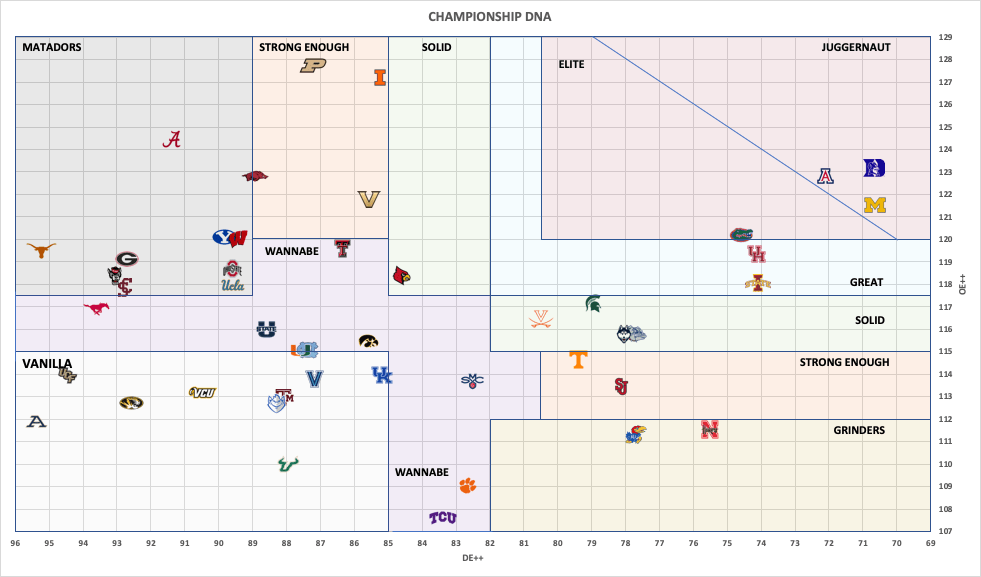
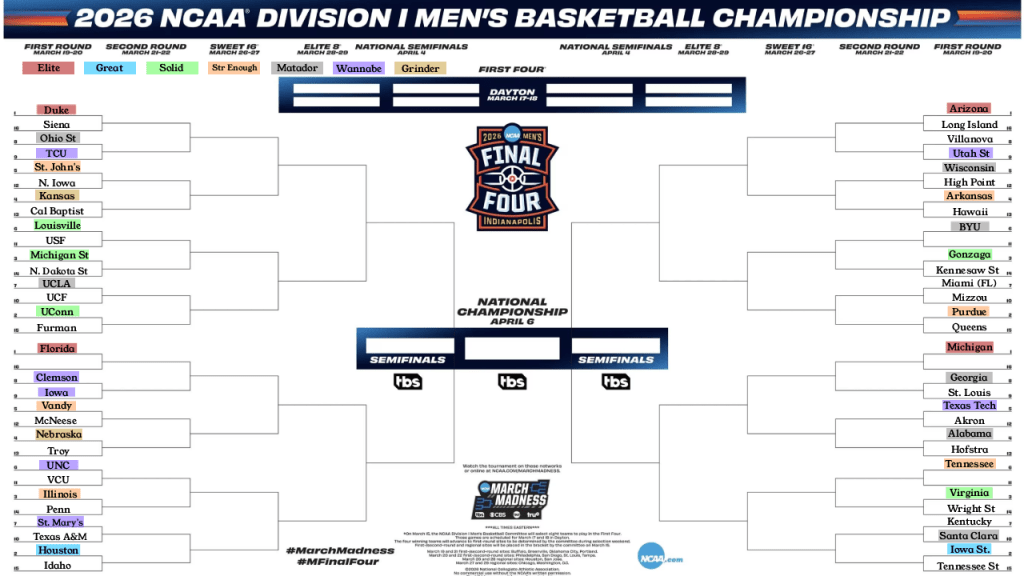
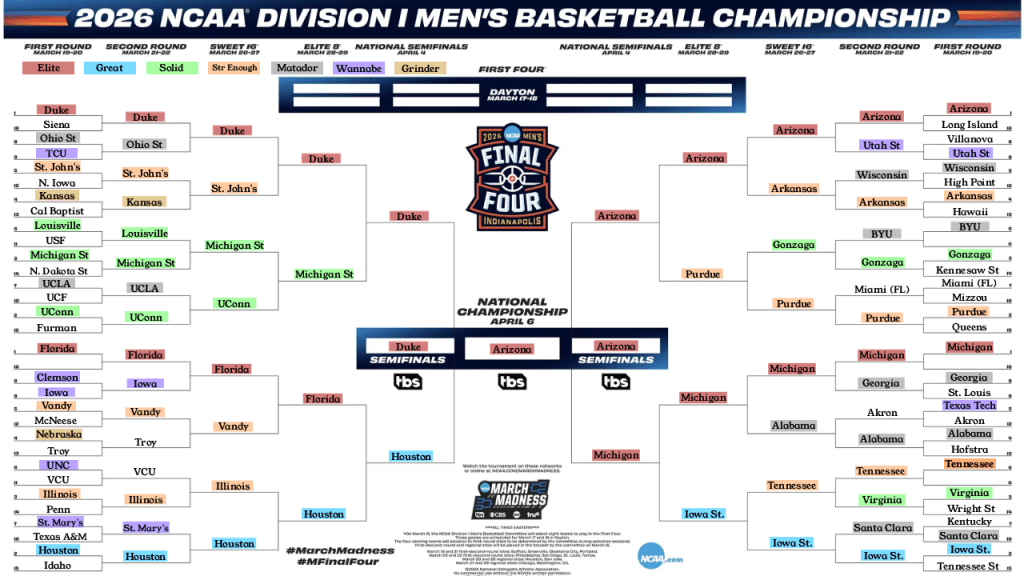



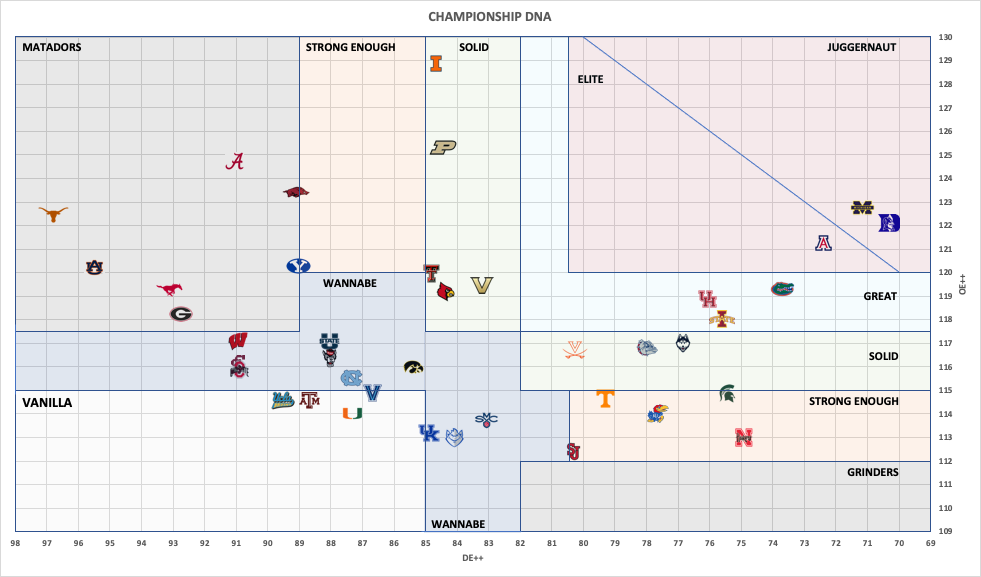
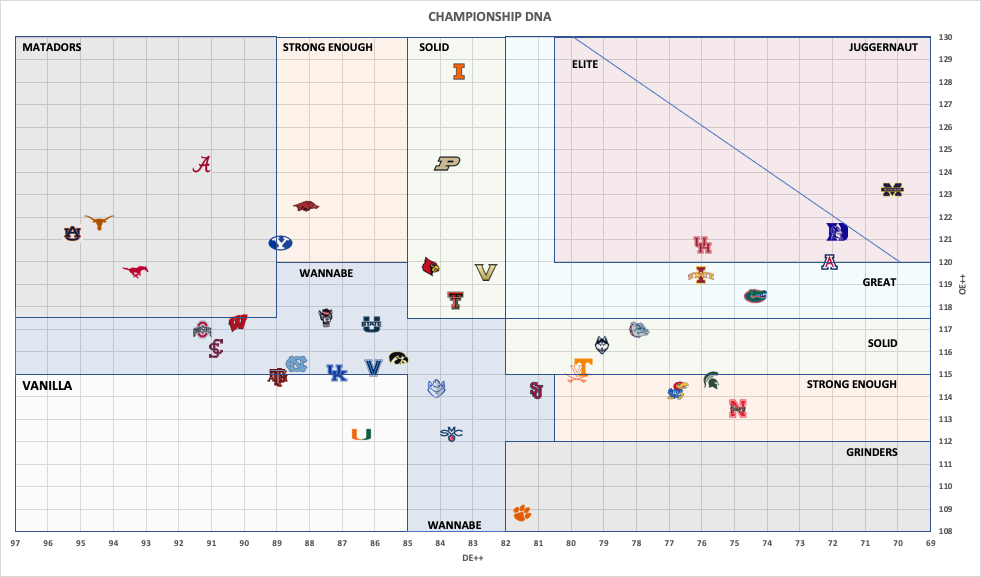
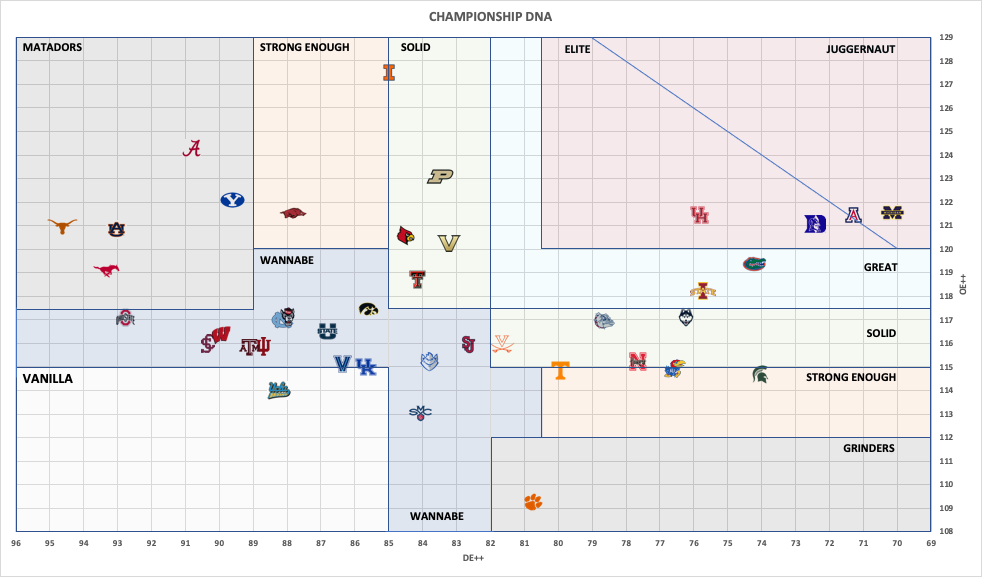
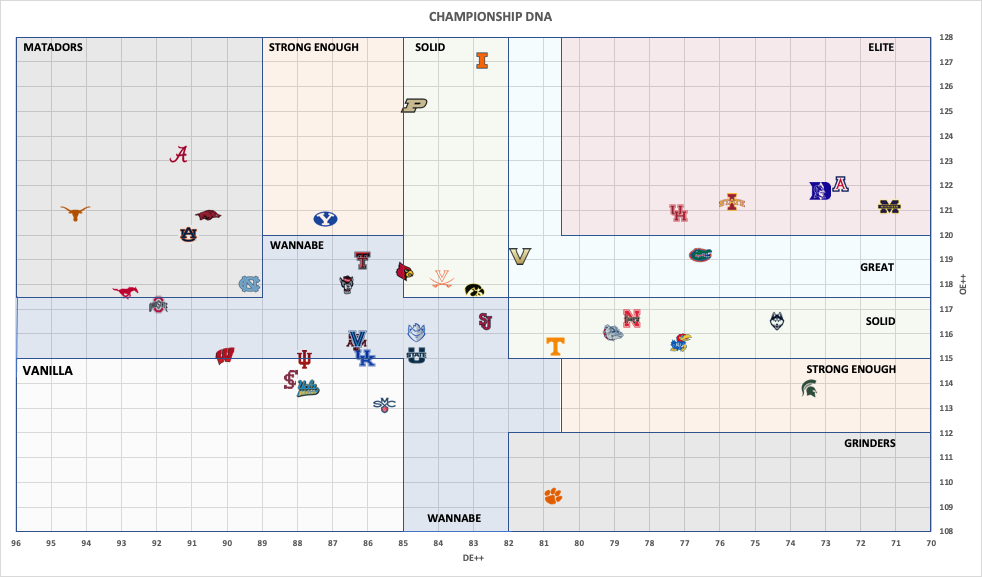
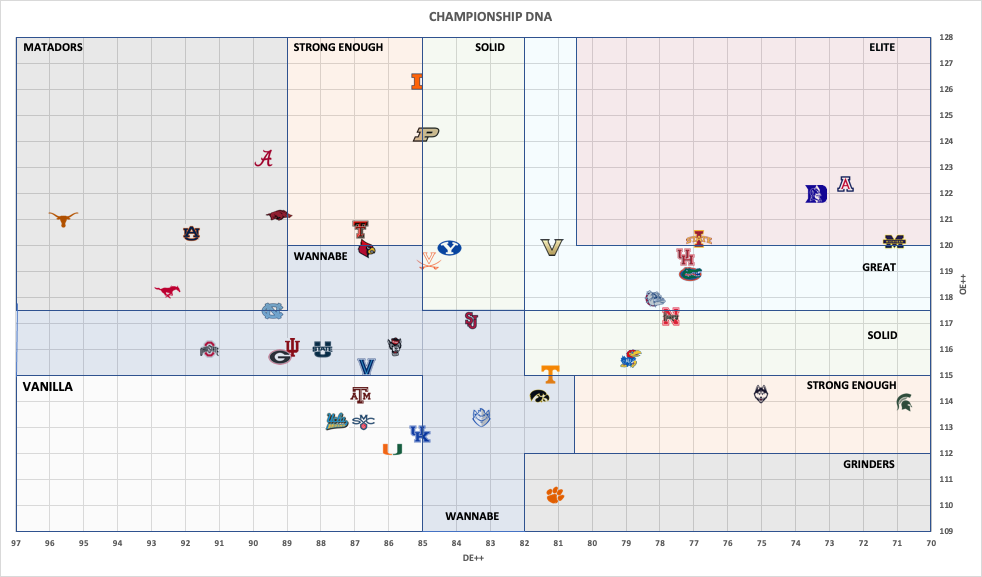
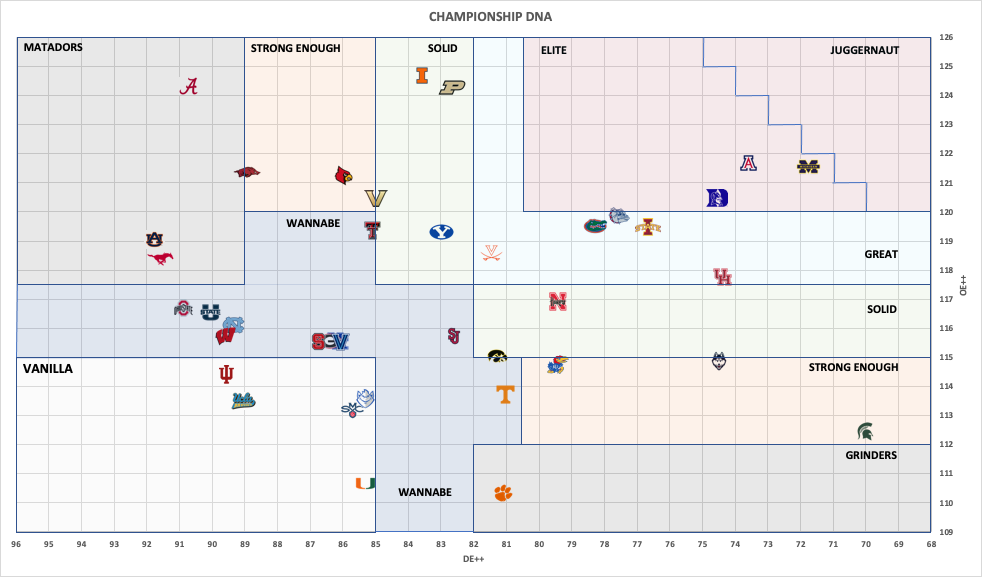
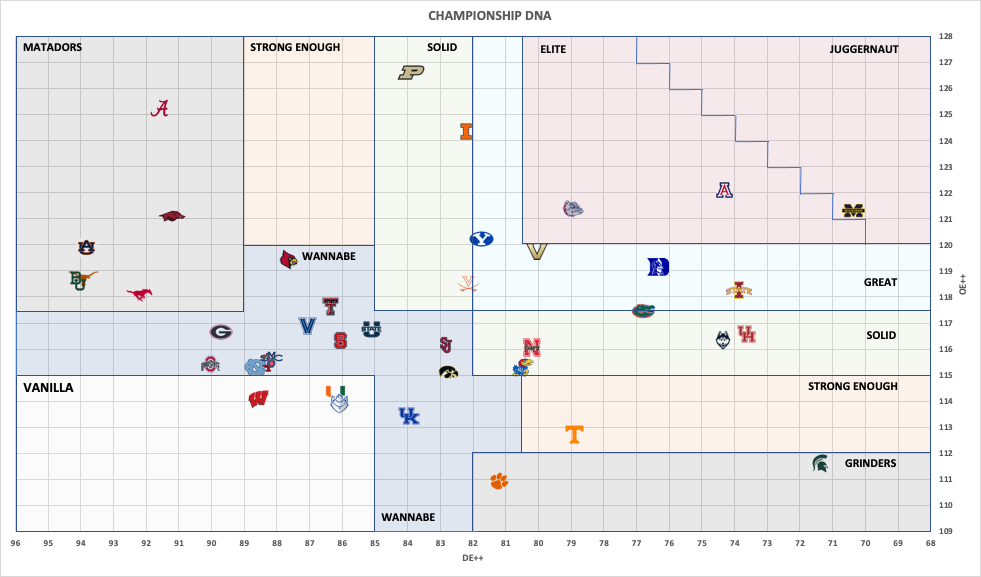
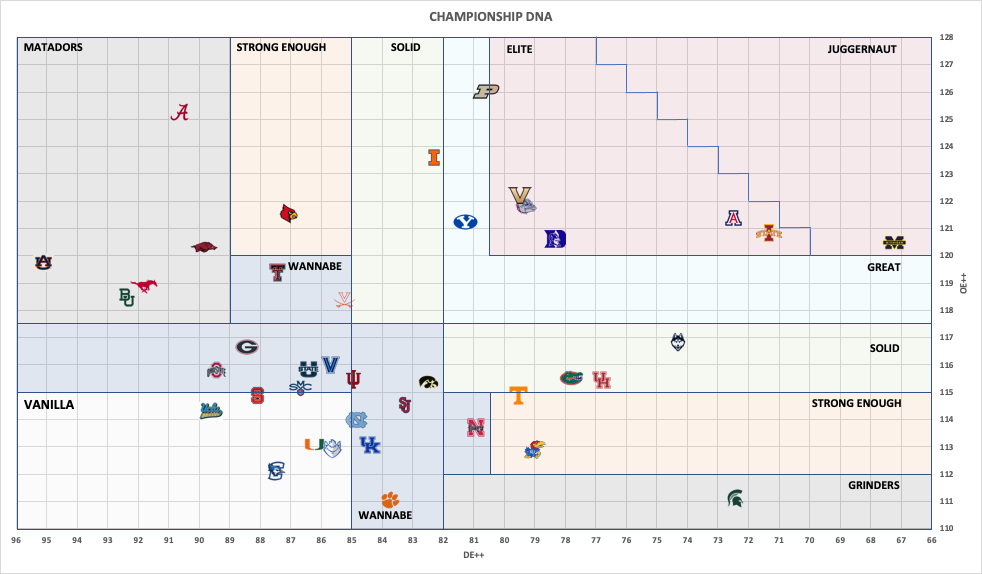
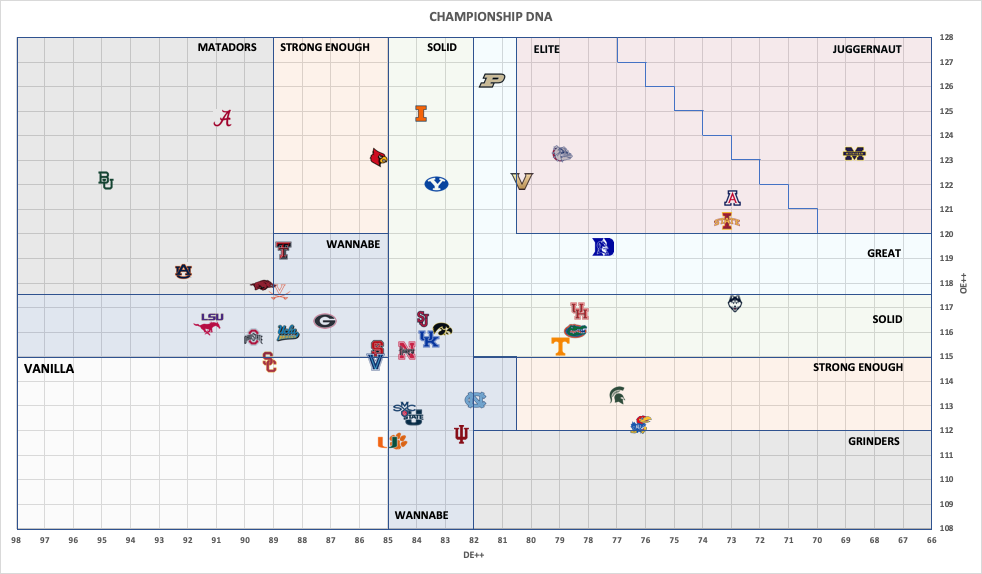
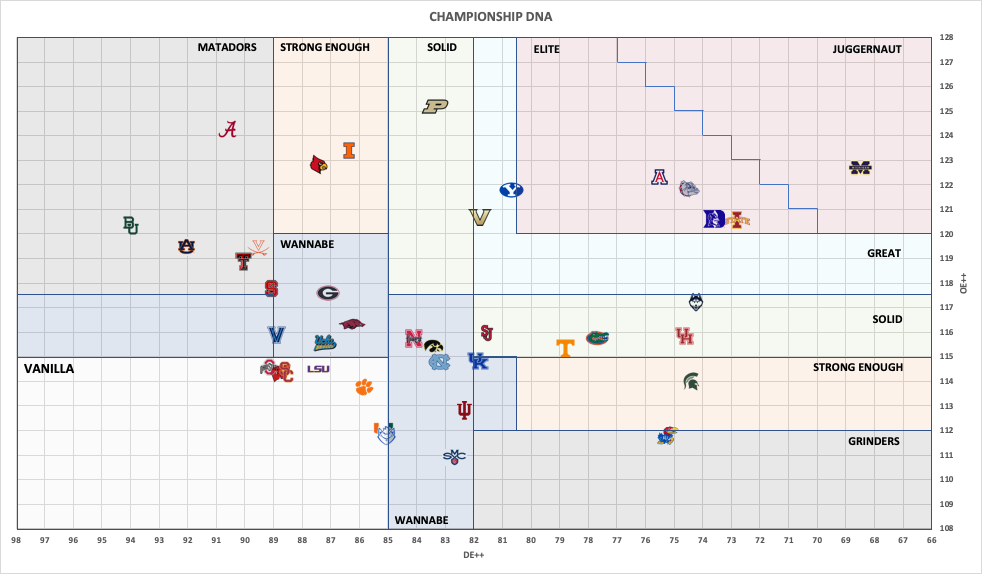
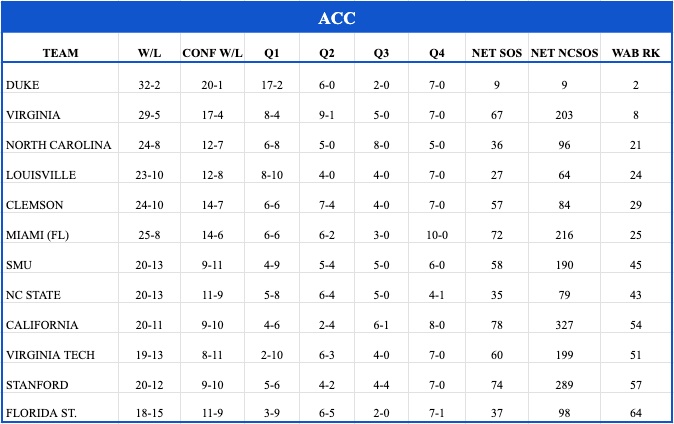











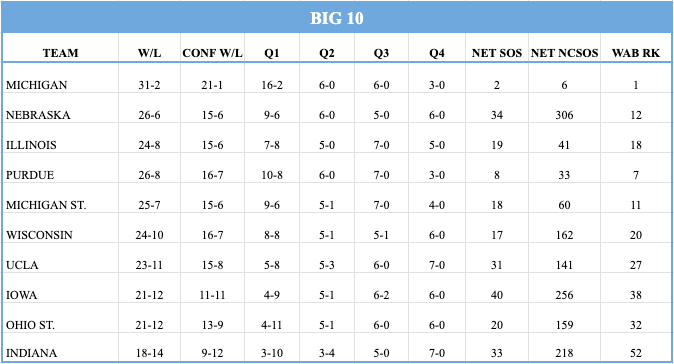









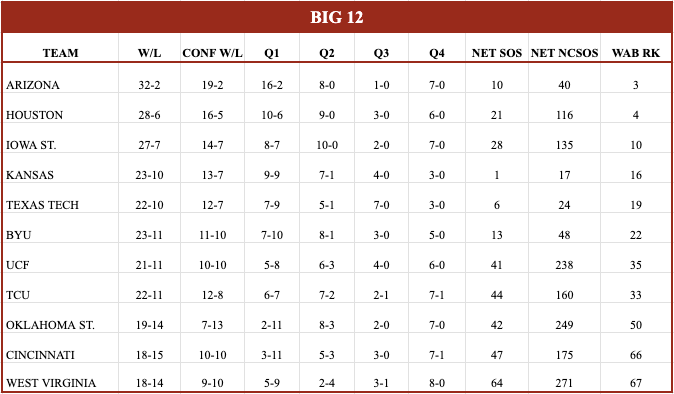











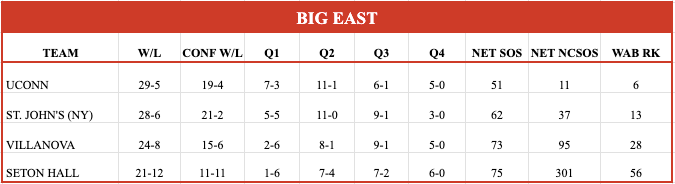




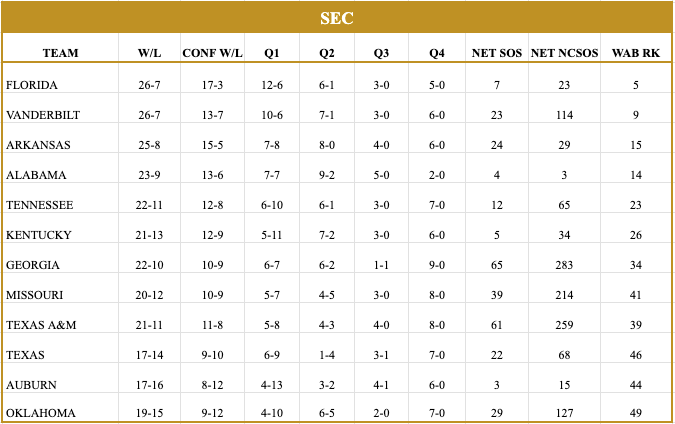







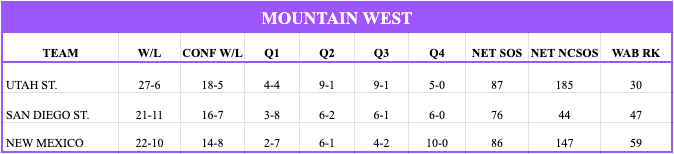



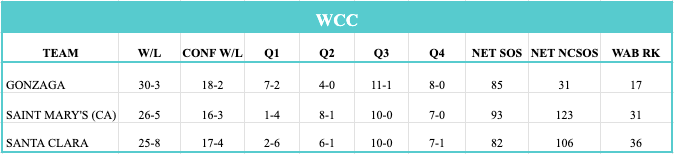








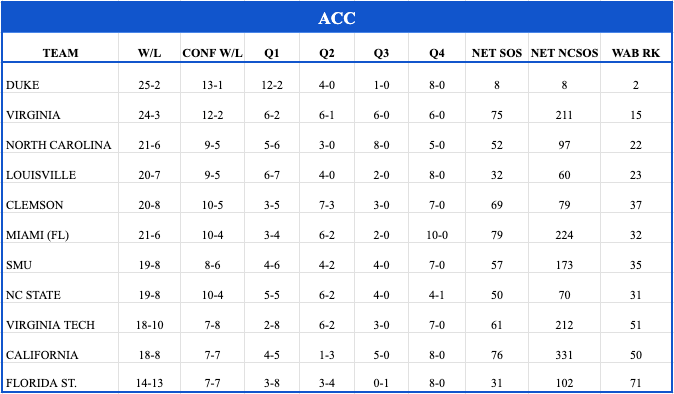
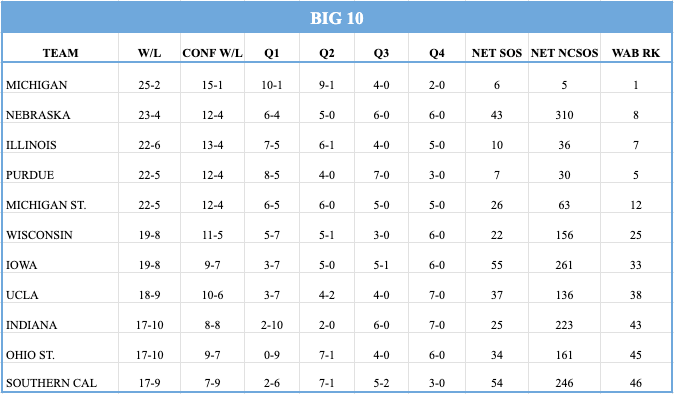

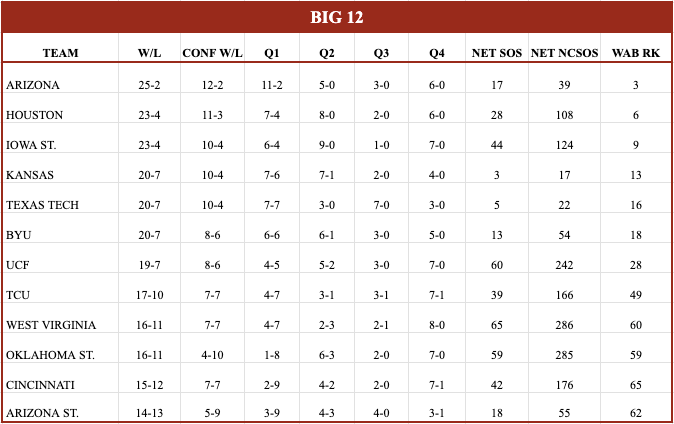

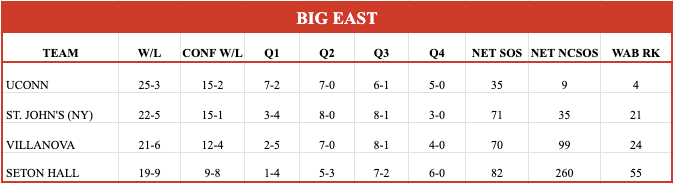
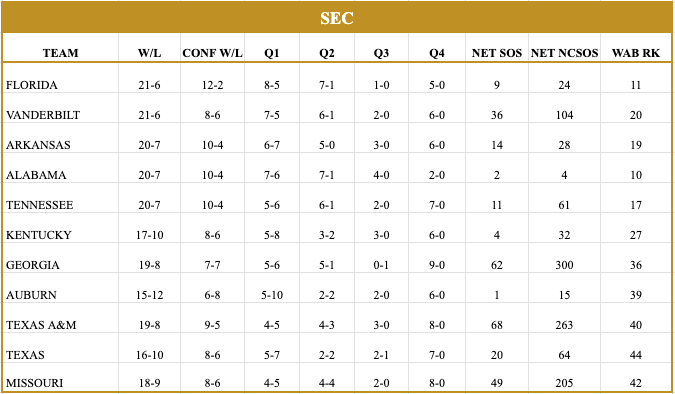
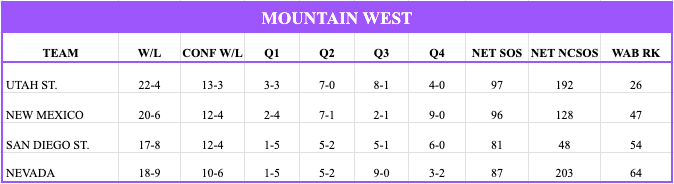

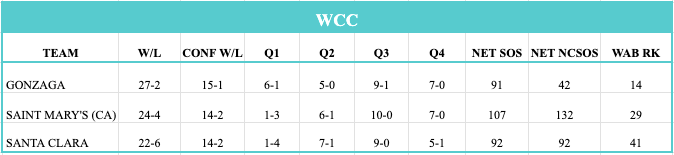


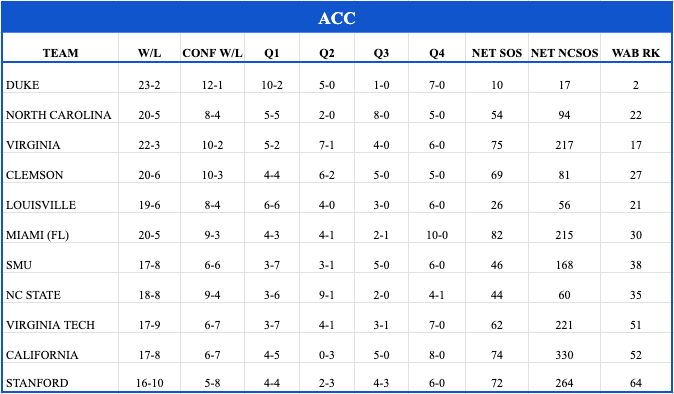
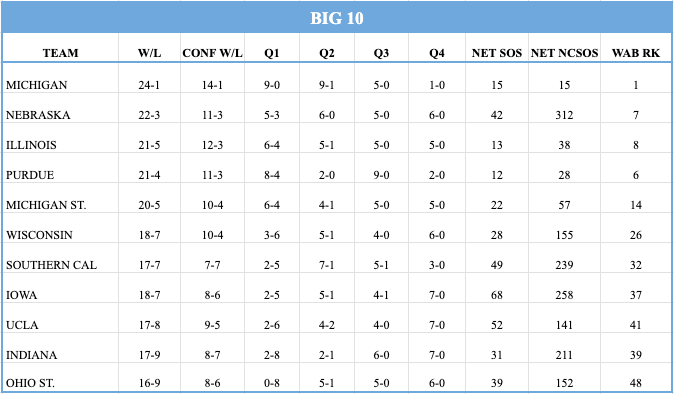
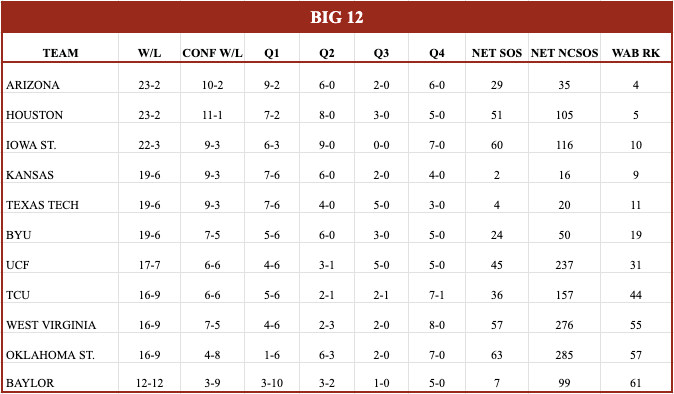

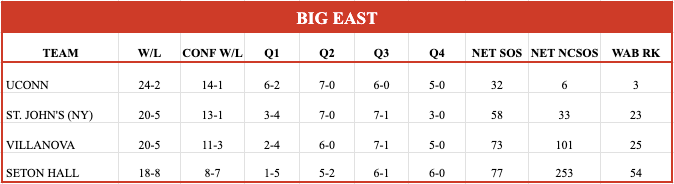
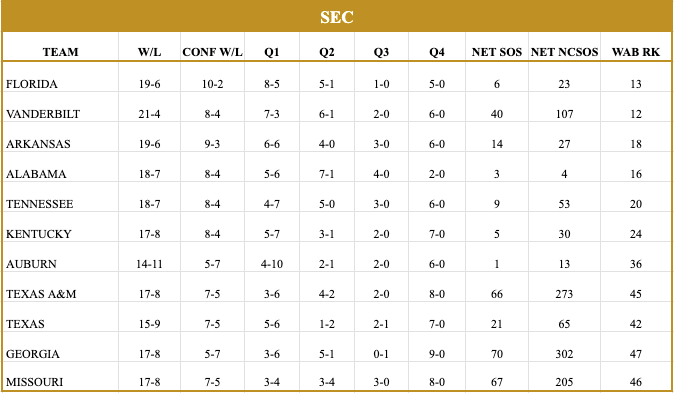
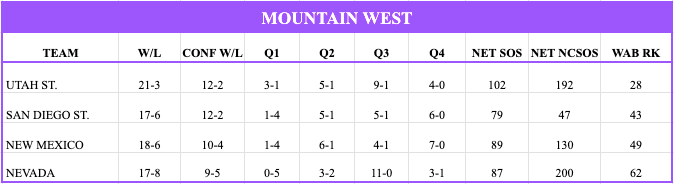
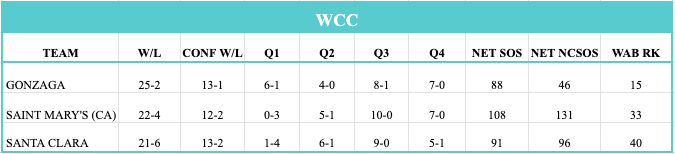


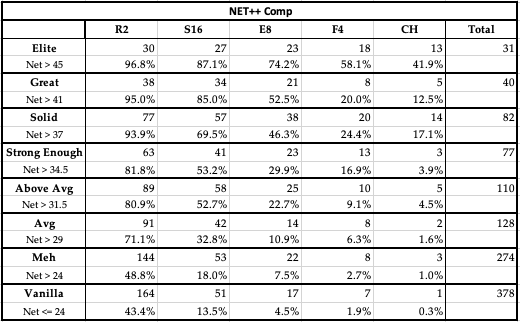

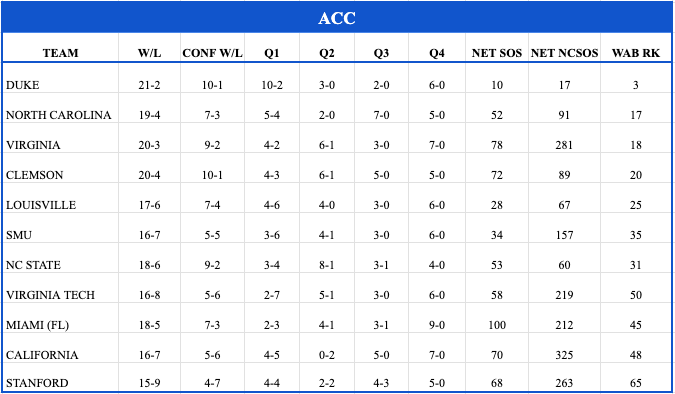
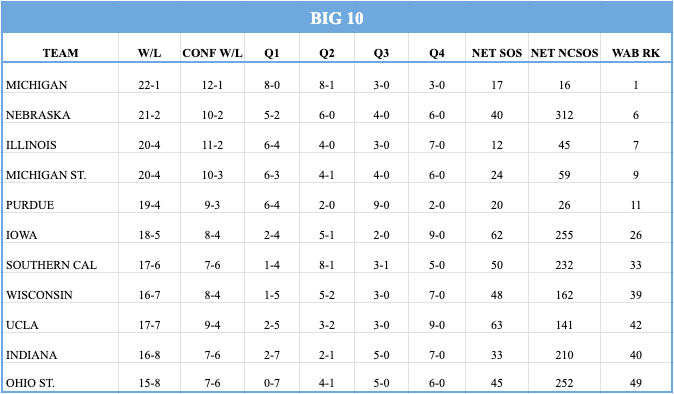
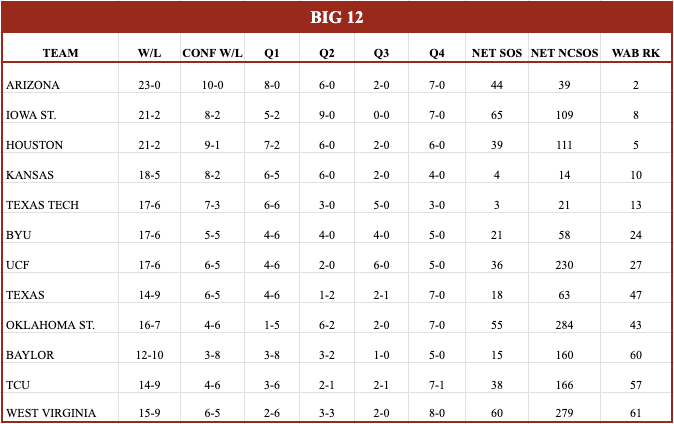
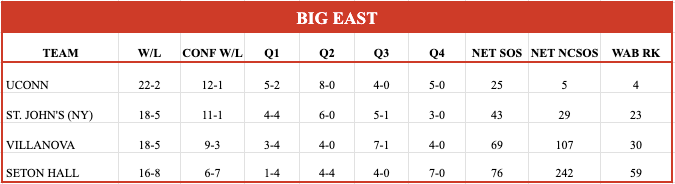
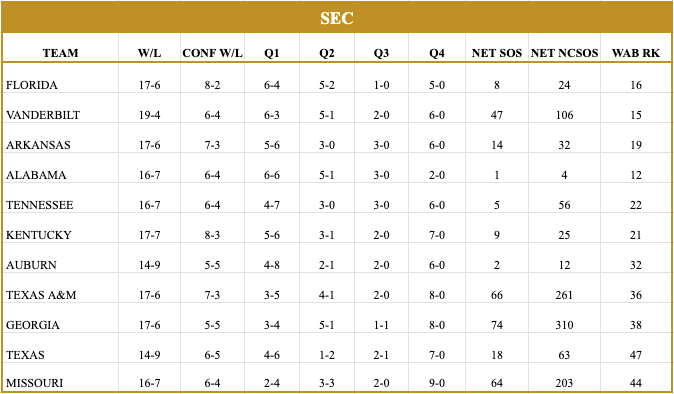
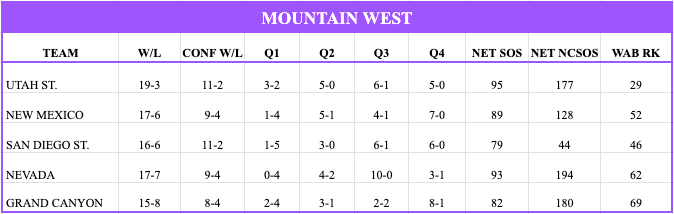

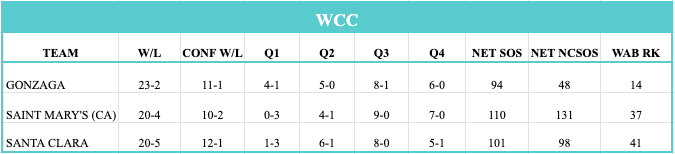


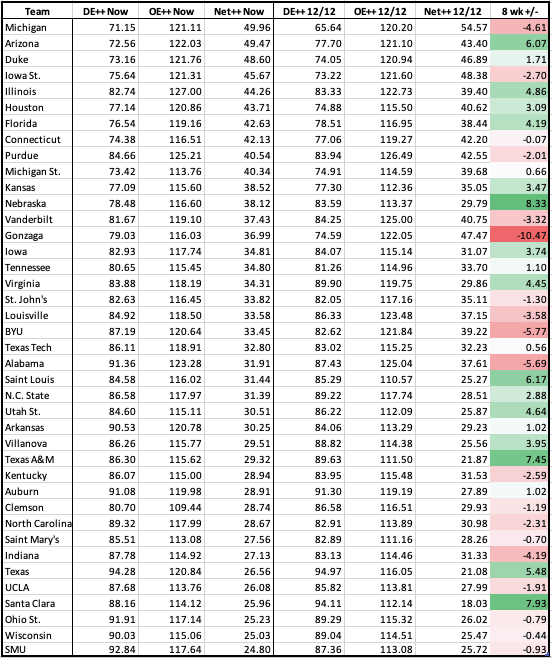
 5-STAR Bracketology